
Discover your free Construction Marketing Ideas Email Newsletter
Showing posts with label innovation. Show all posts

Thursday, July 05, 2012

"Come from behind" construction marketing wins

In recent weeks, I've become far more aware of how it is possible to dislodge a leader and achieve construction marketing success even when an incumbent seems to have it sowed up.  While some examples of this process I know about are highly relevant, they are also a bit too close for comfort.  So we'll go outside the industry to discern some insights.
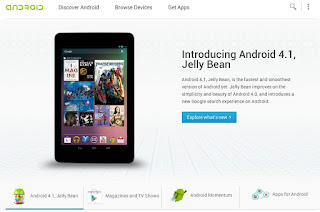
Consider how Apple and Samsung (with a little help from Google) managed to dislodge the original leaders in cellular/smart phone technology -- Research in Motion (Blackberry) and Nokia (conventional cellular handsets).

Apple's success can be explained largely by innovation.  Its products, carefully crafted and trend-breaking, were under Steve Job's leadership so powerfully effective that they created the same sort of 'wow' that Blackberry achieved when it invented the original smart phone.  In both cases, I received my introduction when an early adaptor enthusiastically showed off his new toy to me, describing its features, flexibility and effectiveness.

The Samsung/Android story is somewhat more complex.  Samsung saw the trends -- and Apple's success, and moved adroitly to discover an alternative operating system that could do many of the nifty things possible only with the IPhone (this of course leads the way for some really expensive patent litigation).  With enough foresight and speed, it licensed Android and set out to move the new phones to market quickly -- at price points at a level shell-shocked consumers not ready or able to pay Apple's price could accept.

So what went wrong at RIM and Nokia.  They had the lead; they presumably had the resources to see the new forces arriving, but they could not respond in time to recapture their place.  The answer is the danger of complacency within incumbency.  When you are the market leader, and the outliers seem just that, you are tempted (and in fact rationally may think) you can simply weather the storm with incremental improvements.  Big mistake.

I've seen some examples of this process -- and success where I hadn't expected it to occur -- in my own neck of the woods.  Complacently, I thought the newcomers were simply banging their heads against a big and expensive wall.  I studied them, in some cases even met them personally, but didn't take them nearly as seriously as I should.  And they "won" -- well, sort of.

The story is not over until it is over.  Learning, innovation, growth and maturity are complex, continuous things.  We all tend to revert to the norm, and fall back into our habits (good or bad).  Real change is difficult and sustaining change when it is easier to hold back and enjoy the status quo can be difficult, indeed.

But I don't give up.  As I prepare to spend another day alone in Istanbul, wandering through eons of history, I'll remember the priorities and forces which need to be observed.  Don't be complacent.

If you have any gnawing issue, frustration, or marketing challenge, please email me at buckshon@constructionmarketingideas.com.  It can be a little thing or big problem, doesn't matter. Allowing for time zones and travel, I'll get back to you within two business days.  If you wish, consider also requesting the Construction Marketing Ideas newsletter at constructionmarketingideas.com.

Monday, June 25, 2012

Construction marketing conventions: When they work, when they fail


Tonight, I received some advertising copy from an individual who had achieved some marketing success.  He got through to me with a tempting proposal, which I accepted.  He would redesign one of our company's websites, for free, to demonstrate his abilities.

While the first effort failed, I liked his initiative, questions, and thinking, even though I set an almost impossible bar for his success by making myself virtually totally unavailable for any consultation on what we really required.  So I spent some time on the phone with him, going over the challenges and purposes of the proposed site redesign, and on the second-go-round, he came through with an innovative and I think quite effective design.

(We'll keep it under wraps for now, until all is set up -- it will be the foundation of our corporate website, under the cnrgp.com domain (currently feeding to a temporary remote-hosting service.)

In exchange for his work, I offered him some promotional considerations, including mentions in this blog, the other one at constructionmarketingideas.com, the weekly newsletter, and other advertising resources including possibly client invoice stuffers.  All of these initiatives don't cost us any cash dollars, but represent real value, considering that others pay us hundreds or even thousands of dollars for the relevant services.

We were to get started on the promotional stuff tonight.  Then I read his copy, and sighed.  It read just like -- an ad.

Okay, I know, I asked him for some advertising copy, but I could tell he is a more effective web designer than advertising copywriter.  Actually, very few people can write really great advertising copy.  It is a challenge to create just the right bit of creativity, within conventions, to create the true selling and branding message, without sounding like a hack.  A non-professional will almost certainly fail.

I asked him to go back to the drawing board and send me an originally written article about effective web design.  His English writing skills don't need to be perfect; I can edit things into shape, and the editorial-format coverage (with relevant hyperlinks where appropriate) will generate far better results than his efforts at a standard ad.  (And, yeah, I receive plenty of proposals, well-written at that, from search engine optimization marketers hoping to provide me with guest columns for this blog -- of course, inserting their clients' URLs into the text to boost their rankings.)

Conventions, norms, and assumptions are common in the business world.  Just attend any grand opening or anniversary party, and you'll see things like the ribbon with the giant scissors, or the gold plated shovels (for the ground-breaking) or similar standard stuff.  It isn't bad always to follow the conventions, as long as they are followed properly -- and you keep your expectations of powerful results low.  Sometimes, however, you can have more fun and achieve greater results with some genuine creativity.

Oh . . . the image.  The rainbow . . . conventional perhaps, but I haven't seen one quite as dramatic as this one for some time.


Wednesday, October 21, 2009

Craftmanship or Systems: Which is best?

The Mountain Equipment Co-Op building in Ottawa, one of the award-winning projects of Christopher Simmonds Architect.

Yesterday, I met with Chris Simmonds, an Ottawa architect who won the Peoples' Choice Award in the recent Greater Ottawa Home Builders' Association housing design awards competition for a luxurious home in Mississagua, near Toronto. (He entered the home in the "open" category as it is obviously far away from the Ottawa market area.) His practice -- he has a team of about 10 -- has built luxury residences, community facilities, and environmentally sensitive institutional buildings. "Underneath the hood" is an incredibly brilliant designer with a great sense of style and function. He conceptualizes big things with the little details -- and his staff, with various capacities and specialities, execute the vision.

Meanwhile, I'm watching the work of Stephen Sellers, whose "Professional Contracting Association" I discovered by monitoring his Adwords ads. In my conversation with him a few weeks ago, he described a small, part-time business, based on systems. Cautious to give him an unconditional endorsement -- after all, he has a new business, and his market credentials haven't yet been established -- I've been watching as various pieces of his marketing material arrive in my in-box, all building the base for his vision of a stream of increasing income from contractors looking for practical marketing solutions.

As far as I can tell, Sellers built his system in a box; a really comprehensive system with well written and strategized materials. There is a lot of skill in doing this right, but once he's done, his business should virtually "run itself" and generate money, consistently.

Which approach is better? You can't replace the quality and individual attention from Chris Simmonds and he gets to do the type of work he loves. Sure, Simmonds has systems within his practice to allow him to handle the volume of work -- and he certainly appreciates the basis of publicity and communications: Entering competitions where he can win recognition, and then find new business.

Sellers, meanwhile, described systems gone wrong. He had purchased a franchise which simply wouldn't work -- he paid for processes which hadn't been validated in the market. A systems person, he decided to learn everything, and get it right. I think he has.

I think both the systems and craftsmanship models have place within the industry. If you want to grow a really large business, you will probably need to move more in the systems direction, but if you are really good at what you do, you can indeed "have it your way."

Thursday, January 31, 2008

Convention and creativity

"Mediocrity: It takes a lot less time and most people won't notice the difference until it's too late."


One of the most interesting aspects of business is how most of us accept mediocrity, most of the time. We know of the terrible client service at the telecom companies, the piddling stupidity of 'rush hour' traffic (a misnomer of phrase if there ever is one) and the dumb, arrogant, and wasteful exercise of office politics and perks. Some of us rebel, some of the time. We find other answers, routes, ways around the boring banality that so much of business is today. Or we seek effectively offensive solutions-- with a willigness to irritate the many in order to find business with the few ( . . . have you ever seen a telemarketer at work or, worse, been one.)

There are better ways, of course, and I expect most successful businesses to some extent find these -- or they wouldn't survive. In truth, you only need to have part of the picture exceptionally 'right' to succeed; you can follow 'standard practice and get by with the rest. Of course, it is refreshing when you find businesses which go beyond the standard, and find ways to allow their employees to express their creativity, achieve success, and still serve their clients and the marketplace effectively and profitably.

I want my business to fit in that small, special, and vital category -- innovating in core areas; and refusing to tolerate mediocrity in the rest of the enterprise. So, here are the rules.
  • We've banned "rush hour" (within reason). Our business encourages telecommuting and work-from-home arrangements. We have an office and our support (office) staff will need to be in the building in core business hours (otherwise the whole thing doesn't run very well); but even then we are reasonable -- if it is snowing miserably, distant employees can arrange to work from home and, that day, clients may have to deal with a little more voice mail than usual.
  • We don't "read resumes" and "interview prospective employees". Well, not exactly, resumes, interviews, and reference checks are part of our hiring picture, but not in the conventional order/cycle. Instead, we encourage prospective candidates to "interview themselves" with a preliminary questionnaire -- only if they answer it will we even bother to read their resumes (but everyone who sends in a resume will receive the questionnaire; the person responding -- not us -- will be the 'screen' for suitability. Our systems work really well -- we don't waste time in the hiring process, and are getting it right. (The payoff: Our employees don't need to worry about 'rush hour'.)
  • We believe in giving more than taking; the paradox is the giving works far better than any conventional 'taking' in finding new business. This blog, for example, has become something of a 'lead machine' for the sales team. Readers respond to our offer of Seven Tips for Construction Marketing Success, and then take up the offer to do business with us. Of course, you don't need to do business with us to read the report, email me, or ask questions. (And I've enjoyed some useful and valuable dialogues and information sharing with non-clients whom we never expect to do business with.)
  • We believe business should be (mostly) fun; not the phony 'rah rah' type of enjoyment; rather the satisfaction of doing the right kind of work, at the right time, for the right people. I am not going to force a really good administrative person to be a salesperson (though she earns a significant annual bonus helping out on a sales project which she enjoys); and we don't expect our sales team to be journalists or writers (though two of them actually have journalism training, and when they are not suggesting stories to our editor, they sometimes write their own stuff -- attending interesting events and meeting valuable sales contacts in the process. And, yes, our editor knows instinctively when to pass a lead onto the sales department.
  • Finally, we believe business should serve a useful purpose; in our case,helping our clients find more clients; and supporting our readers in understanding and addressing issues affecting their communities and industry. This is work for which we deserve to be paid -- and we are.
I'll continue to battle mediocrity, boring, wasteful and stupid practices with the goal of creating and building something useful for everyone around us. This is not a machine, of course. We are human and sometimes things don't work the way they should. But more often than not, we are winning the battle against mediocrity and stupidity.

Thursday, December 13, 2007

DeWalt -- Customers, innovation and marketing


One of the privileges of 'cracking' the airline pricing/service systems is my ability to use Air Canada's Maple Leaf Lounges for first class travel while purchasing the cheapest no-frills economy tickets. Besides an open (unsupervised) bar, lots of snacks, and comfortable seats with wireless Internet, there is a huge rack of free magazines. So every visit, I grab a stack, stuff them into my travelling case, and head home reading some publications I would never otherwise notice.

So when I started reading Strategy&Business, I thought I might glean a few general business ideas -- only to find the story about DeWalt Power Tools, and their rather successful approach to product innovation.

It turns out this division of Black and Decker, according to Barry Jaruzelski and Kevin Dehoff, have discovered that it really pays to connect and listen to the customers -- in this case, the construction tradespeople who actually use power tools.

The challenge is that professional tool purchasers want equipment that works really well, but are not so concerned about "brand loyalty". They aren't going to switch tools for modest incremental benefits -- in fact, they might be downright angry if slightly better tools are introduced shortly after they purchase something they thought would work for several years.

But, aha, DeWalt listens, say the writer, reporting on Booz Allen Hamilton's annual study of the world's largest corporate R&D spenders. The researchers discovered two primary success factors: "Aligning the innovation model to corporate strategy and listening to customers every step of the way."

Jack Schiech, president of Black & Decker's DeWalt division, has a valuable story to tell about the importance of paying close attention to your customers, the writers noted.

"The best-selling miter saw on the market in the early 1990s cost about $199, and they all had 10-inch blades. Our guys went out and did some research, and found a lot of people building big colonial-style homes with big moldings. The saw blades cut only halfway through those big pieces of truss. So they had to pass a 16-foot piece of molding out the window, flip it around, pass it back in, and make the rest of the cut. We realized that if we moved to a 12-inch blade, which required a completely different, much bigger saw, they could make these cuts in one pass. So we developed and launched the 12-inch miter saw, and charged $399. It became the number one-selling miter saw by huge margin, and remains so to this day."
Now, I realize that readers of this blog are into marketing, more than R&D -- but the point here is that connecting closely to the clients is a vital responsibility of any business which wishes to succeed in the marketplace. This is especially evidenced by DeWalt, which involves and connects the customers in the actual R&D operations, and thus builds a much deeper understanding of what they really want -- and how they think. Clearly, with this information, they are able to sell tools (and receive some great publicity, as well.)

You can read the complete Strategy&Business article here.