Discover your free Construction Marketing Ideas Email Newsletter
Showing posts with label advertising. Show all posts

Saturday, September 22, 2012

Referrals, repeat business, speeches and presentations, then advertising: Your construction marketing priorities


In this weekly Google Plus Hangout (Friday 2 pm), I discuss how and when you should advertise.  If you think that someone who earns 97 per cent of his income from advertising would urge you to pay for advertising in our (or any) media, you will experience a surprise.  I suggest that advertising should be carefully considered and only used after you've fully accessed the "low hanging marketing fruit" of systematized repeat and referral programs, and effective public speaking and presentation initiatives.

When you are ready to advertise, you should also be aware that the cost-per-lead will (short term) be much higher than through the repeat/referral and public speaking options and you should be careful not to put all your eggs in one basket.  If you have a $2,000 marketing budget and use it all on one advertisement, you are likely to be extremely disappointed in the results.

Conversely, at a crucial stage in your business growth, you can experience a quantum jump in the amount you should spend on advertising, and the results you can expect to achieve.  This is because if you can afford enough advertising to be extremely visible to your potential clients, you'll benefit from the synergy of your advertising.  As well, while the acquisition costs of advertising-based leads are high, their lifetime value -- and their ability to generate repeat and referral business -- can also help your business.

Please feel free to join me at the 2 p.m. video broadcast/hangout.  You can find information about how to register for a Google Plus account to gain access in the sidebar at constructionmarketingideas.com, or you can email me at buckshon@constructionmarketingideas.com.

Monday, June 18, 2012

The marketing concepts behind the construction marketing business

In visiting this or the new Construction Marketing Ideas blog, you are observing -- perhaps at a great distance -- the long tail or distant edge of the marketing process for Construction News and Report group publishing enterprise  You probably have little reason to ever do business with us.  That is okay.  The ideas here will probably help you in your own business, large or small.

We publish regional and national construction newspapers and magazines, print and online.  Most of our revenue arises from special editorial features describing communities, businesses or projects.  These communities and companies work with us to introduce their members or suppliers (the people who are giving them money) as potential advertisers.  The supplier-advertisers, wanting to ensure their actual clients are happy, co-operate by advertising in the publications to help their customers' interests.

Fair enough.  This is relationship-based marketing at its best.  The business model also has an intriguing risk and value transference element.  Companies receiving the editorial publicity don't need to spend a cent for all the attention; the companies advertising don't care about "results" for from their advertising, as long as their key clients are happy.  This means we don't have as much price resistance for our advertising sales.

While this business model is highly effective, it is also quite controversial.  Alas, some publishers have abused it.  They use high-pressure techniques and deliver poor-quality publications.  After a while, the advertisers can decide that they have had enough and stop supporting the features.

We faced this problem, bluntly, in 2005/06, when our business almost collapsed under the weight of angry clients who felt we had taken advantage of their relationships.

Then I had an insight which saved my business.  I realized that the advertisers might be purchasing ads to support their clients, but we were doing nothing to support our true clients, the paying advertisers.  I decided I would find ways to deliver genuine value to them, and thought that they might appreciate comprehensive, independent construction marketing advice and resources of high enough quality that they could always be assured of a positive return on their advertising investment.

So, I started this blog, began learning everything I could about construction marketing, joined the Society for Marketing Professional Services (SMPS), began writing for their magazine, The Marketer, and a few years later, wrote the Construction Marketing Ideas book.  As well, we began working actively with relevant associations and groups, supporting the industry, charitable initiatives, and community service projects.

Our advertising costs as much as it did before, but now we deliver the value and treat clients well, and they return for more, and all is well.

Maybe you qualify for an editorial feature in one of our publications.  The publicity is free, as is the writing, graphics, layout and everything else.  However, you need to have a business of the scale and scope that we can sell some advertising -- about $1,500 worth of ads per feature.  In our experience, this requires supplier relationships founded on a business with sales volume of $3 million annually or more.

In case you are wondering, yes, we would work to sell advertising to your suppliers in an appropriate publication -- but, as you can see, we will also work with them to ensure they truly receive their money's worth.  It can be a great deal, all around.  (If your business is smaller, it is unfair to bug suppliers for support and I wouldn't want to take your cash for this sort of feature -- read the Construction Marketing Ideas book, and you will find other inexpensive options which will help your business grow to the size that this type of editorial feature publicity makes sense.

For a sample of the sorts of features and stories, please feel free to review our publications, such as the Canadian Design and Construction Report.  You can call me as well at 888-432-3555 ext 224 or email buckshon@cnrgp.com.

Tuesday, September 22, 2009

Advertising ideas (2)

How can you reduce the trial and error and risk in planning your advertising? This question is important because, if you are like most businesses who have tried advertising, you know that it is not always successful but often can be very expensive.

The problem is compounded by the fact that you need to give your advertising time enough time and consistency to succeed.

Jumping from one "answer" to another will only lead you down the path of disappointment. Undoubtedly, however, you will be disappointed if, after consistently advertising for a year, you see no improvement in your business.

Here are some options to reduce your risk.

Study effective advertising from similar businesses in non-competitive markets similar to yours. You may find the advertising in your travels but you may speed up the process by reviewing success stories in relevant trade-focused forums like remodelcrazy.com or contractortalk.com. If you are connected with your trade associations and groups, they also can be helpful; notably chapter or group leaders in other cities may be able to refer you to people in their communities who have achieved advertising success.

Speak with your current and recent clients and learn which media they like, read, follow and hear. You need to understand the tastes and interests of your clients, not your own personal values (though they may often be in alignment). These conversations also allow you to renew your acquaintances and connect with people you know.

Look for advertising media with high measurability, solid pay-for-performance standards, and low mandatory commitments. Does the Yellow Pages fit in this list? No. (But if most of your current clients originated with your Yellow Pages advertising, obviously don't ditch them for something untried.) Conversely, pay-per-click advertising can be really effective, though you need to know what you are doing or hire an expert who does.

Work with competent marketing/advertising consultants who you trust because you have been able to verify their work first-hand through references and referrals. These can, in some cases, be media sales reps, but usually you need someone more independent. You will either wish to work with a specialist agency focusing int he construction industry, or a smaller local agency who you know will delver the goods.

Will these measures remove all the risk? No. You also need to plan for things going wrong, and put enough money in your budget so that you are not intimidated by the failures along the way. The last thing you want to do is stop advertising just before your campaign is successful.

Sunday, September 20, 2009

Advertising ideas


William Martin started a provocative thread on Michael Stone's linkedin.com Construction Business Owners discussion group asking about where and how to advertise. This is his blog.

William Martin, owner of WR Martin Co. in the Boston area, posted this question on the linkedin.com Construction Business Owners discussion group: "What are some of the best advertising venues being used today? What gets you the best results." (If you are a construction business owner, I encourage you to apply to join this group if you are not already a member.)

The responses from other contractors are both intriguing and significant.

Mike Davis at TMT Home Remodelers in Eugene, Oregon,wrote:
Advertising is not a one shot or one choice deal. What works best in your marketplace, depends on that marketplace. I you live in an area like ours, radio creates better results than TV. Reason, people spend more time outdoors here and are, therefore, listening to the radio more.

Our marketing campaign consists of radio advertising on the local talk radio station, print advertising in a local magazine that deals primarily with food, print advertising in a newspaper that is distributed once per month in a local destination resort (his newspaper goes to all of the homeowners), we are actively involved in our local builders association, we take part in all of the home shows in our area, we participate in our "Tour of Remodeled Homes" every year, we have a well developed website that shows on the first page in a Google organic search, locally.

I am quite sure that I am forgetting something. We don't count on any one thing to do the "trick" for us in our advertising & marketing. If you have questions about inexpensive ways to get your name out, but take some effort, read Guerrilla Marketing by Jay Levinson. If money isn't an issue, contact a local advertising agency to help you out.

First things first, however, you need to identify who your ideal customer is, what the product is that you have to sell, and how much money you have to spend to reach that audience. If you choose an agency, don't go after one of the "big boys," as they will charge you way more than you can ever come up with in your construction business. You will find that there are a number of high quality small companies around your area that can do a terrific job for a relatively small amount of money.


One more thing, when you choose to take a direction with your marketing, stay with it. Give it a chance to work. The biggest tendency that people have is to bail out on a campaign too quickly. Radio, for example, will take almost 12 months to actually work. That's not to say that you won't get any calls during that time, I'm just saying not to expect huge results just because you start advertising. About the time that you are tired of hearing your ad, your listeners are finally beginning to hear it.


The moral of the story is, identify your ideal customer, find out where they are, identify the best way to reach them, and then give your marketing a chance to work. Be committed when you make the decision to move forward with your campaign.

Kathe Russell, General Manager at DreamBuilders Kitchen and Bath, Inc., in Sacramento, CA. said:
I have found that advertising works best if you have a clear marketing plan. After spending 100's of thousands of dollars on advertising over the years in every publication pertinent to my market, I had to learn this the hard way. Now I don't advertise unless I have a specific, measurable goal.

The main lesson that I've learned is that advertising isn't very effective, in any publication unless you have a specific call to action. For example, one of my company's strategies for getting new clients is to give educational seminars. So we use advertising and other mediums to promote a particular remodeling class. The call to action is that they have to register or the class by a certain date and it will be free. Late registration is a nominal fee. Advertising is great way to get a message out.

We target local homeowners within a 10 mile radius of our showroom, so we use the local newspaper to advertise this. This works great.
The other thing that works well for us are home shows. Advertising an upcoming home show is another great way to call people to action. Just before a home show, we advertise free tickets that can be picked up at our showroom. If you don't have one already, take some time to create a marketing plan before you throw dollars at advertising.
Robert Wright at Citadel Renovations in Ottawa wrote:
What we do is two home shows a year...the next one is in a couple of weeks, have an active website, have a branding radio campaign, and make sure we have happy clients.

I only do the two shows as they are the ones that work for me. There are others that I pass on as they didn't work for me.

I also send out a monthly newsletter to 300+ addresses and growing. They generally are well received. I am also linked to other reno websites that link and use my materials. Lets see how well this works in the future.
More on this topic tomorrow.

Tuesday, July 14, 2009

A fresh day

Every day is different.

If you have the responsibility for overseeing your own business, you know that your assumptions and plans and even specific tasks will not always go as planned. You start the day with some expectations, and end up with something very different.

Understanding this variability is important in your marketing. The challenge is to develop (through experience) enough control
mechanisms so that, if one element isn't quite working the way it should, you can develop an alternative.

This is where marketers with solid advertising strategies have a natural edge over business owners "relying" on referrals and word-of-mouth.

With an advertising and lead conversion strategy, you can quantify your results and if elements aren't quite adding up, add resources or change course to achieve the results you are seeking. If you are passively relying on referrals, if for any reason these dry up, you are in trouble.

Saturday, May 09, 2009

The cash flow challenge

Perhaps the recession is lifting. But many businesses will still die because they have failed to manage their cash flow challenges. This is especially the case if you have long lead times between getting work and payment or (worse) some of your clients are going down the tubes.

Business failure can be like a domino effect: Suddenly, even though you should be okay, you are not, because your money has dried up.

The natural first line of defence is to cut unnecessary expenses; then you start cutting people, borrowing, stretching your lines of credit, and then . . . just before things are about to fail, you decide to take a last ditch at advertising. After all, maybe some business will come in, and if all goes wrong, does it really matter. The media outlets often don't demand payment in advance will just sit in a pile of creditors if you file for Chapter 11 or close shop altogether.

(The latter sort of behaviour of course doesn't help my business one bit, but a wise marketing teacher within our industry taught us: Take virtually every bit of business you can get -- and then go to work on collecting aggressively. The reason: It doesn't costs us much incrementally to accept an additional ad, just a little administration and processing and sales cost, since we are publishing anyways. We might have a 50/50 chance of being paid if the ad runs, but that is real cash in the bank. If we decline credit, we get zero. However this approach undoubtedly does not apply to most contractors, suppliers and professional services within the AEC community!)

Is there a better way?

Well, if your business is well run, you will be a solid marketer in good times as well as bad -- and the really successful marketers have the cash reserves to increase their advertising in hard times (and media outlets, as you can see above, aren't too worried about your credit lines when this happens.)

Unfortunately, last ditch advertising rarely works -- if the problems are so serious you are about to close your doors, a burst of ads won't solve anything, except to add to your creditors' list.

So a better strategy, one that may seem counter intuitive is this:

  • Cut your discretionary and wasteful "nice to do expenses".
  • Cut any staff who are unproductive and not contributing to your business.
  • Spend plenty of time with your existing customers; mine them for repeat and referral business, and most importantly, observe the media they are listening to, using, and following.
  • Spend time and energy (but not much money) improving your website and Internet communications.
  • Take a big breath and begin advertising, consistently, in the media your clients use. (This is NOT a time to take a big risk on untried new markets; it is a time to build on your existing demographic and client base.)
Suggested marketing spend is about 5 per cent of your overall projected revenue. Find that money, somehow, even if it means cutting things you enjoy but don't really help your business.

If you don't, six months down the line, you indeed will have real cash flow and business survival challenges.

Monday, April 20, 2009

Advertising and repeat business


Mike Feazel (left) of Feazel Roofing in Columbus, Ohio and Leonard Megliola (center right) at Bestline Plumbing in Los Angeles have discovered the value of advertising -- but they don't follow everyone else's example in selecting their media and method. Still you can learn a lot from their success.

You cannot draw scientific conclusions from a two examples, but the stories of Leonard Megliola at Bestline Plumbing in Los Angeles (plumbing) and Mike Feazel of Feazel Roofing in Columbus Ohio have similar elements.

Both have discovered:
  1. The commercial and new home builder markets are not for them, because they have discovered they cannot earn enough profit working with builders and most non-residential clients (there are certain exceptions within the commercial maintenance and repair market, but this side represents 10 per cent or less of their business).
  2. Advertising in media where they achieve inquiries and calls independently of other contractors drives most of their business. Feazel finds business through saturation radio advertising; Megliola uses hundreds of thousands of flyers each month. They de-emphasise the Yellow Pages, commercial or residential leads services, or other environments where they are going to face pitched direct competition with other contractors for the "low bid".
Both have healthy businesses with significant repeat and referral volume but neither would rely on the repeat and referral business for their survival.

While the sample size here is utterly unscientific, if I take time to meet more successful contractors I likely will find the same success formula. The advertising method may differ; I'm sure the Internet and website marketing works well for many; others get good results with their local newspapers, and still others have devised effective canvassing and door-knocking campaigns. But the successful contractors advertise wisely, within their own formulae and model, and stay clear of the crowds when they seek out new business.

Now, you may be asking the next logical question: If Feazel and Megliola have succeeded with radio and flyers respectively, where should you go to decide what to do? You can of course copy them -- and even pick their brains -- if you are in a non-competing market. But you can take another approach if you don't wish to visit Columbus or Los Angeles.

First, look at your best current clients. Take them for lunch or dinner or buy them a coffee. You want to learn what media they read, what catches their attention, and what their interests are. (Your market research conversations may also result in some valuable immediate spin off business.)

Take this information and conduct some research into the publications and media the clients like/respect/and answer. You can talk with media sales reps -- just don't buy anything right away, no matter how convincing the rep is that you have to act quickly. Just say you are formulating your plan and budget -- an absolute truth.

Review sources like this blog and contractortalk.com, along with your relevant trade associations and industry groups, for successful examples.

Budget perhaps 10 per cent of your current sales for advertising and marketing. Consider a modest price increase to offset this marketing cost. Advertise ONLY where you can dominate the space; you must not be one of the crowd. Just because everyone else is there, doesn't mean you should be (unless you want to fight for low-ball quotes.) It is better to have a focused presence in one place than a lot of little stuff everywhere (though it doesn't hurt to have some presence in a variety of media, if your budget is high enough).

Review your cash flow projections to be confident you will have the money to stay the course; as while the advertising should generate some immediate response, the results are cumulative and you may need some time to achieve repeat business.

Will this strategy work for everyone? Probably, but you will find trial and error and surprising results as you go along. You may find the thing you thought would do really well flops, and out of the blue something great happens that costs you virtually nothing. The successful contractors I've met certainly know how to advertise, both frequently and intensively. And they are thriving and growing despite the recession.

Wednesday, April 01, 2009

You have to advertise -- Michael Stone

Since we sell advertising for a living, I will enthusiastically repost this recent blog entry from Michael Stone, "You Have to Advertise".

Note, if you are successful enough in business that in good times you have been able to work "only by referral" you have a great opportunity to build on our brand and reputation with effective marketing, which can include resources other than conventional advertising, and you will find your current and recent clients to be truly helpful in deciding which media to use and how to adapt our advertising effectively.

Tuesday, March 31, 2009

Construction Marketing: Under or out of your control

You can't control the overall economy. Nor can you control how individual clients will respond to your marketing strategies.

You can control your attitude, your personal and business finances, and your overall business strategies and individual business decisions.

Your marketing challenge is to ensure the qualities you can control have enough power and effectiveness to overcome (or at least manage) the things you can't control.

Say, for example, that in good times you "relied" on referrals. You never had to go looking for new business, "I never had to market or advertise", because you always had an abundance of clients, in fact a backlog.

Now things have slowed down for reasons over which you have no control. You can survive in business by taking charge of the things you can control. You can cut costs and staff, live on less, and manage.

Or you can understand that if you were doing things well enough in good times that you had a backlog of work, you probably have an overall excellent reputation, and you can work to capture the referral and repeat business through systematic marketing and advertising now.

Remember, as well, that you don't want to be in the position where you are relying on one (or just a few) potential clients to say 'yes' to bring in your new business. If you are desperately hoping for something to work out, it often doesn't -- the potential client can almost sense your anxiety. Even if that isn't the case, you simply don't have that much power to ensure everyone behaves just the way you want, no matter how much you try. You need to have several possible clients wishing to do with you at the same time to be comfortable, so you need to use your talents under your control to ensure you have enough future business in the pipeline.

Take charge of the things you can control, and the things you can't control won't defeat you.

Monday, March 16, 2009

Your $10,000 advertising budget: How should you use it?

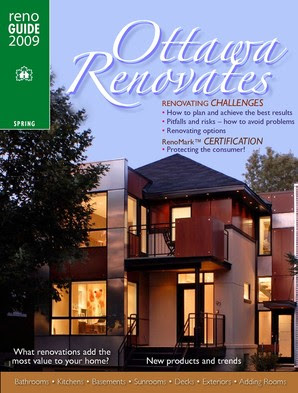
Regional publications like Ottawa Renovates are effective because of their focused readership and distribution. You need to be thoughtful about where and how you allocate your advertising dollars.

If you have $10,000 to spend on advertising, where should you allocate your funds for your construction industry marketing? That question naturally invites the response "it depends" but you can still find clues in these observations.
  • If you've spent this money successfully in other media (for example Yellow Pages or newspaper advertising), and the ads have worked for you in the past, continue if the ads are still working. It doesn't matter what the trendy or new thing is, if you have found ads that generate worthwhile results on a cost-per-lead basis, you should not dump them until you have validated and discovered that the new and better way is truly new and better for you.
  • If you haven't advertised in the past, and relied on "word of mouth", consider strategic ideas to enhance/build and increase your referral and word-of mouth-relationships before you rush to spend money on advertising anywhere. In other words, develop campaigns and programs to reach and communicate with your current and previous clients -- perhaps holding client appreciation events/dinners, send them e-letters, and (best of all) improve your direct communication and thank you contact with your clients.
  • You can use this contact/communication, as well, to learn your clients' interests and which media they like/respect. You may wish to allocate some of your funds to advertising in these media outlets.
  • If you haven't already done it, spend at least a few hundred dollars to build an effective website. You can use a variety of inexpensive service providers. We paid just $500, for example, to build the Ottawa Renovates site.
  • If you are just starting out and don't have previous clients or a track record, proceed with exceptional caution, especially in the current environment. You can easily burn your budget with misplaced or misguided advertising expense, and you must be very careful in projecting your cost/value per lead. I assume in starting out you have some contacts/connections with previous clients (and are not subject to non-disclosure/solicitation contract obligations with your former employer), and would look at communicating and connecting with these people first.
Remember, that a $10,000 advertising purchase is a drop in the bucket in a larger market, but could be have significant impact within a small, focused community, niche or market area. Focus your advertising where it will do you the greatest good -- not where advertising salespeople urge you to go. Then you can grow your business to where a $100,000 advertising budget is reasonable, if you wish.

Sunday, March 01, 2009

Construction marketing: How to get rich fast (the slow way)

How tempting it is that you could just phone an 888 number, or send an email with your credit card number, and find the answer to your questions. You need business fast, and there has to be a way to make money quickly.

In fact, I felt some of those urges in the past week, when the financial reports indicated our business has reached a red line. But I know the real answer: Fast, quick money is possible -- I've earned it many times in the past 20 years -- but it only happens when you forget the get-rich-quick mind-set.

Perhaps the best example comes from my life's most fundamental experience. My living standards skyrocketed within two years at the height of the early 90s recession when I learned how to focus on what really matters in personal relationships, and forgot about the money. (We celebrated our 15th anniversary last November.)

Conversely, last week I enjoyed an entertaining get rich quick video on the Internet promoting greedy opportunity-seekers a course explaining how you could play an arbitrage game involving Amazon.com and Google Adwords to make some quick money. Just send the online promoter a few hundred bucks, and you will have your fast answer, the video promised.

Digging just a little further, I learned this arbitrage technique had worked in the past, but after several people got in the game at the same time, the opportunity has narrowed so much that it doesn't work any more -- except to those selling online get-rich-quick schemes. After all, if you have half a brain, you know that if the idea really works as promised in the online postings, you would just continue or expand your existing business rather than selling the secret to thousands of potential competitors.

Nevertheless, you may still wondering if you can get rich quick. You can, but you need to think slowly and selflessly. Here are my three quick money making solutions (and I'm not charging you a cent for the ideas here.)

Focus on what you can give, share, and how you can respect and help others, rather than how much money you can make (but do this in a community and environment of potential clients).

The reciprocity principal is powerful -- you reap what you sow -- but only is effective when you put aside your results expectations. You need to focus on sharing generously within the relevant community. Eventually, you will connect to the mega network and lead providers; and because your selfless reputation is so strong, you'll find you can in an emergency call on favours quickly. Often real money arrives really fast seemingly without effort when people phone or email you with business you didn't expect to receive.

Learn how to advertise systematically and effectively.

You may be successful with a quick advertising hit -- but more likely you will discover your successful advertising strategy through some trial and error. However, you can gain clues about what is likely to work through a combination of resources: Conversations with your current and previous clients (they will tell you what they like, read and watch), really good advertising representatives who will counsel you appropriately, and Internet forums and sites such as this blog can provide some guidance and assistance.

(See the free offer on the sidebar -- and note the previous point which explains why I provide this service. I will share ideas even if you are not anywhere near the market areas served by our publications. You might also wish to consult Michael Stone who has thought the advertising options through carefully.)

Once you have a successful advertising formula, you can moderate the lead-generating tap to provide enough business regardless of the economy. If you need more business, you simply buy more advertising.

Treat your current and former clients with respect and provide incredible, memorable service.

Last night (yes, at 8 pm on Saturday), a recent client emailed a request. I happened to be watching the hockey game on TV with the laptop in hand (alas the Senators lost in overtime), and could fulfill the client's request immediately and exactly as he requested, with a few clicks of the button. He emailed to thank me, noting how self-employed people are often on the job Saturday night -- and said he wishes to place a full page ad in the next issue. So I can now say: "I made money quickly at my computer while watching television." Sounds like one of those Internet get-rich-quick ads, doesn't it.

Remember, your employees represent your business all the time. Encourage them to think the same way about their work and their clients.

No, I don't expect employees to give up their weekends for the business and be on call 24-7. (We have a rule that it is okay to send emails over the weekend, but no one has to reply until Monday a.m.) But I know things are right when they connect, share, communicate and work with their clients in mind, while maintaining life balance. One employee is at a national conference now, for example, with his wife. It is something of a budget breaker expense that could be seen as difficult to justify in the current economy. But he is meeting with movers and shakers among the client base, and has reported between social events, meetings and dinners on the connections and business he has developed there.

So, you can can make money fast, but you will only succeed by taking the slow approach. Respect others, deliver genuine value, and respond quickly (including after hours when it doesn't sacrifice your life quality) and you will succeed.

You can test how I apply these principals by writing a comment or emailing me at buckshon@cnrgp.com.

Tuesday, January 27, 2009

Advertising, branding, and service

Construction industry consultant Michael Stone with Sonny Lykos in a December 2006 photo

The late Sonny Lykos outlines in this June 2004 Journal of Light Construction posting, the basic issues you should consider in advertising and marketing. His points remain valid today.
Nothing - NOTHING we do or say that involves a customer is ever to be thought of as minor, small, unimportant, or insignificant. NEVER!
If your advertising brings your client to the door, the way you treat your client defines your ultimate business success, Lykos advocated. this is a fundamental point which you should regard consistently and vitally.

Monday, January 26, 2009

Your risks in construction marketing

You can build a successful business quietly, brick by brick, solidly on the foundations of solid relationships and respect within your community and among your clients and peers. You can also build your business by taking risks; by audacious advertising, assertive marketing, and unconventional behaviour that makes you unpopular with your peers -- by attracting clients few of them really want.

Which approach is better? The paradox is that while the latter approach is undoubtedly best for my (advertising focused) business, the former may be the best if you are a consumer, or someone who wishes to enjoy balanced business life.

However, you will need to achieve the rare combination of both elements if you wish to achieve true greatness in business. (Don't worry: Most of us don't want to go that far -- you need to be willing to roll your dice and take yourself far out of most conventional comfort zones to go there.)

Consider the professions, especially law and engineering. Lawyers for many years in most jurisdictions discouraged and often banned advertising. Then the rules cracked, and now you see ads on television, the Internet, and more, selling the virtue of contingency-fee lawyers for a variety of civil claims.

Are the lawyers who advertise the most extensively likely to provide the best quality legal advice? Maybe, but my sense is, if you really need a lawyer, you should forget the ads and focus on the relationships and referrals from people you really respect who have actually used their services in the past.

Now what if you are an architect or engineer, and decide to break convention, and allocate major funds for advertising? You likely would recoil in disdain -- and puzzlement about whether this is a wise thing to do. After all, your practices are likely built on personal relationships, reputation, and integrity, and loud ads seem highly unlikely to take you where you wish to go. (I'm not arguing with you.)

However, I sense if you had the courage and budget to break the rules, your practice could grow to levels beyond your dreams (though you would find your life among your professional peers lonely, as they reject you, and you might find your ideal clients want little to do with you.)

Sunday, December 14, 2008

Recession pricing

Here are some recession-smart approaches to increasing your marketing effectiveness, while controlling your costs.

Consider co-op advertising support
Many of your suppliers will help you out on your marketing costs if you are using their products/services. They may provide brochures, printed materials, or (even better) subsidize portions of your paid advertising in other media. They have good reason to do this: If you sell more of their products/services, they'll get more business. They may be able to also suggest where they've seen good marketing results in various media; saving you some trial and error costs.

Consider bartering or contra-trade, where appropriate
While cash is always king, and thus I am not really in favour of participating in organized barter exchanges or groups, direct trade makes sense when both parties to the transaction can benefit and the hard costs involved are low. As an example, we frequently trade advertising space for relevant trade show booths -- the trade show obtains valuable publicity, and we gain access to the show without draining our budgets (this is especially useful for our business because the other exhibitors, of course, can be future clients.) Recently, we noticed an advertisement for a local hotel seeking to promote itself as a spot to be used by contractors and construction crews. We have an employee who must visit the city every two weeks and stay in hotel. Not surprisingly, the hotel can see some value in exchanging space in one of its rooms for advertising in our publication; and we are happy to save the cash cost of the hotel rooms.

Encourage competition among your suppliers
Loyalty and respect are fine, but if another business can provide the same service at and quality at lower cost, should you not find the savings? your existing suppliers have choices in this situation: They can sharpen their pencils and reduce their prices, or create enough value-added services that you are ready to pay more (because you are receiving more value).

Raise, don't lower, your prices
This one is counter intuitive but you can often get more money for the same amount of work by ensuring you are delivering great value and service; often, even in the current environment, you may be underpricing some of your products and services. If you can raise your prices while your costs decline, you may be able to offset lower sales volumes with higher margins, and thus retain your profitability.

Wednesday, December 10, 2008

What advertising works? (2)

As I waited for my flight back home from Washington (D.C.) Dulles Airport today, I reached consultant Michael Stone across the country in Camas, Washington to find some answers to questions about his consistent recommendations that contractors should advertise, advertise, and advertise some more.

After all, my business sells advertising for a living. However, much money thrown into advertising is wasted. Worse, a contractor facing desperate hard times will easily be sucked into spending money on advertising not knowing what works, and why, and could lose a fortune.

Stone and I, it turns out, are not so far apart in our thinking. Stone certainly has no problem with your business encouraging and developing referrals, he just doesn't want you to be one of the majority who rely passively on word-of-mouth. Contractors who simply accepted in-bound referrals in good times, now find their phone has stopped ringing, while contractors who advertised effectively are stepping up their marketing, and attracting profitable business regardless of the difficult economy. In other words, relying on referrals is not wise; building systems to encourage and develop your referrals makes a lot of sense, and could be one of your first and most important strategies during hard times.

So what works, and what doesn't?

First, Stone says you should have at least six different forms of advertising to reach your market.

Second, he advocates you spend upwards of five per cent of your annual sales on advertising. This means if you are a contractor doing about $500,000 in business, your advertising budget should be in the range of $25,000.

Third, and most important, he suggests your advertising be geared to the demographic of your ideal clients. Spend some time with your best clients. See what magazines they read, what things they enjoy, what marketing approaches 'reach' them. (This conversation with your best clients, of course, givs you a chance to capture some repeat and referral business, as well.)

Now, lets get over the bad news -- what advertising should you avoid?

"Banish all Yellow Page advertising . . . it doesn't work," Stone says. "You have to have a long-term identification in business before Yellow Pages advertising will work for you, perhaps 10 years in business." In other words, if you have a long-established reputation (and I would add, are trying to reach an older demographic), you might use Yellow Page advertising, but if a Yellow Pages representative calls you, hang up on him.

Similarly, "unless you have long term name brand reputation, stay away from radio and television," Stone says.

Leads services are generally a waste of time, unless you have the good fortune to find one that "delivers on what they say." "They are all in it for themselves -- they are in business to make money, rather than for contractors."

Okay, now what works.

Business cards -- yes, handing out business cards is cheap and effective;
Your website -- spend some money (perhaps $1,500 to set it up), and you will be in a better position to find business.

Home and Garden Shows -- "They are excellent now," says Stone.

What might work?

Stone says the other media and advertising you would use will depend on local conditions, your client demographics,and what you find they are using. He says, for example, a high-end magazine in Atlanta works really well there for many clients, but a similar publication in New England is ineffective. The key to discerning what works and what doesn't is to spend some time with your ideal clients, and to really know who you will reach.

So how do you deal with the pesky advertising sales reps who call you. "Ask them to put in writing a performance guarantee -- that they will actually deliver the leads and clients they promise," Stone says. Most of course won't do that; because they cannot deliver on their claims.

Stone says he hounds his clients to advertise -- and the clients who listened to his advice and built systematic advertising into their systems, rather than passively relying on referrals in good times, are still thriving even in the recession. Others are struggling.

I think there is wisdom in these words, but caution you to be very careful if you haven't tested or validated your advertising in good times, before spending your scarce resources now.

While Stone is advocating advertising for the business-to-consumer markets, I think it is also effective in the business-to-business market; as long as you apply the principals of knowing and understanding your clients before you spend your money and relate it to other marketing methods including association participation, public and media relations and effective networking (the sort of stuff we do in our own business).

Remember, as well, that building your brand with great service and built-in-follow up systems to encourage and develop your word-of-mouth and referral marketing is probably your wisest and most effective form of marketing. This is not a passive activity. It is a systematic initiative. You are not relying on referrals; you are developing them. Go there first.

Sunday, November 30, 2008

What advertising works?

I started a thread on contractortalk.com with this observation:

We sell advertising for a living, but I know much advertising in the contractor community doesn't really work. Maybe you can help me serve our clients better by sharing your success stories: Tell us where your (paid) advertising is successful, and why.

Your best examples would be a copy of your actual ad(s) or a detailed description (if it is radio or television, perhaps an audio file, Youtube or similar link would help), a description of your cost per lead, and other aspects you think important in assessing why the ad succeeds (including how long it took you to get results, and measure them).

If you are concerned about competitive confidentiality, you can 'bury' some important details. If competition concerns you, maybe you would share your success offline with other relevant non-competitive forum readers. It is likely your competitors know and see your ads, anyways, but I understand some of the measuring data might be sensitive.

(I may 'lift' some of your suggestions for our own advertisers -- even if it means sending them to other media/services. Of course, even if the advertising dollars are redirected, it still makes good business sense for us to do this. Would you return for more (or refer friends) to a business that always puts your interests in first place, even if it seems the business is acting against its own self-interest?)

If there are few or no responses to this posting, I think there is validation that advertising should be used cautiously and sparingly -- especially if you are trying to dig out of a recessionary slump and don't know what advertising works, and why.

After a few days, you will read some interesting responses but you probably won't find the magic bullet of inspiration. This could be because successful advertisers are keeping their stories to themselves, or because, well, not many people on the forums have found a way to advertise successfully!
Well, when you read the thread, you'll see there isn't an overwhelming response. This is because most successful contractors continue to find most of their business through referral and repeat clients -- and when they 'dabble' with advertising, they usually end up quite disappointed.

I'm certainly not waving the magic wand here -- though we earn 99 per cent of our income from advertising sales, in practice, most of our revenue is from supplier support advertising for editorial features (which 'works' as intended, in both senses -- the company profiled in the editorial feature gains truly useful and revenue-generating publicity, and the advertisers show their support for their current clients, a wise move). Ads can support established businesses with their branding and, if you have significant resources and patience, you will find they draw profitable business.

Trouble is, the most challenging time to start advertising is when you suddenly realize you 'need' new business, like at the start of a recession. You need to be careful here. I'm continuing my search and research for useful answers to the question.

Monday, November 17, 2008

The referrals are drying up -- What to do?

Publications such as Ottawa Renovates! can be effective in building your business and brand, but we note that most of our advertisers in the publication's first issue are experienced marketers, who have consistently used advertising as part of their marketing strategies, in good times as well as difficult. If you've never paid for advertising before because you have relied 100 per cent on referrals and repeat business, you need to proceed cautiously when purchasing advertising in any media. (In this case, as we are producing this magazine at the request of the Greater Ottawa Home Builders Association Renovators' Council, the risks of trying something new are of course greatly reduced.)

You've relied on word-of-mouth and referrals, and repeat business, and your reputation for quality and service and meant you never really had to advertise or market your business to keep busy. Now, with the economic slump, things are different. Your backlog has eroded, you are starting to think about advertising, or maybe leads services, or something, anything to find new business. What should you do?

My first piece of advice is to think carefully (but quickly) before spending any money on promotion or marketing. You'll probably throw much good money after bad if you don't. The problem right now is that while advertising and other marketing services will still work to bring in new business, they will be much less effective than in good times, and the quality of leads you receive will be significantly poorer than the type of leads to which you are accustomed.

Businesses which had a systematic advertising and marketing campaign in good times are in better shape to handle the current circumstances since they have metrics and experience on which to base their budgeting. Knowing they will achieve fewer results at a higher cost per lead, they can plan their campaigns accordingly to keep their pipelines full. But if you have relied exclusively on referral and repeat business, and never 'marketed' because you didn't need to, you won't have this track record, so you could end up in a deeper hole, quickly, if you are not careful.

What should you do, then?
  • Your first and most important priority is to engage with your previous clients both for referrals and for new maintenance business. You can phone, visit, or email them (or all of the above). If you have their email addresses you can send them an electronic newsletter on a regular schedule. Seasonal greeting cards are helpful. Meet them at community and association functions.
  • Are their community and trade groups where you can connect with potential clients, build relationships, and discover opportunities? You can get in front of current and potential clients this way.
  • Canvassing and cold calling are hard rock, painful, and perhaps demoralizing approaches to find business, but if you have nothing better to do and you are starving, you can bring in results quickly. But I understand if you don't want to go that route. I wouldn't, myself.
  • Take advantage of free listings with Google Local, possibly Craigslist, and maybe inexpensive media like community newspaper listings.
  • Finally, and this is perhaps my best advice, check with your peers in other communities who are experiencing some success. If they advertise, learn what they do that works, and copy it.
Also, remember that if you in good times had a backlog with really satisfied clients referring others to you you have achieved the first and most important success in marketing: You have developed a great brand. If people trust you and respect you enough to refer friends to you, you are on the right track and you can, and will, survive the hard times. Remember that not all work disappears in these conditions; and if you have the highest skills in your trade and profession -- and a passion for your work -- you will be able to survive even the most severe downturn.

Sunday, November 02, 2008

Which will give you better return?


Here are additional details about the ongoing Construction Marketing Ideas poll.

If you could allocate $10,000 with the goal of achieving a 10 per cent increase in results on a $1 million business, would you achieve better results by improving your client service/employee systems to attract more repeat and referral business, or should you advertise, telemarket/canvas or spend it on leads services?

The ongoing Construction Marketing Ideas poll shows that, at present, 76 per cent of businesses find most of their new business through repeat and referrals. This means, your $10,000 investment in increasing your repeat and referral volume would generate on average $76,000 in new business (assuming a 10 per cent gain.) Compare the results for a similar investment in telemarketing/canvassing -- your return would be $6,000.

Of course these numbers are misleading for two important reasons:

First, if you have built our business around advertising, telemarketing and leads services, you are undoubtedly using these resources effectively and profitably, or you would stop.

And, secondly, if you are using these resources, if you convert the new clients into long-term customers who speak highly about your business, you'll garner years and years of valuable business from each lead you convert through the resources among the 24 per cent.

Nevertheless, it makes sense for you to consider improving your processes and systems to encourage repeat and referral business before you spend significant sums of money on other forms of marketing.

Saturday, September 13, 2008


Sam Morgan of SW Morgan Fine Homes in Nephi, UT, started the JLC Online thread, Share some marketing/advertising ideas??? described here. He has an impressive website with great testimonials, indicating he cares about quality and reputation. His idea, however, of mailing a financing offer to renters doesn't seem to be working.

These three postings on a Journal of Light Construction thread tell a disturbing story. (Of course you should visit JLC Online to read the entire thread.)

The thread starts with this post:
Anyone want to share some marketing and advertising ideas that they are using right now with the market so dang slow??? I'm in the middle of one that I hope will get the phone ringing....so I can't say whether it is going to do any good or not. I am specifically a new home builder....so I am out looking for new home prospects.

If anyone is interested in this thread idea....I'll post more of what I am doing now....and over the next few weeks I can post results of whether or not it is working.
Then the original poster explains his plan:
Yes...looking for clients to build presold homes for. I've done way to many specs and not interested in doing any more....live in several of them!!!! You may remember that a few years ago I moved to this new area....only 20,000 people in the whole county so I am pretty much marketing to anyone and everyone!!!!

I do not currently have any lots of my own...although this coming year I may be working with at least one "partner" to develop one or more locations.

Things are deathly slow here now after really being quite busy all last year and earlier this year. I'm ready to move past the downturn I'm in with my current development project with all of these condos/townhomes that are going back to the banks and go back to building homes like I used to when you and I first met.

So...here's what I am working on right now. I obtained a mailing list from the city office of the city I live in, which is the largest city....of all of the rental units in town. I figure this target market has two things going for it with things being so slow right now. First, no current home to sell and second, most likely can qualify for the first time homebuyer tax credit. Those of you that are following along here may want to look into that for your own marketing at www.federalhousingtaxcredit.com which is a website the NAHB set up with all of the rules for getting the $7,500 tax credit for first time home buyers. The nice thing is, you can have previously owned a home to be considered a "first time" home buyer.

Anyway...I have a pretty awesome brochure that I had 10,000 copies made up of several years back. You may even remember that we did an article in JLC about that as we had our subs and suppliers participate in the advertising and cost of the brochure which is really almost more like a magazine than a brochure. I sent the brochure, one of the NAHB premade flyers regarding the tax credit, a letter explaining how the tax credit works, and a cover letter explaining who we are and how we can help them get into a new home even though the credit market sucks right now.

NOW....this is where it gets really interesting and where I think my marketing idea is getting good. I wouldn't normally do something this bold....but I've been sitting at home doing nothing lately.....so I figure anything to get work is better than nothing.

I'm offering....as an assistance to help people qualify for their construction financing, to subordinate half of my builders fee during construction. I do all of my jobs on a cost plus contract....always have. I typically do cost plus 10, plus I have a percentage for overhead and supervision. So, I am offering to collect my normal overhead and supervision and only 5% during construction and leave 5% on the table to help them qualify......so they don't have to bring as much in as a down payment....possibly having to bring in NO DOWN PAYMENT!!!

Of course I will have liens on the property throughout the job so I am protected and then will get a lump sum at the end when the home closes. I normally wouldn't even think or consider something like this......but I'm SLOWWWWWWW right now....been doing nothing but sitting a home drawing plans for myself and working on getting a book full of plans together. With any luck I may get 3 or 4 projects out of it???

So far, I've just sent out info to renters in this one town only as that's the only list I had access to. If I start getting some calls next week, I looked into a list from an online company and I can access the rest of my county for $75.00.
And here (and alas not surprising) are his results:
Well.....so far....not one single phone call. I'm trying to not get discouraged thinking that many of these people are worried about what they are seeing on the news so they are being careful and taking time to think about things before they act at all. I'm going to put an ad in the local real estate magazine over the next few months that will have the same message so hopefully that will get some things going.
Fortunately, the contractor who tried this marketing approach didn't spend thousands of dollars on the ill-fated experiment, and he deserves respect for telling his story openly. And other thread posters suggest that is best hope is not so much in trying to get renters to start building homes using financing programs (probably a rather dubious concept in the current environment) but to diversify and find opportunities within his area.

I think one challenge with the general direction of this builder is that he can't pass the "word of mouth" test. Is (in the current environment) a renter going to brag to his friends that he can get a new home with a builder willing to help carry the load on financing, when so many have lost their homes because of supposedly easy credit. No relationship is established, no connection from the heart is made, in selling a supposedly rational offer.

What should the builder do here?
  • Who are the most successful people in town? The top-producing Realtor, the best recognized banker, the community newspaper publisher? Can he outline his advantages, and unique selling proposition to them -- in a thoughtful way? In a community with a 20,00 population, these leaders won't be inaccessible.
  • Who is currently building, and who is currently buying what is built? The local building permit department may help. The sample won't be large, but it will provide insights and clues about where potential clients can be found.
  • Could the builder claim expert status with straightforward insights and knowledge on how to successfully navigate the real estate/construction markets in his community? Then he can write articles, give speeches and presentations, and generally achieve visibility as an expert within his community. And the phone will, then, ring.
All of these initiatives require outbound effort and communication on a one-on one rather than mass basis. Marketing strategies which involve placing ads and hoping people respond, or sending out standardized direct mail fliers and dreaming of response, generally are disappointing. Look at the poll results on this blog's sidebar and remember that most business arises from word of mouth and repeat clients. Your alternative marketing strategies should supplement and encourage, not replace, these key methods.

Sunday, August 24, 2008

The time to advertise

Our ongoing poll shows that most construction businesses find their new business through repeat clients and word-of-mouth. Advertising is right near the bottom at eight per cent. So where, and how, does it make sense to advertise for new business?
First I should distinguish that not all advertising is for new business -- in fact, most of the advertising our own company sells (and we earn almost all of our direct revenue from advertising sales) is to support/maintain and enhance repeat client relationships. This form of advertising correlates more with client service and brand maintenance than directly finding new business. It is valid and worthwhile, but the subject of other postings.
The advertising I'm referring to here is the type that actually causes your phone to ring or email to ping, and someone to say: "I'm interested."
Done right, this type of advertising is the most satisfying lead and business development system possible because you can directly measure the results, compared to the cost, an in some cases adapt and adjust the flow of advertising to your market conditions -- that is, you can decrease or increase it depending on your need for leads.
Usually, but not always, this type of advertising is reflected in seemingly small but repeated impressions -- you see the same Google Adwords listing, or the small print ad, or the routine direct mail piece. And until the Internet changed buying habits and behaviours, the Yellow Pages had lots of this type of advertising. I suppose it still does, and these directories work in some categories, but I expect a lot of money is being wasted from habit and inertia more than true effectiveness here.)
In my life, outside of selling things like cars, I've only had one instance where I succeeded with advertising in this model, and it is a revealing example of the relative value and utility of conventional advertising.
In the late 1980s, the U.S. government announced its first "non preference Immigrant visa lottery". At the time of the original lottery, the government set up some rather odd rules -- you could enter as many times as you wished, but you could only enter by sending an (unsigned) letter to a particular Washington, D.C. post office box. I deduced that I could take orders for these applications and bring them, in bulk, to Washington, for a modest fee per application.
But how could I get the word out? I decided to place a small ad in one publication. The phone rang, a couple of times, but nowhere near enough to justify the project. Then I assessed the results more carefully. Comparing the cost of advertising, the number of responses per ad, and the total potential, I decided I could make some money by advertising in several publications simultaneously. The phone would ring enough, I calculated, to justify the project.
Well, it did, but most of our business came only indirectly from the advertising. News reporters, seeing the ads, also called -- thinking I was running some kind of scam. However, when they checked the story out, they discovered indeed that the idea and concept were legitimate, so publicized the good news that you could truly increase your chances of winning a coveted "Green Card" by calling my little business. At the end, just before I left to Washington with my partner, things were going crazy. (We made some money in the two week project, and several of our clients actually obtained visas -- I received one myself, though I didn't exercise it!)
How can you achieve this type of effective advertising. Here are some suggestions.

  • Look to similar businesses to yours (non competing) in other cities with similar demographics. Call them. And copy.
  • Experiment gently with Google Adwords. Depending on your category and geographic targeting, this can be extremely effective and inexpensive advertising.
  • Be wary of anyone who calls you to sell advertising, cold, unreferred. And look at the nature of the referral if there is one.
Remember, most businesses don't find most of their new business through advertising. Allocate your time, resources and energy to conventional advertising in line with this important consideration.