Discover your free Construction Marketing Ideas Email Newsletter
Showing posts with label ethics. Show all posts

Thursday, November 05, 2009

Tarred by others feathers

One of the biggest challenges in business is when your business practices (and brand) are adversely affected by the ill-doings of others, such as your competitors. I noticed this challenge yesterday on the closed list serve from the Society of Marketing Professional Services (SMPS) group for Certified Professional Services Marketers (CPSM).

One member sent an email to the group with this question:

Would like your opinion regarding National Publications offering to publish a feature article on your firm. The caveat is to supply them with a listing of your firm's vendors/suppliers who they will then contact to obtain advertising space.

Although the contact at the publication assured me this is done in a professional manner (no hard sales involved), I'm not sure that I am comfortable with this tactic.
Several members responded, some telling of horror stories of suppliers being badgered, and publishers producing terrible and useless publications. A few took a more even-handed stance, pointing out that if the feature is well written and distributed to the right people, it can truly be effective for the business.

I felt like the lion in a china shop, however, as our business is producing just these types of features -- and I know that the complaints of the angry CPSM members have some validity.

Last summer, for example, one of our own clients reported he had been burned by one of the less-than-ethical players in this business. He had experienced working with us, and so thought the other publisher would conduct business in the same manner.

The challenge of course is we can't dictate the ethical behaviour of our competitors, but their mis-doings affect our brand. We certainly can't name or criticize them. (However, here our client is being helpful; when we hear from other clients about the competitor plying the trade, we refer the potential customers to him a first-hand and wonderfully negative reference.)

The unethical behaviour in our industry is possible because sales can, to some degree, be conducted in a hit-and-run manner, especially if you are publishing a "national" publication and are able trap your business victims in many different locations, at least once.

As I write this note, an industry association with whom we have very good working relationship sent me an email asking about a publisher who appears to be representing a project in co-operation with the association. The association's employee immediately emailed us and two of our competitors to find if the person works for us. I'm sure the dishonorable publisher will be warned off.

I don't have a magic solution to this problem, which might affect your business, especially if you have several less-than-ethical competitors in your market space. Probably our best defence is simply to maintain our own standards. We benefit, like most successful businesses, from long-term repeat and referral clients, and by participating and contributing to industry associations.


Friday, April 03, 2009

Construction marketing is only part of the story

This image of an unfinished basement is from Connecticut's WSFB TV.

The tragic failure of Custom Basements in Glastonbury, Connecticut, provides an enlightening reminder that great marketing (short term) will never replace solid business practices and ethics, and when you abuse the basic principals for short-term marketing gain, you can cause truly long-term damage.

According to the WSFB TV website, the business promoted its success in receiving the local Better Business Bureau Torch Award for Integrity and Ethics. To make things worse, the Connecticut Attorney General attended the awards ceremony in recognition of the winners' purported high ethical standards.

Unfortunately, according to Michael Stone, the whole thing represented a deck of cards. Stone had worked with one of Custom Basement's competitors who could not figure out how they could stay in business with their uneconomic pricing and business practices. In the end, dozens of people lost (each) tens of thousands of dollars, including clients and sub trades.

This news is sad on several levels.

A few years ago, I served on the board of directors of the Ottawa Better Business Bureau as the Bureau launched its Torch Awards program. Everyone involved in the selection and assessment process maintained high standards, and we found it satisfying to be able to grant the awards without charging any fees to the entrants; relying on client testimonials and independent judging.The recognition really helped the contractors and other businesses who won the awards attract hundreds of thousands of dollars in new business.

This is why I encourage contractors with good reputations and business values to enter (free or low fee) awards competitions. (I am not talking about the commercial services where the awards publicity company charges tens of thousands of dollars to promote the purported "winners" and where for some rather obvious reasons, anyone with the money, regardless of ethical standards, is able to "win" the recognition.)

But what happens when a business enters legitimate competition, wins the award, and then fails to deliver? You have marketing muck everywhere.

Maybe Custom Basements meant well. They certainly got their marketing practices on the right track initially, including selecting a clear and valid niche speciality (basements), while making use of the free recognition awards programs.

But what good does great marketing do when you can't pay your suppliers or complete your projects? You need to put everything into perspective and run your business properly. Effective marketing is only part of the story.

Thursday, March 05, 2009

Loyalty and longevity

On Tuesday, I had a fascinating conversation with a mortgage broker who put a new spin on a very old story. For legal reasons, I'm not going to name names, but people in Ottawa might guess the subject of the conversation.

Way back in the early days of my business, in the late 1980s, an Ottawa mortgage broker revolutionized the industry with aggressive and creative marketing. He changed the idea of using a mortgage broker from a place of last resort, to a mainstream alternative to the banks, who then controlled the entire market.

His advertising account represented a prime 'catch' and I knew my business had reached a level of credibility when he called to start booking double-page spreads.

Then, as the 80s real estate boom turned to bust, his business crumbled, and failed. He went bankrupt. Investigators discovered that he had pooled mortgages, and paid out mortgage lenders with bad mortgages from funds earned through good mortgages. Facing several counts of fraud, he pleaded guilty and went to a minimum security federal prison. (As this drama unfolded, someone slipped a brown envelope under my door with his personal tax return for the previous year, showing he had reported a rather handsome income -- but clearly he wasn't evading his taxes!)

I decided to arrange an interview with him in prison, and after securing the necessary clearances, headed to the pen. The interview proved to be both fascinating and disturbing. My sixth sense told me he wasn't all right -- there seemed to be something odd in his remarks which spoke of guilt rather than innocence.

I wrote the story, and then forwarded it to him through the prison's correspondence unit for his review before publication. In perhaps the most memorable call in my publishing career, I received a call from the prison warden, who then put the jailed mortgage broker on the line to me. He pleaded with me not to publish the story; he said he accepted the interview as a friend not as as journalist. Weighing everything in total, I spiked the story. But I never changed my opinion about his guilt or innocence, until Tuesday.

The mortgage broker I met this week, who had worked the convicted broker but after the crisis set up his own business, has remained a part of the community for the past 20 years. He has a positive reputation and is well respected.

"Look, if (name of his former employer) was guilty, why did it turn out that after all the receivers went through the books, and all the legal and accounting fees were paid, that most people received most of their money back," he said. "How could this represent real fraud?"

That remark reminded me of the rather strange call I received from the mortgage broker's receiver about five years ago -- 15 years after the failure of the original business -- saying they had a cheque for me representing the final asset distribution. It took some effort to cash the cheque; it was in the name of a former business which had been merged into two successive corporations, but it is the first time as an unsecured creditor in a bankruptcy I had received so much money on such an old account.

The mortgage broker gave an explanation of why he thought his former employer had been brought to what he feels is unfair justice. I won't describe the details because they would put another person, with a very good reputation in the community as well, under a negative spotlight.

I haven't been able to verify the facts of this story but I share it here to show the complexity of reputation, business truth, loyalty, and impressions.

  • Did I unfairly draw conclusions about someone because of my first-person jailhouse interview; or did I see truth first hand (after all, I was there -- this isn't some third-hand observation?)
  • Did the person I met on Tuesday show what loyalty and friendship is all about; sticking through thick and thin, and believing in the integrity of his friend and former employer, regardless of the circumstances (or did he see something that I never appreciated in the former mortgage broker?)
  • How much truth and myth are combined in our collective business knowledge and history; and how can we gain an understanding of what is right, effective, and honorable?
This is one of those stories where you cannot find a black-and-white solution; I share it with you to show the questions that sometimes make business principals and ethics truly murky and complex.

Saturday, February 28, 2009

Bid shopping or scope of work -- two sides of the coin

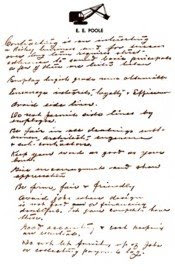
PCL Constructors' Poole's Rules, developed by founder Ernie Poole, codify simple ethical and business practice principals which have helped the employee-owned business to thrive and grow.

When can right and wrong be two sides of the same coin? When you discuss ethics and effective marketing principals in construction, you sometimes find opposite interpretations.

Yesterday, for example, I had a fascinating conversation with Ron Barrie, a retired senior project manager with PCL Constructors Canada Ltd., who recently received the Integrity and Ethics Award from the General Contractors Association of Ottawa (GCAO).

We discussed one of the major bones of contention between subs and general contractors, and general contractors and owners -- bid shopping, and when what could be perceived as bid shopping is actually the opposite: A genuine discussion about the scope of work.

Barrie said he frequently called subs after closing to confirm they had their scope of work correct. This would apply to subs whose bids seemed too low, and slightly higher bidding subs who he knew could do the job well.

Often, he says, the low bid sub, on realizing they had made a scope of work error, would withdraw from the competition. Sometimes the higher bidder would modify the bid recognizing that had overstated their work scope.

Barrie says most of his work before retirement had been on construction management rather than fixed price projects, allowing him to manage things more effectively and ensure a fair resolution for everyone. In this context, only qualified sub trades could get on the short list in the first place.

He added another point to this story, however. Sometimes, he said, a sub would run into problems on the job, often for reasons outside of the individual project. Technically, the GC and owner could throw the book at the sub, replace the trade and sometimes call on the bond.

But Barrie says the better solution, in consultation with the owner and other trades, often involved biting the bullet and providing extra financial support or resources to the sub to help out. The question, from a practical point, is whether the job would move forward better and at lower cost if a reasonable arrangement is made on site, rather than resorting to litigation, delays, and disputes.

Barrie says in great jobs the teamwork builds naturally and effectively. This leads to much happier working relationships -- and really satisfied clients. With the right team of like-minded sub trades and suppliers, in concert with the general contractor and owner, solutions are uncovered quickly and the project moves forward to a satisfactory conclusion.

Rouge elements still exist in the industry, he acknowledges, and some of them find their way into fixed price government-bid projects where the bidding authority is constrained by rules and therefore cannot easily weed them out. But they are few and far between.

Obviously, Barrie's award is well-earned, and the company he worked for has earned a reputation as one of the most successful general contractors in North America. PCL's Poole's Rules, to me, represent a solid model for business practices and processes for not only the construction industry, but any organization, and I believe the company's employee ownership model is well designed to encourage excellence and business sustainability.

The challenge for everyone in the industry when it comes to marketing is to remember that 80 per cent of your success arises from the work you do and the relationships you build on the job site with your associates and suppliers, and your clients. Nothing is stronger in building referrals and repeat business, and I know of no better source of leads than your network and connections built as you are working on projects.

In this environment, when someone tells you about future work, continuing maintenance opportunities, or other areas you could expand your business, you don't need to strain, struggle, or develop new strategies or systems -- your marketing flows naturally. As well, once your work is completed, your references are strong and your relationships are solid.

(Of course, it is wise -- in fact essential -- to develop methods to keep in touch with your clients and colleagues from earlier projects. Here, resources such as annual parties, seasonal or Christmas greeting cards, monthly newsletters, or friendly calls and emails are always helpful -- and will pay off in valuable leads and future business opportunities.)

Saturday, December 27, 2008

In Providenciales


We arrived at the High Country Club condo in Providenciales, Turks and Caicos, today. The days between Christmas and New Years of course are prime, peak season -- the anomalies of the Destination Club booking systems mean this is either a great bargain, or a great waste (depending on whether High Country Club can survive the real estate implosion/recession.)

Nevertheless, this Caribbean Island is close to our hearts -- we celebrated our honeymoon here 15 years ago, and visited again five years later, when Eric was a little less than two years old. (Now he is a strapping 11-year-old.)

I chose Provo for our honeymoon in part because of its obscurity -- and decided to use the visit to research the offshore financial industry. A Canadian tax lawyer, then associated with the Greater Ottawa Home Builders' Association, referred me to Richard Hape at British West Indies Trust to learn how offshore financial centres work. At the time, I published a general business newspaper for Ottawa, and figured the story about offshore finance would make good reading.

While we stayed at the Club Med on Provo, Hape's office was on one of the other islands, the capital, Grand Turk, requiring a local flight in a small plane. Hape, knowing my business is publishing but perhaps not appreciating I was there as a journalist rather than business owner wishing to dodge taxes, proceeded to explain things to me in a surprisingly candid interview.

"What we say on this island doesn't go outside," he said. "So, we'll prepare financial reports showing you are receiving a three per cent return on your investment, when you are really earning 15 per cent. You would declare your tax on the three per cent." In other words, Hape told me he would co-operate in cooking the books.

I wrote the story about the offshore financial industry and its shady practices for my business publication and enjoyed the sweet irony of claiming half the cost of my honeymoon as a legitimate business expense (after all, this is a story I could not get by phone -- and the primary costs of getting to and from Turks and Caicos, plus at least a couple nights accommodation, would be deductible expenses.)

Five years later, Vivian and I decided to return to the Turks, and I thought of looking up Richard Hape. He didn't return my phone calls. Perhaps this is because he was in Canada at the time, about to be captured in a sting operation by the Royal Canadian Mounted Police. With the co-operation of BWI police, his trust company offices were raided and information dug up to lay charges of drug and money laundering.

Hape took the case all the way to the Supreme Court of Canada (probably using some of his ill-gotten gains to pay for the lawyers). The judges ruled his conviction would stick, but declined the government's bid to seize further assets. I'm not sure how much time in jail he served.

There are ironies in life. When I married Vivian, the North American economy was digging out of a major recession. A couple of years before we married, I thought my then new business would fail; but had a moment of insight. "I'm responsible for myself, have my health, and will do whatever I can to make it right," I thought to myself. And with that attitude, i set out to do what needed to be done to restore the business. The maturity in solving the business issues also indicated to Vivian that indeed I was ready for marriage.

Now, another major recession is in the early stages. It may end in months, but more likely will last years. Crooks and con artists who lived high during the good times are discovering they can't hide any more -- as (alas) new con games are in the works; exploiting desperate people wondering how they will keep their businesses alive. Some people who had played tax dodging games during the good times are experiencing the double whammy -- their income has dried up as authorities are coming at them for back taxes. These stories happen again and again.

Life goes on. We'll retrace old steps, remember shared experiences, and discover new things during our week here. The basic rules of business (and life) are consistent, however.

Friday, December 12, 2008

Integrity


The stories this week out of Wall Street and Toronto about Bernard Madoff and Marc Dreier touch close to the heart of business. Wealthy, successful, incredibly intelligent people -- purportedly playing by the rules -- have been arrested and charged with serious criminal fraud offences and (formerly) wealthy investors in their schemes face extreme hardship and perhaps destitution.

Why?

What causes people with purportedly excellent reputations to turn out 'bad' (the individuals named here of course are considered innocent until proven guilty in a court of law), and why do people with wealth, intelligence, and capability fall for what are, in effect, scams?

I wish I had an answer, but expect we will find more stories of this sort as the economic recession deepens and problems patched up in an environment of growing wealth are exposed in declining markets. And some of these stories will touch closer than we like to the AEC community. (Note: I have no evidence or even a hint of wrongdoing anywhere within our community, so the previous remark is speculation, not fact.)

Some people are corrupt all along, putting up a show of integrity where, underneath the surface, they are true psychopaths. Others slip gently at first over the line, then fall deeper and deeper into the morass of crime. (And unless you are Mother Teressa, I suspect you've crossed the line at least a few times in your life, only to recover and return to respectability -- just avoiding the one step too far, where your integrity is compromised by the ongoing reality of your circumstances. Yes, you can interpret the previous remark autobiographically, but don't expect me to be totally clear about my transgressions in this public forum.)

Can you avoid being a victim of fraud? And can you decide where the point of stretching the truth just a little, goes beyond fair play and into the realm of dishonour? I won't give a perfect answer here, but offer some thoughts which you will observe are founded in common sense and Jewish values.

If it is too good to be true, it usually (but not always) is.
Beware of gifts from strangers (and exceptional gifts from friends) and beware of short term gain with long-term pain. If someone promises and seems to deliver amazingly good results, stand back and ask if the story is real. Sometimes of course really good stuff happens. Enjoy it.

Trappings are not substance.
Look at where things really are. I know you expect an investment advisor or bank to have a high class establishment, but when you are doing business with real business people, they will often operate in much more modest circumstances.

Know your stuff, and know how to assess people who know stuff you don't know.
That is quite a phrase, but you have a responsibility to not assume anything. I am not a medical doctor, for example, but certainly can research the norms of good health and potential problems -- and also assess whether the doctor is a good at diagnosing.

Put all your eggs in one basket, then remove some of them.
What I mean here is that you need to become great at your chosen field - your objective is to be truly at the peak of your profession, business, or craft -- but you then need to take a few 'eggs' out of that for your investments, and spread them around a little. This way, if something goes wrong in your primary space, you will feel hardship, but not destitution. You will live for another day.

I believe most people are good, most of the time. Most of us live within values of integrity, fair play, and humanity and respect, and share these values with our families, friends, and business associates. A few people are really bad, and a few people are perfect -- I'm neither. You may still be victims of crooks, even if you adapt the ideas expressed here, but I think your chances of victimization and (worse) destitution are much lower if you use some common sense and remember the basics.

Monday, November 17, 2008

The (marketing) cost of business sloth

Today, on the SMPS Listserve, I read three posts about a competing publication that touched close to home -- too close, in fact, because the posts came close to describing some of our own business practices a few years ago. (The competitor will not be named here -- under no circumstances should any business speak negatively of the opposition -- I didn't of course initiate these posts.)

Has anyone had a good or bad experience with (publication name deleted)? They recently approached one of my clients to do a story on one of their projects and assured them that they had created a special edition under a new business model for clients who don't share vendor lists. But when my client said it was okay for them to do the story, the magazine's people contacted the project manager for a vendor/sub list; when he wouldn't give it to them, they went directly to my client's client and requested it from them. My client is really upset and embarrassed that the magazine approached this important client without her knowledge or approval. She said she will never do business with them again. I wondered if this was an isolated problem or if other people have had similar experiences.
This message resulted in the following two postings, both naming the same publication:
My firm will not do business with (name of publication) at all anymore. We had similar experiences. They also contacted our confidential sub list and solicited advertisement on our behalf, even though we told them not to. I have had many unpleasant conversations with them.
and
We worked with them on a couple of corporate profiles, but they merged two of the publications where separate profiles were to appear and they didn't tell me. They just posted both profiles in the same publication. The profiles were written for completely different audiences and distributions, so I was very irate. Eventually I got our money back, but that was the last time we worked with them.

I recommend avoiding them.
Reading these observations, I think of any business which fails to understand the basics when is representatives go out into the marketplace and oversells, under-delivers, and manipulates people for short term gain. I'm haunted by our own previous business practices where, with a lack of management control and common-sense respect for clients and the community, we sometimes stretched ourselves beyond the point of rightfulness to manipulate the process. Sure, we got the sale, but we lost respect for ourselves and our place in the community.

How expensive is it to get things wrong? Consider this: The Society for Marketing Professional Services (SMPS) has more than 6,500 members in most major U.S. cities (and soon will have an Ontario chapter) and the members of this association are responsible for recommending and allocating the marketing budgets of the nation's largest and most successful architectural, engineering and construction businesses. Now anyone who had any doubts about the unnamed competitor, reading these observations, knows what to think about it and its proposals.

On the surface, this type of publicity is no good for us as well, because, gulp, we earn most of our revenue by publishing features about businesses and selling advertising to suppliers largely from lists provided by the featured businesses. But there are differences, and they are fundamental -- and we learned these lessons the hard way.
  • You never win long term by misrepresenting short term to get the sale. Ever.
  • You can sometimes manipulate the story by going around some one's back. But when you do, you will effectively stab yourself in your own back.
  • Conversely, you can achieve the seemingly impossible -- achieving co-operation where you would otherwise not expect it -- by playing fair, expressing creative and sincere generosity, and respecting everyone in the process; regardless of stature.
Clearly, you risk major long-term costs to your reputation and brand if you allow your sales practices to degenerate to the point that you invite and allow the type of negative word-of-mouth represented in the three listserve postings reproduced here. Thankfully, we learned our lesson.

Tuesday, September 30, 2008

More on Montes

Tim Klabunde in When an award is "pre-wired" outlines some ethical guidelines on when and how to handle bidding/RFP situations where you have an unfair advantage -- when does the advantage from great marketing/relationships step over the line and become something you should not touch?

Friday, August 15, 2008

Luck, timing or talent

Michael Fraser in a bnet.com posting asks this question: Would You Rather be Lucky, Timely or Good? The question is whether good fortune, persistence, or talent are essential to business success. The answer, most agree, is all have a place in the story.

Interestingly, the first comment describes the fact that in the gold rush, the entrepreneurs who made the real money were the people providing services to the gold miners. And this of course brings me back to that Colorado tourist attraction gold mine which operates a business where a heavy dose of spirituality and apparently genuine (but not overbearing) religious passion underlies its viability.

Stripping away specific religious interpretations, however, I think great business successes require a form of spirituality, framed in positive yet pragmatic perspectives. I'm sure there is some valid social science and psychological interpretations beneath this stuff, but I can see how, in my experience, strange and wonderful things have happened just at the right moment, when I was really ready for them. And these moments correlate with a combination of letting go, accepting, respecting the forces beyond our control, and accepting total personal responsibility for what happens.

The opposite story, I see, in the bitter and angry person who believes an evil force has set course to destroy her family's business. From my own experience, I know that bad guys exist in the business world -- many times putting on truly impressive shows as community leaders and successes. Most of the time, I believe these crooks and, for want of a better phrase, "business psychopaths" are brought down to earth, but equally I'm sure some never get caught. (Note, I am not an angel of perfection!)

As I listened to the victimized person's tirades, I sensed she had some real and valid axes to grind. But wait: In her own remarks, she provided clues to elements of genuine personal responsibility and causality for her own problems, which she brushed off as insignificant.

The next day, at a local industry event, I sat with an industry leader who, just a few years ago, participated in what I could have seen as a business-destroying (and unfair) conspiracy against my company. I didn't see the treatment accorded to my business then as just or fair -- and the person who led the conspiracy is still very much around, and continues (as far as I know) to be hostile to my company.

But I appreciated the difference in attitude from the 'victim' described above that defines my values. As things went from bad to worse, I could see some of the major mistakes I had made, and accepted the fact that, while I had been treated unfairly, I couldn't change the other people involved, but had to accept responsibility for my own decisions, and could change my own ways.

Now, enough time has passed, and most people involved in that conspiracy have accepted me back in their orbit as legitimately in business and therefore I could, in an off-the-record conversation, ask industry leader about the 'victim'. "Oh, she's a nutcase," he said. Then he told me about another business that appears to have been a real victim of a cruel and business-destroying fraud. "Could you write something about them?" he asked.

I had to decline -- it is deadly serious (and dangerous) for a publisher to take on a crook head-on in print or even a blog: The bad guys understand and know the laws regarding libel, often hire the best lawyers, and can bring you down to poverty so fast you won't know what hit you. (Thus validating the 'victim's story.) The key to success in dealing with these situations, of course, is to know the lay of the land, to be nimble, quick, responsible, and patient. Yes, you can do everything wrong and still have good luck -- and everything right, and still fail, consistently. But I've seen enough times how good luck sometimes happens just at the best and most unexpected times, and now more than ever believe the forces behind this good luck are in the realm of spirituality, not business. I believe in G-d.

Wednesday, May 21, 2008

Ethics and marketing -- some thoughts

If you are looking for a clear and obvious answer to the ethical issues in our industry, I won't be able to provide them (I am not that brilliant!) This image from an academic paper suggests some of the variables here -- but if you read the whole thing, you'll see how downright complex your choices really are.

In the previous post, one of our readers describes how, to ensure a successful low bid a co-operating vendor and purchasing agent (and some friendly 'competitors'), arrange higher competing bids to ensure compliance with multiple bid requirements and still ensure a profitable job. Similarly, if you read my "Seven tips for construction marketing success" (by request on the blog sidebar) you can read about a general contractor who conspires with a local hospital to "come in low" all the time -- with the mutual understanding that the scope of work is deliberately left vague enough to allow for profitable change orders. Both practices, of course, are blatantly unfair to competing bidders and could well be in violation of the law, especially anti-combines (or in Canada, Competition Act) laws.

Last November, the late Sonny Lykos addressed these issues in a blog comment:

In my opinion, deceptive practices can never be justified any more than when an employee steals from his employer, justifying the act by telling himself that he deserved the raise he didn’t receive.

And that’s the problem with far too many people, their cavalier attitude of rationalizing unethical acts to get what they want. We know what the GC wanted, being awarded the project. We don't know what the hospital administrators wanted, and obviously got. Either way, the agreed upon tactic is tacky!


Of course, we don't live in a perfect world and ideals of fair business practice are challenged every day by the competing demands of expediency, personal relationships, and (on a more positive ethical note) job quality/satisfaction. We all know that the low bid is not always -- or even often, the best -- except in purely commodity transactions where quality standards can be highly specified. So, arrangements to get around the bidding rules sometimes serve a higher ethical purpose. (Should you take the low bid and get a crappy job that will cost more in the long run, or work with a trusted supplier who does things properly, without question, and will fix problems without complaint or manipulative change orders.) But we are playing with fire here and the ground rules are shaky, indeed.

I'm facing many of these contradictory ethical issues in my writing, for example, on the bid shopping/peddling issue. I cannot disclose the intellectual foundation of the story, for example, in part because it would divulge or interfere with sensitive and important business relationships. And I know that I cannot attribute or publicly identify in any way the many people who are contributing to its substance -- including the people who have graciously responded to my survey, and my own network of personal contacts who have shared insights that usually don't find their way into the media. (No one issues a press release saying they are about to bid shop or peddle, of course!)

Here, I cannot wave a magic wand and tell you what is right, and what you should do. But I am certain that successful marketing is very much intertwined with ethical and sometimes legal dilemmas. We should, I think, strive to build our marketing/branding advantage, but equally, strive to be fair in our practices. Done right, I suppose, this has advantages in business practice and sustainability. In the real world community -- not that of public relations experts and photo opportunities -- people get to know who is who, and what is what, and behave and respond accordingly. Your (real) reputation for integrity I think, with some common-sense shrewdness and talent, will ensure your business survival no matter the economic environment or ethical practices (or mispractices) of your competitors.