Information and ideas for marketing and promoting your construction or construction-related business.
Discover your free Construction Marketing Ideas Email Newsletter

Wednesday, December 31, 2008

Your 12 New Years visions (not resolutions)

Last week, I observed that New Years resolutions are, well, a waste. We have an annual planning process and system, of course, but this is done in October. So the ideas here are really not new for the New Year; but they are timeless in their application. You can mix the month and year, and they'll still work fine.

January
If you value and respect your employees, suppliers and clients, you will succeed even in challenging conditions. This is not an argument in favor of becoming a push-over or for careless financial management; but you won't get far without respecting the people around you.

February
Encourage individuality, freedom, and work-life balance, but maintain your discipline and accountability (and expect it from everyone around you.) Regular, systematized meetings are essential. You'll soon enough catch game playing, miscues and misrepresentations.

March
Your brand is built on the overall experience that previous, current and potential clients have with your business. Your brand is trust and allows you pricing power. If you create a wonderful client experience, you'll succeed -- and that experience requires the support and participation of all of your employees and key contractors.

April
Your fastest way to find new business (if your brand is healthy) is to systematically connect and remind your previous clients about why they enjoy working with you. Follow up service/inspection and free maintenance calls are probably your least expensive and most effective marketing strategies.

May
Your business is your personality, and the personality of your employees. Do you speak like a robot with business cliches to your family and your friends; do you think your clients and employees want to hear the stuff out of the boring book, either? Example: "We deliver great client service."
Sure. Yawn. Can you tell a real story of some exceptional initiative where you really went beyond the norm. Better, will your client tell the story for you (the testimonial?)

June
Your business should be fun and you should as much as possible do what you enjoy and for which you have a passion. However, beware of salespeople playing to your emotions, your visions, your fears and your passions. Spend your time doing what you love; spend your money on the stuff you really need to do but don't like so much (and if possible select people to give the money who have the passion and competence for what they are doing.)

July
Connect and participate in relevant associations. In business-to-business (and consumer) markets, your best associations are the ones where your clients and potential clients are members. Put your best and most active contributions to these associations (time more than money) and you will reap the rewards -- in time.

August
If you are looking for "fast action" your best strategy is to revisit your current and previous clients for repeat/referral and additional business. A second-best solution is in-your-face canvassing and phoning (yuk). The latter approaches will work in certain circumstances but you either need a real thick skin or really good reason to pursue them.

September
You can't "rely" on referrals and repeat business to succeed. You need to plan and build the cultivation of these primary business development sources into your marketing processes. The good news is, if you have a solid base of previous clients (and in good times can get away with relying on repeat and referral business), your brand is healthy, so you simply need to cultivate and develop your marketing strategy to your clients. You won't need to reduce your prices, and you won't waste your time flailing about for business.

October
Use RFPs and leads services creatively. Public RFP and fee-based leads services can help you find business, but usually not directly. Sure, you can chase the public bids, and grind your pricing to the floor. However, in many cases, the opportunities are already wired. (You know you are on track if you find out stuff well before the information becomes available publicly through the leads services or RFPs). So where do the services and public opportunities help? They provide clues about what may be down the road -- and who may have future work -- and allow you to plan a forward thinking marketing strategy. See September.

November
Share. Be generous (more with your time and ideas than your cash, which you should preserve!) Remember networking success is not about what you take but what you give. You need to suspend your short term needs for long term gains when you are networking; by focusing on the needs of the people around you rather than your own interests, you will find results far beyond the short-term costs.

December
Read, learn, ask for help when you need it. You can email your questions to buckshon@cnrgp.com or use the forms on this blog to request the free bi-weekly Construction Marketing Ideas newsletter.

Tuesday, December 30, 2008

Is your brand fragile?

Wally Evans, Publisher of Pumps & Systems Magazine and President of Cahaba Media Group, which also publishes Construction Business Owner Magazine, says in a blog posting: Your brand is fragile . . . and temporary.

"Do you still think that a well established brand that leads in industry year after year is virtually impossible to destroy? Or is an unassailable competitor?, he writes. "Think again, and look at General Motors. The world has changed dramatically, and the concept of a "brand", while no less important than it used to be, is now a much more fragile thing."

Just a few years ago, Compaq, Circuit City, Lehman Brothers and Oldsmobile were household names. Today, they are gone. A few others such as AOL, Yahoo, Starbucks and Kodak that were industry flounders and once commanded dominant market share are teetering on the brink of irrelevance.

Why? In some cases, poor stewardship of the brand, or unforeseen industry disruptions or mergers are to blame. Often, it is because the company just sat still while others innovated. But there is also something at work here that is generational in nature. Americans today, especially those under 30, are much less loyal to brand than they used to be, and have a lot more choices than we used to. I think it is a good thing, and reflective of a vibrant, entrepreneurial economy. But it is also a warning to the big, dominant, older brands in any marketplace -- be good stewards of your brand, and don't ever stop promoting it.
I agree with much of what Evans says here. As a rule, if you are in the fortunate position to have a large business and successful brand, you can use many resources to maintain it -- and retain your innovative edge (you have the money for really thorough psychographic research, proper analysis, and careful planning). But I'm not sure that I agree that brands in the true sense are any more fragile than they always were.

If we define brand as trust -- the willingness of people to do business with you because they respect you will deliver what they expect (and more, in positive way), then the issue of brand failure is more the failure of trust on the part of the companies holding the previously successful brands.

And this also is good news for you if your reputation is solid, if (during good times) you could rely 100 per cent on referral and repeat business from a diverse group of clients. Things may be slowing now, but you can, and should, maintain your pricing, while designing effective and inexpensive marketing approaches to improve your business flow and stability. You aren't General Motors, thankfully.

I've set a permalink to Evans' blog.

Reader's question: What other things can I do to turn 'leads' into clients?

We are commercial and residential builder and things have slowed down tremendously. We have been in business only one year under this name, but were two companies that merged. Marketing is a new thing for this company and we are trying to find what works best. We have done a lot of trade shows this year that seemed to help, and have kept us going. Now the trade show season is slow (until spring) I have continued to mail my data base and email them, What other things can I do to turn these "leads" into clients?

Alisha Hale
Yukon Harbor LLC.

My response:

Alisha:

I looked at your website and sense you are doing much right. Referral programs, community association involvement, shows, and the like. So what can you do more, and better?

None of these suggestions, alas, will be a magic bullet. But maybe they will provide some clues (and you may be doing much of this already)..

1. Do you have a systematic free service call/checkup/fix up program for your clients? If so, you can schedule the visits during the slow period. This gets you into their houses and gives you a chance to build goodwill (especially if you fix things that need fixing.) It also gives you the opportunity to gently ask for referrals or receive invitations to do some additional work.


2. Have you polled your clients and established clearly their demographic, especially which media they read/view/which community groups they support, and the like. This may give you some clues about marketing strategies.

3. I don't see much of a personality or 'story' in your website; who are your company principals; can their faces, names, etc, go on the website; how did they get together and what is their background? And if you have live testimonials, let the world know them (and if you don't (but have earned them), collect them! They will help.

4. With roofing, sometimes opportunities are possible through a canvassing program if there are storms, etc, and insurance coverage is available. But my sense is this wouldn't be a great priority for you right now.

5. Unless you have established relationships where your brand is strong (and therefore you don't need to go to low price wins the job, I would not focus much on the commercial side of things -- too much price beating, and too much risk on payment/cash flow for the margins available.

6. You could contract with a consultant like Michael Stone who is geographically much closer to you than me. A little money spent on solid advice can go a lot further than flailing about with 'try this, try that' marketing.

One other thing I would explore with non-competitive peers (though industry associations/other markets, are strategies for winter works or winter initiatives.) There is seasonality in this business and you might simply need to budget for it.

In an email before granting permission to reproduce this response, Alisha wrote: "Thank you so much. We will get started on these ideas."

Please feel free to email your own questions to buckshon@cnrgp.com.

Monday, December 29, 2008

Doing business when others aren't

Can you find profitable clients and achieve useful business results in the quiet days of the Christmas holiday season? Sure, if you know what you want to do.

Most senior 'decision makers' never stop working -- their passion, interest, and drive in their business means they are always on the job, in some way or another. However, many of their employees are away -- and so, if you have good reason to initiate communication with someone senior and wish to avoid the gatekeeper, you might just get through a little more quickly.

But why would you want to do that? I mean, why would you find it necessary to 'get around' a gatekeeper. If your proposal, idea, vision, or objectives aren't so compelling that they would truly be relevant to the person you wish to reach, then should you waste his or her time? However, if you really believe in what you are offering, and wish to be just a little different (and possibly more successful), it never hurts to call during these quiet days.

If your market is consumers and home owners, of course, these days are more the time of retailers than construction businesses, unless of course you are on a sunny Caribbean island!

Sunday, December 28, 2008

Crooks and victims

Overlooking the Atlantic ocean, I think about how people are victimized by crooks, and how crooks go on to further success in their business. As I've grown older, I've seen some bad guys from earlier years resurface again and again, plying their shady practices, in different (yet surprisingly similar) guises, against new sets of victims -- many of whom, you would think, should know better.

Why does this happen? Why do so many white collar criminals end up going to the grave rich and -- if you are measuring success by surface trappings -- successful, despite the pain and hardship they cause others?

I can't entirely answer these questions to my satisfaction, but sense there is a correlation between successful conning and great marketing -- both rely on strong knowledge of emotional as well as practical relationships; and both rely on the ability to move people and decisions in the intended direction, either illicit or honorable.

This suggests that great marketers might learn a little from great con artists. Alternatively, we can look at the techniques of the great con artists and see how we can frame a marketing message to distance ourselves from the crooks.

How do con artists play their game?

  • They fit in and dress up to their role; whether it be the mega-successful executive, or down-to-earth bum.
  • They rely on affinities, relationships, and existing trust connections. Often they find primary victims (or colleagues, depending on intent) at the head of civic, church or community networks.
  • They play to the essential and core human emotions -- they answer your dreams and present an option that is both easy and believable. Instant wealth without effort (or long term security of wealth, without needing to watch things closely); weight loss without stress, relationships perfectly oriented and balanced, happiness, fun.
How can you avoid the cons?
  • The cliche, "If it is too good to be true, it usually is" is usually correct. Nevertheless, don't be afraid to take chances; just don't bet everything on the one sure thing if it involves handing over money or security on your current assets (if you are starting out in business for the first time, for example, you should find a way to do it with sweat, not money, equity.)
  • Watch out for major decisions at emotionally sensitive times -- you may hear what you want to hear and see what you want to see; rather than what is.
  • If you are responding to a word-of-mouth referral, satisfy yourself that the person (or people) referring you are not victims themselves.
How can we learn from the cons?
  • Skillfully respect and respond to emotional cues, and create an environment where word of mouth spreads. You'll build a great brand -- and business.
This article, How to Spot a Con Artist, from the North American Securities Administrators Association, is worthy of review.

Saturday, December 27, 2008

In Providenciales


We arrived at the High Country Club condo in Providenciales, Turks and Caicos, today. The days between Christmas and New Years of course are prime, peak season -- the anomalies of the Destination Club booking systems mean this is either a great bargain, or a great waste (depending on whether High Country Club can survive the real estate implosion/recession.)

Nevertheless, this Caribbean Island is close to our hearts -- we celebrated our honeymoon here 15 years ago, and visited again five years later, when Eric was a little less than two years old. (Now he is a strapping 11-year-old.)

I chose Provo for our honeymoon in part because of its obscurity -- and decided to use the visit to research the offshore financial industry. A Canadian tax lawyer, then associated with the Greater Ottawa Home Builders' Association, referred me to Richard Hape at British West Indies Trust to learn how offshore financial centres work. At the time, I published a general business newspaper for Ottawa, and figured the story about offshore finance would make good reading.

While we stayed at the Club Med on Provo, Hape's office was on one of the other islands, the capital, Grand Turk, requiring a local flight in a small plane. Hape, knowing my business is publishing but perhaps not appreciating I was there as a journalist rather than business owner wishing to dodge taxes, proceeded to explain things to me in a surprisingly candid interview.

"What we say on this island doesn't go outside," he said. "So, we'll prepare financial reports showing you are receiving a three per cent return on your investment, when you are really earning 15 per cent. You would declare your tax on the three per cent." In other words, Hape told me he would co-operate in cooking the books.

I wrote the story about the offshore financial industry and its shady practices for my business publication and enjoyed the sweet irony of claiming half the cost of my honeymoon as a legitimate business expense (after all, this is a story I could not get by phone -- and the primary costs of getting to and from Turks and Caicos, plus at least a couple nights accommodation, would be deductible expenses.)

Five years later, Vivian and I decided to return to the Turks, and I thought of looking up Richard Hape. He didn't return my phone calls. Perhaps this is because he was in Canada at the time, about to be captured in a sting operation by the Royal Canadian Mounted Police. With the co-operation of BWI police, his trust company offices were raided and information dug up to lay charges of drug and money laundering.

Hape took the case all the way to the Supreme Court of Canada (probably using some of his ill-gotten gains to pay for the lawyers). The judges ruled his conviction would stick, but declined the government's bid to seize further assets. I'm not sure how much time in jail he served.

There are ironies in life. When I married Vivian, the North American economy was digging out of a major recession. A couple of years before we married, I thought my then new business would fail; but had a moment of insight. "I'm responsible for myself, have my health, and will do whatever I can to make it right," I thought to myself. And with that attitude, i set out to do what needed to be done to restore the business. The maturity in solving the business issues also indicated to Vivian that indeed I was ready for marriage.

Now, another major recession is in the early stages. It may end in months, but more likely will last years. Crooks and con artists who lived high during the good times are discovering they can't hide any more -- as (alas) new con games are in the works; exploiting desperate people wondering how they will keep their businesses alive. Some people who had played tax dodging games during the good times are experiencing the double whammy -- their income has dried up as authorities are coming at them for back taxes. These stories happen again and again.

Life goes on. We'll retrace old steps, remember shared experiences, and discover new things during our week here. The basic rules of business (and life) are consistent, however.

Friday, December 26, 2008

The magic solution (maybe)

Bobby Darnell's recent blog entry, The Calm Before the Storm, is a reminder that you should be wary about anyone who promises quick fix solutions to your marketing challenges.

The bottom line is one does not suddenly become a successful marketer of their company any sooner than one decides to play golf in a manner that will impress a golf playing prospect. They both take time, skill and effort. He writes:

I was going to entitle this entry “Lose Weight! 30 Pounds In A Week, Guaranteed!”

It is pretty close to impossible to buy anything at a major grocery store without reading a similar headline near the check-out counter. Is it possible to lose 30 pounds in a week? Absolutely! I believe if I were to cut off my left leg, I would indeed be at least 30 pounds lighter but the repercussions would not be worth it.

The point is, there are no sure-fire, quick and long term ways to lose weight nor are there any sure-fire, quick and long term ways to build new business. For long term, successful and lasting results, they both take time and a steady effort.

I agree with Bobby, 80 per cent, but allow you the hope for some fast-acting answers if you have an established enthusiastic client base (multiple clients, not one or two dominating customers) and the ability/willingness to get in touch with your current and previous clients. In this case, some immediate communications may result in immediate work if you've done great work for them in the past (and thus, your brand is healthy). But you don't want to handle this stuff carelessly -- take your time to review your options, plan your strategy, and ensure you are on track before blasting away!

Thursday, December 25, 2008

To Boston and beyond

This morning, we fly to Boston, MA and overnight before continuing to Providenciales, Turks and Caicos. for a week's winter vacation.

The Boston area is home for consultant Mark Paskell, publisher of The Contractor Coaching Partnership Blog. Mark phoned me on Christmas Eve, sharing some observations about what works and what doesn't.

Good marketing, it turns out, revolves around some basics. Generally, residential contractors need to spend about five per cent of their annual gross revenues on marketing. This means, if you sell $1 million in services, you should be spending about $50,000 per year. This isn't a hard-and-fast number, of course, but gives you an idea of where you can get started, and where you should be heading.

Of course, the big question is how should you spend this money. Paskell, like me and many others promoting our services to the trades community, finds greatest value within the relevant associations. In his case, he is actively involved in the Boston chapter of the National Association of the Remodeling Industry (NARI). Through his relationships here, he has gotten to know many of the the most successful remodelers in the Northeast.

He shares my belief that, for remodelers, the best source of business indeed is referral and repeat clients (as you would expect) and that systematic initiatives through follow-up service to existing clients provide the best results.

He would like to develop a truly useful leads service. I'm a little skeptical about that idea -- the challenge is that anyone who gets into the leads business ultimately runs into the paradox of 'success'. If your leads are good enough and of great enough value to provide genuine opportunities to your lead clients, you will attract more and more contractor clients for the same number of leads -- perhaps increasing your profitability, but ultimately decreasing the value of the leads you provide.

We both agree that most contractors really are ill-equipped at marketing; and can benefit from coaching and solid advice. Accordingly, I certainly would recommend Mark's services especially if you are int he Boston area and northeastern States.

(My blog entry tomorrow will be delayed, probably. We need to be up extra early to catch a 5 a.m. flight to Charlotte, connecting right on to Providenciales. Once we are settled in, I'll share with you a tale of our honeymoon turned into business trip, built on a rather unusual interview with an offshore tax shelter dodger, who ended up arrested and charged with drug and money laundering offences in Canada -- and a case that made its way to the Canadian Supreme Court.)

Seasons Greetings

seassons greetings lantern
From the most recent issue of the Construction Marketing Ideas newsletter

As Christmas arrives and we prepare for the New Year, we remember 2008's tumultuous economic crisis, which may be the start of a long and painful recession.

Some say we should see things through a positive perspective and banish the bad news from our minds. I'm a firm believer in realism, and believe that you can adapt yourself to even the most difficult situations.

For example, yesterday, in reviewing our newspapers January issue proofs, I noticed the first word of a headline: "Negative".

"We've got to take that negative out," I told our editor. Digging into my writers' mental toolbox, I found an alliterative option, "Flagging" -- appropriate because the story is about how our company paid $400 to help a contractor put an Ottawa Senators hockey logo flag on a crane at a local school project.

When things are tough, does it make sense to spend money on custom-made flags? Absolutely. Marketing that connects you to your clients and your community is always a wise investment, especially in an environment where you cannot rely passively on referrals and repeat business.

When you think creatively, you can find opportunities all around you. Focus your marketing on your previous and current clients, and the communities where they connect (like relevant associations), and you'll find you can attract and retain business even when things look gloomy elsewhere.

Best wishes for the Holiday Season and Happy New Year!

Mark Buckshon
1950s
President
Construction News and Report Group of Companies
P.S. You will find value in reading this article, The Death of Salesmen, which reminds us that one of the least wise marketing decisions you can make is to try to win business by lowering your price. It also shows how flawed Internet marketing practices can harm your credibility and effectiveness.

Wednesday, December 24, 2008

Resolution time (not)

As we prepare for the Christmas break, you are probably reflecting on the past year, and thinking about the future. You may even be thinking about New Years resolutions.

Yesterday, at our modest Ottawa employee Christmas lunch, colleagues discussed the idea of resolutions and one of our employees, who like me takes personal fitness seriously, remarked that come January 1, we'll see the gym filled with out-of-shape people trying to lose weight and become 'healthy'. And we'll know that most of the gym visitors will disappear by the end of the month.

In a similar manner, I've noticed that business projects initiated shortly before Christmas with planned implementation in early January usually fizzle pretty quickly. They may be good ideas, or not, but they attain greater theoretical weight because of the long time between discussion and the first available opportunity to put them into work.

This is in part because the Christmas season in our business is unlike any other time of the year. From now, through January 5, we are virtually shut down. Sure, things can slow down in the summer and periodically for public holidays at other times in the year, but nothing quite equals the 10 days or so beginning yesterday and ending the first monday after New Years.

I'll take this time to work on finishing the first draft of my book on Construction Marketing, and our family will be on vacation for nine days commencing Boxing Day.

You'll still see the blog during the vacation, with allowance for a few days where travel/schedule doesn't allow -- in fact the entries may increase in frequency when, with time on hand and laptop in front of me, I can write freely.

But if you are expecting me to bravely announce new projects to 'start' in January, or (worse) to declare resolutions, you should know that I find January to be the most frustrating time of the year at the gym. The place is too crowded and full of people who could, if they really wanted to make improvements in their lives, achieved much more by getting to work on their concerns in November or December.

Monday, December 22, 2008

The death of salesmen?

This thread, "The Death of Salesmen?" on the JLC Online forum, is a fascinating discussion about pricing, marketing, and Internet forum skepticism. Rick Ritivoy starts it with this post (I've edited a little here to get around a run-on paragraph):
I’ve read through some of the threads and posts and the one that got to me was all the chatter about PRICE. Should it be lower, higher more detailed etc. I’m fascinated that the only solution to a downturn in your business is “Should I lower price?” Should I go back and rebid lower? No one has said that maybe its time to get some sales training and do a better job with the opportunities that they get.

Balderdash man. For the love of God sniffling about the economy must stop. To prove a point I contacted a local company that remodels bathrooms. They gave me eight leads that called in and I sold six of them, five on the first visit at higher margins than the company expected. They are booked through Feb now and I’m a rock star.

Were things so good that all of America forgot that products and services need to be sold. Detailed pricing and scopes of work left on the table to fend for themselves against the others piled on is a race to the bottom waiting for the starting gun. Shouldn't the answer to lost projects be better sales skills not lower prices?

If all it took was a low price one place could sell everything and there would be no need for salespeople at all. There are three things that almost always sound the alarm of the failure of a business.

One thing is declining gross margin. Gross margin only goes down because your selling price is too low relative to your cost. The second condition is wages, as a percentage of sales, increasing. And the third condition, surprisingly, is sales volume increase.

Now, a lot of people say how can that be? Well, to put it simply, when a business gets into trouble, and let’s talk about trouble in a business. Trouble comes when you can’t pay your bills. When you can’t pay your bills, you need some cash. Now, to get some cash, we’ve got to sell something. How to sell something, “let’s cut the price.” and invariably they cut the price, but they didn’t cut your cost because when you cut prices, you don’t cut the cost, you just cut the selling price. Your costs are still there. So, your gross margin has gone down.

Now, when you cut price, did you cut payroll? No. If you cut price 2%, 10%--pick a number--do you cut wages of everyone that works there 2% or 10%? No. So, wages as a percentage of sales go up and consequently you will probably sell a little more and have some sales volume increase, but your margin hasn’t gone down, your wages as a percent of sales has gone up, your sales volume is going up and your company almost assuredly is going broke.

Great sales skills equal better margins. Isn't lost projects a sales problem?
Sounds reasonable enough, and readers of this blog know that the one piece of advice I constantly make in the recessionary environment is that price-cutting may be a recipe for business suicide. You can, in fact, in many cases, raise your prices if you think carefully and your brand/relationships and marketing are in a healthy stage.

But when you read through this thread, you'll find over five pages not all of the JLC Online readers are buying Rick's story. They suggest he might be exaggerating his numbers and making excessive claims. Further postings suggest these rather negative observations are overstated and that Rick may indeed offer real insights.

Then, again, I checked his website and yellow warning flags went up, loudly. His web page uses the online marketing tricks, to claim: "

"Secrets of a Successful Remodeler..."

...How to grow your company by 30% in a down market!"

I can see why some forum participants are skeptical. Loud claims of secret solutions (if you pay) ring not so true in this era of openness and sharing. I haven't read his materials, but suspect -- reading between the lines -- that Rick is advocating a variation of a theme I've repeated here several times: Your best business will come from connecting/relating to current and former clients -- and variations of the free inspection or service call to former clients can produce more return on time/investment than any other form of residential marketing I know about.

Rick still gets a free hyperlink from me and if he wishes to provide a review copy of his material/system, I'll be glad to share it with you.

And, yes, you really need to get away from thinking "lowering your price" is the solution to recession challenges. Think marketing, think relationships, and think value, and think Wal-Mart (not!). Don't "roll back" your prices -- Roll them up, and up some more (but always deliver real value).

Saturday, December 20, 2008

Reading and writing

Yeah, I read a lot. This is a picture of just part of my personal library. If you enjoy reading -- and writing -- you have a powerful competitive advantage. You should put these skill and interests to work for your business.

Most readers of this blog will not need or want to read as much as I do. After all, you are unlikely to consider writing as your trade. Then again, if you are reading these pages routinely, you know the value and power of the written word. Even as electronic and visual media have increasing role -- and accessibility -- in marketing, you can still absorb more information, sustainably, with words than with other media. (Obviously visuals can appeal to your emotions, and provide great demonstrations, but words still communicate abstract ideas and thoughts most powerfully.)

In fact, if you are an architectural, engineering or construction professional or trades person, if you are a reader, you have a powerful competitive advantage if you can convert your reading into writing. Succinct and informative articles in relevant trade journals and publications create credibility and relationships; both in writing them (your research opens the door for contacts you would not otherwise achieve) and in the distribution achieved to your readers.

Original, informative and educational content on your website will, of course be more powerful and effective for readers than the traditional platitudes and brochure-type imagery -- and if you update your site frequently with this original content, your search engine rankings may soar.

Finally, you might dare to tackle the biggest writing challenge -- the book. Earlier this year, I set a goal to have the first draft of my first book (naturally, the topic is construction marketing) ready by Christmas, and I'm on track to achieving the goal. Every day I set the alarm for 5 a.m., and complete about two hours writing and editing before everyone else awakens.

If you want to write a book, of course, you need to learn new skills and have patience and organization for a long-term project. Writing coach Cindy Shearer helped out at the start -- now the editing task passes to my wife, Vivian. As things progress, I expect the edited draft will be ready for layout and pre-press production at the end of January 2009, and then the manuscript will go to the online print-on-demand service. (Since my business is publishing, I'll self-publish this title -- using the wholesale print-on-demand service which allows for truly reasonable production costs (but you need to have qualified people familiar with the process of preparing and designing printed materials available to use this printer -- it isn't for amateurs.)

One great thing about effective writing is you can often recycle the same material in different formats and environments, allowing you to multiply your marketing impact for the same effort.

If you can/enjoy writing, do it.

The Brooks Act -- who you know and what you know


One of this blog's readers sent me an email with a simple question: "Do you know about the Brooks Act?" It is perhaps the most important element in considering who wins architectural and engineering projects at the federal level -- and in many states -- and creates a major barrier to entry for outsiders, and a real competitive advantage and power-base for design firms with solid Washington connections and relationships.

I discovered this 'old' (2002) reference to the Brooks Act on the American Society of Civil Engineers site. If you are thinking of competing for federal work as new infrastructure funds are available, read it carefully.

Brooks A/E Act Turns 30

This week marks the 30th Anniversary of the Brooks A/E Act, mandating the use of Qualifications Based Selection (QBS) for federal procurement of A/E design services. Rep. Jack Brooks (D-TX) introduced the Architect-Engineer Selection Act after a GAO report pointed out that there was no statutory basis for use of the QBS method of selection. The bill was signed into law on October 27, 1972 (Public Law 92-582).

Congress later expanded the act to include surveying and mapping as well as architecture and engineering services. Since 1972 the QBS method of procurement has been extended to include highway, mass transit and airport grant programs as well as prime and subcontracts under the Superfund program. In 1988, Congress amended the Brooks Act and supplied a new definition of covered services.

The Brooks Act has set the model for procurement acts in over 35 states as well as the ABA Model Procurement Code for State and Local Government.
So what does that tell you?:

You are not going to walk in the door and pick up Washington business unless you know -- and have relationships -- there.

Say as an outsider you submit a bid; you might have the lowest price because your cost structures are really under control -- or you are simply desperate to win the work. Your bid will be passed over for the design firm or contractor with a solid work experience and credentials, and these subjective measures will be strongly influenced by personal relationships and experience between the design professional or contractor and government officials -- in other words, they will almost inevitably select incumbents they like, over strangers they don't know.

With several years experience in the Washington, D.C marketplace (I broke the 'rules' and as a Canadian started Washington Construction News in 2000 -- the former print publication has evolved to become The Design and Construction Report), I've seen how insiders get the business, and outsiders wonder why they lose -- and how insiders in one element can be outsiders in others. Take one contractor who almost always wins certain military contracts, but can never get any business at the Post Office. "The building designs and standards are virtually the same," the contractor told me as we drove around Washington's suburbs. "But we can't get our foot in the door."

So, how do you break in and get this work?
  1. You should waste no time establishing relationships with AEC firms connected already in the Washington area. Here, your membership in local Society for Marketing Professional Services or relevant trade association chapters may be helpful. You'll learn which members are already established in Washington, and can begin building your connections with them. This is vitally important in gathering intelligence and connections for opportunities where local procurement is possible
  2. If you have lots of money, and know your way around, you could buy or joint venture with an established AEC firm/consultant serving the DC area. Their value has risen in recent weeks, of course, so be prepared to pay. Alternatively, you could hire (at some cost) key people with knowledge of the local industry.
  3. In your local market, get to know the movers and shakers within the federal system; then connect the dots and find out which companies have established relationships, and figure out a way to connect the dots. One Florida based architect, for example, won a major design project after receiving a call from "Washington" -- then used local knowledge and skill to capture and exploit the opportunity.
  4. Naturally, you should be wary of scams -- some consultants will purport to have Washington connections which are more flim-flam than substance.
(Blatant sales message to follow . . .)

You may find value in participating in The Design and Construction Network (http://mydcn.com) and promoting your business through the Design and Construction Report. The DCR evolved out of relationships established in the Washington, D.C. area and the network traces its roots and home base to the national capital area. You may find the connections you need to build or enhance relationships for federal government work both in the D.C. area and your own region through connnections developed here.

Friday, December 19, 2008

AGC: Lets build America's future


The Associated General Contractors (AGC) is co-ordinating a lobbying campaign to encourage infrastructure development. Not surprisingly, I hope all blog readers will respond to support this initiative, and hyperlink it and email references to encourage further support.

Here is the announcement:

AGC launched a new national effort to ensure that Congress and the President-elect understand the vital need for investing in all components of infrastructure as part of the pending stimulus package. The centerpiece of this effort is, frankly, you. As you will see from the advertisement below, AGC is encouraging people to sign up to indicate their support for badly needed new investments in water and wastewater infrastructure, transportation and schools and public buildings. AGC will share this list with members of Congress when they return to work on January 6th, and also will provide it to the President-elect’s transition team.

We need your help in ensuring that the full breadth and depth of our support is reflected in this list. So I am asking each of you, please, to reach out to your employees, your suppliers, your subcontractors your local government and business community leaders. Encourage them to log on to www.agc.org/letsbuild and sign up. So far, we have collected more than 1,000 names, and with your help spreading the word, we can make sure Congress and the new Administration understand the value and wisdom of new infrastructure investments.

With more than 770,000 construction workers out of work over the last two years, our sector has been one of the hardest hit by the country’s financial challenges. With your help we can make sure our members are put back to work now, building America’s future. After all, the infrastructure projects our members build will not only put people back to work, they will serve as a crucial foundation for future economic growth.

To join the campaign, visit www.agc.org/letsbuild. For more information, contact Brian Turmail at (703) 837-5310 or turmailb@agc.org.

Thursday, December 18, 2008

The big chill

I'm reading a rather gruesome crime biography about Joseph Silver, who trolled eastern Europe, Britain, the U.S. and South Africa with a medley of horrendous crimes in the late 19th and early 20th century.

Charles Van Onselen in The Fox and the Flies: The secret life of a grotesque master criminal suggests that Silver may have been Jack the Ripper, who terrorized London in the late 1800s. This is not a book to read if you adhere to the "think only positive thoughts" mind-set, especially when you read that Silver may have found his way to crime and brutality during a 16-year economic depression.

If you think the 30s were bad, go back to the 1880s -- and if you think the world might have been more innocent then, you will find the grinding poverty, prostitution, and evility existed as much then as you read about now -- in fact, this book makes me think we live in a time of unparallelled health and prosperity.

So why read, and describe in this blog, such negative stuff now? We need to put things into perspective and understand that humankind (and economies) do not progress in a straight line up. If you look back in history, you'll see plenty of times of despair, hopelessness, and struggle -- and the seeds of progress and rejuvenation even in these hard times.

We've been fortunate to avoid a really hard and long recession since the early 1990s. Compatriots with similarly greying hair think the road ahead will be extremely rough. Some businesses will sail through the tough times -- they are well capitalized, do not have any debt, and have loads of cash and recurring income streams so they need not worry.

Others (and I think mine fits into this category) will have some really rocky spells; we will sometimes have to make hard decisions, but if we use the common sense and simple business practices developed over the years, we should be able to make it through -- and even thrive.

A third group of businesses will fail. These fit into two categories. The first are businesses started near the latter part of the boom and over-leveraged with debt and high costs (and lacking experience in hard times). The second are businesses which have become complacent, allowed incompetency and vanity to override business sense, and in the process lost their capacity to survive.

An example of the type of business is a building supply company which failed in the early 1990s recession. They advertised on Page 1 of my Ottawa newspaper, month after month, regardless of their cash flow, but payments for their account grew erratic. Then I received a court notice that the company had filed for bankruptcy reorganization. It continued in business following reorganization, and the ads continued to run.

But i sensed something just wasn't quite right -- the person I dealt with just didn't seem to have the competence and ability to run the business; he had been there for many years, it seemed, and the owner didn't want to dismiss him. The advertising payments slowed. I showed up at the office. The owner told me he would be filing for bankruptcy again the next day and I could, if I wish, pick out whatever I wanted from the store to settle the account. (Yes, this is in violation of preference rules, but since more than 15 years have passed, I feel I can safely report it.)

I picked up some power drills, a shop vac, and a solid aluminum ladder, carefully calculating the retail price against the advertising invoices owed (maybe I'm just a little too honest -- I could have taken anything I wanted, and they didn't care.) My car loaded with the stuff of preferential creditor status (or maybe just astute timing), I drove home to muse on the ironies and challenges of business. Today, the drills and other stuff are long gone, but we still use the well-made ladder.

If you are reading this blog, you probably are not in the category of the building supply dealer who allowed incompetent management to continue, draining the business wealth. And I trust none of you are criminals, or thieves, or dishonest players. You are smart, and you have integrity. You know not everyone around you has the same values or intelligence. You have choices, options, and alternatives. But you cannot ignore the world around you and the fact that hard times have happened in the past, and will happen in the future.

Be prepared. You will make it through.

Wednesday, December 17, 2008

Time wasting (not)


I really like Mel Lester's posting: Don't waste the client's time! Mel addresses one of the biggest problems of conventional sales practice: The yukky, thoughtless, bothering of 'decision makers' for products, services and ideas that are utterly irrelevant or useless -- and for which no amount of 'time' is going to change the picture.

In part, of course, this is the 80/20 rule in practice -- your best clients will take little time, and you won't find it too stressful, because they know what you want, trust you, and are able to support the decision to move forward without much delay. Then there are all the rest. And here the paradox of diminishing return becomes relevant.

Here is a good example, from a current business project.

A couple of months ago, I received a call inviting me to propose a quotation for a new renovation magazine for Ottawa. The reference point: The chair of the Greater Ottawa Home Builders' Association Renovators Council. The council needed to follow through with a public invitation to bid, but I sensed the job would be wired in my favour.

So I made one call, and the person I called made another, and that person made another, and soon, we had our team formed -- competent people within their areas of expertise, believing the idea would work, and committed to excellence. Needless to say, we won the bid.

Then the sales team set out to work, and as we hoped (but could not be sure in advance), they found significant interest from key, relevant businesses they knew and understood would be interested. Soon, the sales had reached the point that we knew we have a viable publication.

But, with primary contacts exhausted, and 'easy sales' gone, now the slog begins. Calling on people who are mildly or not interested, who need to 'think about' a small purchase, who waffle, change their minds, and are uncertain.

"Dropping by" handing out fliers, sending repeat (third time around) emails, and so on, all producing limited results for a great amount of effort.

Should the sales team have stopped when they had reached the end of the easy stuff. Well, not really, in this case. Our business model calls for a reasonable sales commission for every sale, but the partnership group shares in any profit once break-even is achieved, and in the print world, profits can be truly great past break-even. So, even though the late-stage sales work is stressful, slogging, and painful, the return on time spent is high enough for the late, tough, stuff.

Would I base my sales model on this hard-rock approach (or do the work myself?) No, but I can see why the sales team directly involved in the project is willing to go the extra mile, and put in the extra effort, for these last, small, hard sales. They make a whole lot more money on them.

The Google keyword tool


The Google Adwords Keyword Tool is a useful resource in defining your online marketing, both directly in determining which key words you should use for your Google paid advertising and, more importantly, understanding which search terms result in inquiries, and how many arise.

For example, I keyed "construction marketing" and discovered that last month 8,100 searches used these words (a significant increase from the average of just above 5,000.)

The tool offered insights into 'traffic' for other related keyword combinations, ranging from an indication that "marketing construction services" attracted 320 inquiries last month, to "marketing to construction" on average attracts 58 inquiries in a month.

The tool also you to enter a web page URL to find keywords related to the content on the page. Here we find "small business" attracted a whopping 3,350,000 search inquires last month (a big jump from the norm) and "construction job" attracted a million inquiries. Not surprisingly, if you use these high demand keywords you will pay a small fortune for an effective campaign -- I tested out one option, and found if I were to pay for the words for top billing, I would need a budget of about $4,000 a day -- for one keyword combination.

On the other hand, you can use this tool to narrow your focus; your goal is to find search terms relevant to your business, with reasonably high visitors, and reasonably low competition. Of course, you can get obsessed with this stuff and forget what really matters -- the quality AND quantity of response. Designing your site so it contains lots of relevant content that truly matches the keywords you expect people will seek in learning about your business, and building a site so good that it attracts back links and repeat businesses, will do a whole lot more for than simply analyzing the keywords.

And yes, this posting will (legitimately) boost keyword relevance for the words that matter here.

(Thanks to Tinner666 at contractortalk.com for the tip that leads to this posting.)

Tuesday, December 16, 2008

The competitive challenge

Las Vegas architect Craig Galati in his The Heart of Business Blog reports how intense competition has become recently in the U.S.

My firm recently responded to a request for qualifications to provide architectural design services for a library addition and renovation project in a small rural town. The project is approximately 10,000 s.f., a small project by most standards. The library district received thirty-five submittals for the project. Thirty-five submittals for this small project!

In my subsequent discussion with District staff, I was told that the District had hoped to receive 5-10 submittals. As if I needed more evidence, this is clear proof of current economic conditions — the competition is heating up.

How do you battle and win in this enviornment: You need to build relationships, he says, and you need to play by the rules. And you need to be creative, different, and be prepared to take some risks.

I have found that during slower economic times, there are always great innovative breakthroughs. Perhaps by looking critically at what your firm is doing, you can find an innovative strategy. Many firms get complacent during good times. Perhaps increased competition will get them to start thinking creatively again and take some risks. A friend of mine told me about a recent interview in which Tom Peters states that most people waste their money coming to see him: that in an audience of 500, “there are (only) four who are on the verge of doing something really interesting, whether inside or outside the company.” What are you doing that would be of interest to your potential clients?

This is solid advice. Still, I'm thankful that my U.S. relationships (and market) are in the Washington, D.C. metro area rather than Las Vegas, these days. If I'm going to go overboard in puns, if I wish to place a bet, it would be on the Government -- at least until the economic cycle rebounds.

The rough road ahead: How to prepare

Here is this month's Publisher's Viewpoint, published in Ontario Construction Report

How rough will the economic road ahead be?

I would like to say we will escape the worldwide recession lightly, but think we should all appreciate this economic downturn will challenge all of our assumptions and expectations. If you are older, you know that recessions can sometimes be deep and long (as the 1990s recession progressed, some were starting to use the 'depression' word to describe the frustrations of working through several years of hard times). And since we've escaped really hard times for the past couple of decades, we may have to work through a really difficult house-cleaning in the economic cycle this time around.

Certainly, things are getting rough in parts of the U.S. Our North Carolina publisher Bob Kruhm reports extremely challenging times there – even though North Carolina avoided the worst excesses of the high-risk mortgage funding scandal that represented the tipping point for this economic cycle. For a while, it seemed, North Carolina defied gravity – as other southern states went into a slump, North Carolina continued to thrive. Not any more.

I've been receiving emails from as far away as the United Kingdom and Australia, as construction businesses used to many years of success suddenly find themselves in uncharted, difficult waters. They've been visiting my Construction Marketing Ideas blog, looking for answers to the questions that threaten their business survival. Most have relied on the booming market, coupled with repeat and referral business, to grow – now their clients, suffering, aren't buying anything, and they are struggling with the real world of competing against many players for a much smaller business pie.

Is this perspective excessively gloomy? Well, I think there are few things you could do that would be dumber than ignoring the signals around you. You need to plan for hard times, and prepare, and develop a new, pro-active and creative approach to marketing and promoting your business. If you've been relying on the 'old things' then you may be in for a rude awakening – and you may make mistakes as you desperately seek out new business to fill the holes in your order book.

What can we learn from businesses which have survived hard times and continue to be viable?

The best answers, it seems, come from a combination of creativity, solid client relationships (you want to make sure your current and former clients stay with you) and effective, thoughtful, marketing. You certainly don't want to chase blindly 'bidding opportunities' outside your of your core relationships (competence is important, but who you know in some cases is even more important). When the Society for Marketing Professional Services (SMPS) Ontario chapter is established in the next few months, you should join. (In fact, I would argue you should join SMPS now, even before the chapter is established, to build your AEC marketing network and contacts.)

Yes, the next few years will test your skills and abilities, and you will probably find many days when you feel you are being kicked when you are down. The platitude: “Don't worry, it will get better” doesn't help much – in fact it could hurt if you decide to simply do nothing. But you can get through the economic storm by remembering your values, by focusing on your competencies, and by learning how to market yourself and your business effectively. And that is why we are here.

Mark Buckshon is president of the Construction News and Report Group of Companies, which publishes construction industry publications in several Canadian and U.S. cities. He can be reached by email at buckshon@cnrgp.com or by phone at 888-432-3555 ext 224.

Monday, December 15, 2008

Your fast fix

Your single most effective way to find new business in tough times is to look to your current and previous clients for additional and/or maintenance work, and the single most effective way you can sell anything is to solve an immediate problem, or show tangible and fast cost savings for your clients.

Why? Because you can gain access, quickly, and you know what to look for.

Your best way to get in the door: Offer a free inspection and touch/up maintenance service. Yes, it will cost you some money and time -- but is that time better spent chasing long shot bids and preparing complex estimates for jobs which are, if they will happen at all, wired for a competitor who already has an inside track.

Sunday, December 14, 2008

Recession pricing

Here are some recession-smart approaches to increasing your marketing effectiveness, while controlling your costs.

Consider co-op advertising support
Many of your suppliers will help you out on your marketing costs if you are using their products/services. They may provide brochures, printed materials, or (even better) subsidize portions of your paid advertising in other media. They have good reason to do this: If you sell more of their products/services, they'll get more business. They may be able to also suggest where they've seen good marketing results in various media; saving you some trial and error costs.

Consider bartering or contra-trade, where appropriate
While cash is always king, and thus I am not really in favour of participating in organized barter exchanges or groups, direct trade makes sense when both parties to the transaction can benefit and the hard costs involved are low. As an example, we frequently trade advertising space for relevant trade show booths -- the trade show obtains valuable publicity, and we gain access to the show without draining our budgets (this is especially useful for our business because the other exhibitors, of course, can be future clients.) Recently, we noticed an advertisement for a local hotel seeking to promote itself as a spot to be used by contractors and construction crews. We have an employee who must visit the city every two weeks and stay in hotel. Not surprisingly, the hotel can see some value in exchanging space in one of its rooms for advertising in our publication; and we are happy to save the cash cost of the hotel rooms.

Encourage competition among your suppliers
Loyalty and respect are fine, but if another business can provide the same service at and quality at lower cost, should you not find the savings? your existing suppliers have choices in this situation: They can sharpen their pencils and reduce their prices, or create enough value-added services that you are ready to pay more (because you are receiving more value).

Raise, don't lower, your prices
This one is counter intuitive but you can often get more money for the same amount of work by ensuring you are delivering great value and service; often, even in the current environment, you may be underpricing some of your products and services. If you can raise your prices while your costs decline, you may be able to offset lower sales volumes with higher margins, and thus retain your profitability.

Friday, December 12, 2008

Integrity


The stories this week out of Wall Street and Toronto about Bernard Madoff and Marc Dreier touch close to the heart of business. Wealthy, successful, incredibly intelligent people -- purportedly playing by the rules -- have been arrested and charged with serious criminal fraud offences and (formerly) wealthy investors in their schemes face extreme hardship and perhaps destitution.

Why?

What causes people with purportedly excellent reputations to turn out 'bad' (the individuals named here of course are considered innocent until proven guilty in a court of law), and why do people with wealth, intelligence, and capability fall for what are, in effect, scams?

I wish I had an answer, but expect we will find more stories of this sort as the economic recession deepens and problems patched up in an environment of growing wealth are exposed in declining markets. And some of these stories will touch closer than we like to the AEC community. (Note: I have no evidence or even a hint of wrongdoing anywhere within our community, so the previous remark is speculation, not fact.)

Some people are corrupt all along, putting up a show of integrity where, underneath the surface, they are true psychopaths. Others slip gently at first over the line, then fall deeper and deeper into the morass of crime. (And unless you are Mother Teressa, I suspect you've crossed the line at least a few times in your life, only to recover and return to respectability -- just avoiding the one step too far, where your integrity is compromised by the ongoing reality of your circumstances. Yes, you can interpret the previous remark autobiographically, but don't expect me to be totally clear about my transgressions in this public forum.)

Can you avoid being a victim of fraud? And can you decide where the point of stretching the truth just a little, goes beyond fair play and into the realm of dishonour? I won't give a perfect answer here, but offer some thoughts which you will observe are founded in common sense and Jewish values.

If it is too good to be true, it usually (but not always) is.
Beware of gifts from strangers (and exceptional gifts from friends) and beware of short term gain with long-term pain. If someone promises and seems to deliver amazingly good results, stand back and ask if the story is real. Sometimes of course really good stuff happens. Enjoy it.

Trappings are not substance.
Look at where things really are. I know you expect an investment advisor or bank to have a high class establishment, but when you are doing business with real business people, they will often operate in much more modest circumstances.

Know your stuff, and know how to assess people who know stuff you don't know.
That is quite a phrase, but you have a responsibility to not assume anything. I am not a medical doctor, for example, but certainly can research the norms of good health and potential problems -- and also assess whether the doctor is a good at diagnosing.

Put all your eggs in one basket, then remove some of them.
What I mean here is that you need to become great at your chosen field - your objective is to be truly at the peak of your profession, business, or craft -- but you then need to take a few 'eggs' out of that for your investments, and spread them around a little. This way, if something goes wrong in your primary space, you will feel hardship, but not destitution. You will live for another day.

I believe most people are good, most of the time. Most of us live within values of integrity, fair play, and humanity and respect, and share these values with our families, friends, and business associates. A few people are really bad, and a few people are perfect -- I'm neither. You may still be victims of crooks, even if you adapt the ideas expressed here, but I think your chances of victimization and (worse) destitution are much lower if you use some common sense and remember the basics.

Publicity, recognition and awards

Awards and recognition competitions can be truly effective in promoting and marketing your business. The best competitions will, if successful, provide you recognition among your potential clients.

The Ontario Construction Report's Readers' Choice Awards is an excellent example of a competition worthy of entering. One nominee called me earlier in the week, expressing concern. "Is there any cost associated with this -- either to be nominated or if we win?" he asked.

"There is absolutely no charge or fee involved," I responded.

Some competitions, especially ones co-ordinated by associations and business groups, charge modest entry fees (they also often earn significant revenue from awards dinners and banquets). These competitions are usually worth entering.

A third group of "Awards" are operated by commercial businesses who earn revenue by structuring the competition so that the businesses which pay the substantial fees for 'entering' generally win the competition. Some structure their affairs so that you learn that you have been nominated, but you cannot share the news or announce your success without paying the high fees.

Obviously, I don't think much of the latter type of award but I see many businesses proudly proclaim their victory. And I suppose, if you budget it as a marketing expense, and can control the fact that you know you are going to win in advance, the cost may be justifiable as an advertising expense.

But our Readers' Choice Awards -- and many similar competitions -- are very different. You win if you earn your victory by the number of votes you receive (or if it is a judged competition, you convince the independent judges that your entry is the best.)

The key to winning the Ontario Construction Report's Readers' Choice Awards, of course, is getting out the vote. Some businesses email or communicate with their suppliers and clients and invite their support. This is fair game, as long as people don't vote more than once for the same businesses.

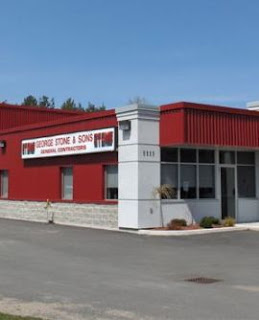
Or you can follow the example of George Stone & Sons Ltd. in Sault. Ste. Marie, Ontario, who parlayed their nomination into a news story in the local newspaper and its website.

The result, this posting on soonews.ca

The staff at George Stone and Sons Ltd. in Sault Ste. Marie have no idea who nominated them, but they are glad someone did.

April Foster, administrative assistant at the local contractor told Soonews.ca that now that construction firm has been nominated, they want to win! People can vote by going to The Poll and cast your vote.

George Stone and Sons is nominated in the "All-Around Best General Contractor" category.

Another Sault firm, FICMAR Builders Inc was also nominated in the Ontario Construction Report Reader's Choice Awards for Best Residential Contractor."It would be great for Sault Ste. Marie to have us win these awards" said Foster. Winners will be announced March 1st - Good Luck to the two local companies nominated!
To see the complete list of nominated companies from across Ontario check out the following link:

Thursday, December 11, 2008

Readers' question: Should we send out brochures?


An image from Surrey, United Kingdom

This morning, an employee of a substantial British contractor sent this email to me:
Hello there

I came across your website and out of many that I’ve looked through this morning yours seemed to stand out to me. I’m not sure whether you would work with companies in England but I would ask for your advice. We are building contractors and specialize in the refurbishment of hotels, we turn around about £40 million, well we did until the recession hit us. Our major client has pulled all our jobs from us and we have had to make many redundancies, it’s not looking good. As a result my directors have asked me to send a mail shot out to hotel groups, schools, hospitals, supermarkets etc with our company brochure. I know for a fact that many builders will be doing the same at the moment and most of these letters will go straight in the bin.

I feel that we need to do something to stand out from the normal, do you have any suggestions?
My response:
I agree with your interpretation that a mail-out will likely not produce great results. It can be part of a campaign, but you will get limited response. The challenge is that (as you are undoubtedly aware) this business is built on relationships and if you enter the space cold, you will likely receive a cold shoulder.

With the limited information I have, of course, I cannot suggest a simple solution. But it looks like you best bet will be to look to your network, your connections of connections, and you may find these are at the relevant client-focused trade group and association level. In other words, go where your current clients network among themselves and build out of this to develop your new relationships.

The other approach that might work is to prime the pump of your existing clients, suggesting value added or cost saving services to them. Perhaps energy saving retrofits, or connecting government subsidy programs to your clients' needs will be helpful. In other words, rather than waiting for existing clients to suggest ideas, propose things that don't cost them any cash but will achieve operating savings. If your design/estimating team isn't working at full capacity, then this would be useful work for the skilled professionals to do.

I wish I had better answers here -- the problem of course is global in nature.
You can see from this inquiry, and a similar one (from a residential contractor) in Australia received not-to-long ago, that the challenges your business are facing are spread around the world. Long-established businesses, with experienced labour forces and competent managers are all facing the difficult task of trying to find new business in a competitive market, as they prepare for layoffs and cut-backs in their operations.

The temptation in these situation is to reach out of your comfort zone; to grasp for straws, to hope for some business, anywhere. You need to be careful especially about anyone who promises a solution -- for a price. If you know who you are dealing with, okay, but otherwise, watch out.

I expect the most successful contractors in this environment will be the ones who know how to work the system for government procurement. Infrastructure funds are likely to be released by governments spending their way out of the recession. This money will most likely go first to contractors who know the lay of the land. The challenge is this public sector funding is not always fairly distributed, at least in the perception of outsiders. Qualitative relationships often count more than quantitative facts -- and you can't just walk in the front door and expect the business to emerge.

Wednesday, December 10, 2008

What advertising works? (2)

As I waited for my flight back home from Washington (D.C.) Dulles Airport today, I reached consultant Michael Stone across the country in Camas, Washington to find some answers to questions about his consistent recommendations that contractors should advertise, advertise, and advertise some more.

After all, my business sells advertising for a living. However, much money thrown into advertising is wasted. Worse, a contractor facing desperate hard times will easily be sucked into spending money on advertising not knowing what works, and why, and could lose a fortune.

Stone and I, it turns out, are not so far apart in our thinking. Stone certainly has no problem with your business encouraging and developing referrals, he just doesn't want you to be one of the majority who rely passively on word-of-mouth. Contractors who simply accepted in-bound referrals in good times, now find their phone has stopped ringing, while contractors who advertised effectively are stepping up their marketing, and attracting profitable business regardless of the difficult economy. In other words, relying on referrals is not wise; building systems to encourage and develop your referrals makes a lot of sense, and could be one of your first and most important strategies during hard times.

So what works, and what doesn't?

First, Stone says you should have at least six different forms of advertising to reach your market.

Second, he advocates you spend upwards of five per cent of your annual sales on advertising. This means if you are a contractor doing about $500,000 in business, your advertising budget should be in the range of $25,000.

Third, and most important, he suggests your advertising be geared to the demographic of your ideal clients. Spend some time with your best clients. See what magazines they read, what things they enjoy, what marketing approaches 'reach' them. (This conversation with your best clients, of course, givs you a chance to capture some repeat and referral business, as well.)

Now, lets get over the bad news -- what advertising should you avoid?

"Banish all Yellow Page advertising . . . it doesn't work," Stone says. "You have to have a long-term identification in business before Yellow Pages advertising will work for you, perhaps 10 years in business." In other words, if you have a long-established reputation (and I would add, are trying to reach an older demographic), you might use Yellow Page advertising, but if a Yellow Pages representative calls you, hang up on him.

Similarly, "unless you have long term name brand reputation, stay away from radio and television," Stone says.

Leads services are generally a waste of time, unless you have the good fortune to find one that "delivers on what they say." "They are all in it for themselves -- they are in business to make money, rather than for contractors."

Okay, now what works.

Business cards -- yes, handing out business cards is cheap and effective;
Your website -- spend some money (perhaps $1,500 to set it up), and you will be in a better position to find business.

Home and Garden Shows -- "They are excellent now," says Stone.

What might work?

Stone says the other media and advertising you would use will depend on local conditions, your client demographics,and what you find they are using. He says, for example, a high-end magazine in Atlanta works really well there for many clients, but a similar publication in New England is ineffective. The key to discerning what works and what doesn't is to spend some time with your ideal clients, and to really know who you will reach.

So how do you deal with the pesky advertising sales reps who call you. "Ask them to put in writing a performance guarantee -- that they will actually deliver the leads and clients they promise," Stone says. Most of course won't do that; because they cannot deliver on their claims.

Stone says he hounds his clients to advertise -- and the clients who listened to his advice and built systematic advertising into their systems, rather than passively relying on referrals in good times, are still thriving even in the recession. Others are struggling.

I think there is wisdom in these words, but caution you to be very careful if you haven't tested or validated your advertising in good times, before spending your scarce resources now.

While Stone is advocating advertising for the business-to-consumer markets, I think it is also effective in the business-to-business market; as long as you apply the principals of knowing and understanding your clients before you spend your money and relate it to other marketing methods including association participation, public and media relations and effective networking (the sort of stuff we do in our own business).

Remember, as well, that building your brand with great service and built-in-follow up systems to encourage and develop your word-of-mouth and referral marketing is probably your wisest and most effective form of marketing. This is not a passive activity. It is a systematic initiative. You are not relying on referrals; you are developing them. Go there first.

Bobby Darnell -- Some fresh perspectives

Bobby Darnell at Construction Market Consultants in Atlanta, GA, has rebuilt his blog, buildingnewbusiness.com, which is worthy of your bookmarking. And I love the headline of his latest posting: Warren Buffett, Bill Gates and Bobby Darnell.

Tuesday, December 09, 2008

Networking: The SMPS Washington Christmas Party

Tonight I drove from the hotel in Northern Virginia to downtown D.C. to attend the SMPS DC chapter's annual Christmas party. This is, for me, one of those surreal moments in life -- what is a Canadian doing in the U.S. capital city, and why am I at a networking social event, when these sort of things make me truly uncomfortable?

Of course, the answer is 'business', though if you think I would even think of trying to sell anything at this kind of event, you haven't been reading much of this blog. I took my camera with me, however, and lots of pictures, and got lots of names for captions for a photo feature in the upcoming first return issue of Washington Construction News. (Alas, the cable to connect the camera to the computer has disappeared somewhere, so I can't post any images right now with this blog entry.)

The ground rule for any networking function is to focus on giving rather than taking, connecting rather than marketing, and learning rather than pontificating. I'm not sure how well I really did, but probably lived reasonably close to the values.

Today in Washington


Today, I fly to Washington, D.C. to start the process of re-establishing Washington Construction News. I'll attend a meeting of the SMPS DC Chapter tonight, and meet with Chris Chapin, the local publisher, tomorrow, while co-ordinating editorial contractors.

One thing apparent from emails and communications with with several people over the past few weeks is the severity of the U.S. recession on the construction industry is much greater than official statistics show, though the problems are far less severe in the D.C. area (or, for that matter at our home base in Ottawa, Canada) than they are elsewhere in the country. The reason, of course, is the 'security net' that government creates for the local economies.

Because you may wish to learn about opportunities in the Washington, D.C. area for your own business, please feel free to email me at buckshon@cnrgp.com.

Sunday, December 07, 2008

Testing zoho.com


George Zarogiannis of Ecopainting Inc. in Toronto visited our booth at the Construct Canada/Home Builder and Reno Expo show on Friday. He has been masterful in using web/Internet marketing to develop his business and leads, and effectively define his market niche. (We first met on the contractortalk.com forums, where he is an active and intelligent contributor.)

He also introduced me to a potentially extremely useful and inexpensive resource, Zohocrm.com, which may provide your business with answers to the question of how to develop a proper client relationship management (CRM) program without burning up your budgets.

Access for up to three users is free; monthly fees beyond that (or for more advanced functionality) are modest, and it has many tools and resources for lead and client tracking. This test form could link to an auto responder, mailing list resources, and the like. I won't replace my current patchwork of tools used to manage initial leads just yet, but certainly would put this service on the list for further consideration and use. I set up the form below in a matter of seconds. If you complete it, I'll send you an advance draft of my chapter on Networking and Association Participation in my upcoming book on Construction Marketing Ideas. (Please allow a few days for delivery.)


Web Form
Company :
First Name :
Last Name :
Email :

The challenges of measuring

How do you really measure marketing success? Cost per lead? Client satisfaction? What Key Performance Indicators work for you? I'm still looking for the answers here.

Yesterday, as I reviewed some draft writing on measuring performance and metrics, I had a sinking feeling: Have you ever run into situations where you preach not what you practice?

Here, in advocating concepts like "Key Performance Indicators" and the use of the Net Promoter Score to measure client relationships, I realized we have never bothered with these potentially important concepts and approaches to assessing business performance. I've reported earlier how client surveys are sometimes gamed, providing distorted and meaningless results.

But where are our real measures of success, and how can we implement a proper measurement program?

Like most businesses, of course, we have some regular reports -- receivables (volume, delay to payment and so on), bank balances, debt levels, and our balance sheets and income statements. These are shared freely with all employees -- no secrets here. But the raw financial data, while useful, doesn't capture any one's imagination (including mine).

How can we solve this problem? Here I am turning a problem (okay, a challenge) into a marketing and relationship-building opportunity. Yesterday, I asked my network for their own insights, and proposed an article on metrics and marketing/business performance measurement to Randy Pollock, editor of the SMPS Marketer. He responded by asking me to write a series on the topic. (Well, I can think of few better ways to solve a problem than to use my abilities/strengths to research some answers.)

On a more immediate level, I asked my sales team to compile a list of their leads, their quality, and their total expenses for the recent Construct Canada show. Hard to believe, but we've never actually measured the cost per lead and actual revenue generated from participation at previous shows. Time to change our ways, I think.

Because

"Because"

Saturday, December 06, 2008

Returning from Construct Canada

The Toronto Construction Association booth is not surprisingly a centrepiece of Construct Canada (as the event is in Toronto). The TCA holds its annual Christmas Lunch fundraiser at the show's conclusion -- and attracted close to 2,500 people at a cost of more than $100 per plate.

While we are fortunate to be able to trade services with Construct Canada for booth space, the three-day annual trade show is undoubtedly one of our biggest annual marketing expenses. Hotel rooms for four employees, meals, travel costs, and a mass of incidental expenses man this is a major budget item/expense.

Is it worth attending? You can look at the question from different perspectives. Alas, at present we don't have a truly robust lead measuring and valuing system for trade shows. Many businesses do and of course if you can directly quantify your cost per lead and correlate it to the profitability of the resulting sales, you will know if the trade show is truly valuable. (I'm hopefully solving this problem in a non-bureaucratic way by asking the sales reps who attended the show to provide their leads reports and expense information right away. They aren't straight jacketed by some corporate CRM data gathering system, but obviously need to be accountable that they indeed have gathered/developed leads, and know which ones to serve.)

On other levels, however, undoubtedly the show is worth attending:

Competitive assessment and intelligence gathering: We can see our competitors and 'read' their business health (and sometimes snatch a good idea or two from them).

Connecting and renewing acquaintances and relationships: Undoubtedly one of the most important elements of show participation, especially when you've been in business for a while. These brief visits and conversations help future relationships, build respect, and community, and of course are easy to co-ordinate in the show environment.

Internal staff communication: We effectively had an environment for a four day working sales meeting; with informal conversations, some more formal discussions and sessions, and consistent feedback, both in the trade show setting and outside, at the hotels and after-hours. I gathered some insights into potential business challenges which I can address in the next few weeks and months.

Trade shows undoubtedly can be expensive. One building products manufacturer told me his cost per lead is in the range of $75.00 (I'm hoping to get similar quantitative data in time for the 2010 show based on current year data). Obviously, this expense isn't too great if you are getting tens of thousands of dollars in business from each lead. But even after we quantify our numbers for this year (it will take a few months, of course, to see which leads convert to sales), I realize the subjective advantages of show participation make participation at this event worthwhile even if the lead cost is significant.

Notably, the show organizers told me that the show, which they founded in the late 1980s, grew through the early 90s recession. It truly met a need in hard times, and helped businesses find new clients and opportunities when they were scarce, indeed.

Thursday, December 04, 2008

An elegant idea

Jon Goldman speaking at Construct Canada. He has an impressive collection of ideas -- some of which I will share in future blog postings.

Here is a story that will brighten your day -- and perhaps provide the marketing answer you are seeking.

Hopkins and Porter, a Potomac, MD, contractor planned a special celebration for its 25th anniversary. The company sent a letter to its former clients, offering them one free hour of handyman services in exchange for permission to putting a lawn sign at their home.
The campaign cost $2,000 -- and netted $375,000 in sales -- marketing consultant Jon Goldman told a Construct Canada seminar today.

Goldman said 32 per cent of the people who received the letter responded. Many took up the offer of the free handyman service -- but many purchased additional services, and referred their friends.

The thing that I really like about this idea is its impressive simplicity. You don't need to be in business for 25 years to make it work (Hopkins and Porter's website says it celebrated its 30th anniversary in 2007 -- I will check to see if they repeated the story last year.) "Every business has an anniversary; it could be five years, three years, even one years, and this would work," says Goldman.

Goldman says marketing makes the most sense when you pick the "low hanging fruit" and that fruit is, of course, your previous satisfied clients and referral contacts. Give them a reason to connect with you again, and you'll get even more business, and quickly.

Here's the good news. If your business had been doing well in good times, relying on word of mouth and referrals, you can implement this type of strategy quickly, easily, and profitably.
Smart marketing need not be expensive nor difficult to co-ordinate.

Wednesday, December 03, 2008

Real networking is real generosity


Recently, I've read several posts about networking including Ford Harding's useful post asking how big you think your network should be, and Mel Lester's observations about the value of lasting relationships in his most recent blog entry. You may also find some real value in reviewing Bob Littel's Netweaving site.

Since I am among the most socially awkward people in the world, networking, at least in the conventional sense, is not an easy thing for me. The way I solved the problem is to offer to contribute my talents and skills in the business communities most relevant to the business -- in this case, writing and advertising. Using the Netweaving concept, there is only one rule: The networking initiative is 100 per cent focused on the other person's interests -- not our own business needs and objectives. In other words, it is all about generosity, not taking.

In case you are wondering if this is an expensive and slow way to do business, especially in hard times, you are partly right. Great networking can be slow. But it shouldn't be expensive. Your 'give' is your insight, connections, time, and (sometimes) free services -- it isn't cash. If you want fast results, try canvassing, telemarketing or (perhaps less painfully) offering supplementary services to existing clients.

The last thing anyone (including you) want is to have some sales person pounce on you at a so-called networking event, making small talk, collecting and handing out business cards, and posing the blunt question about whether you need some product or service. The reverse also applies. Who really cares about you -- and how likely are potential clients to be interested in what you have to offer when you make perfunctory small talk, and just ditch people who can't help you?

With the reverse philosophy, networking become fun because your entire effort and exercise is focused on helping others achieve their objectives.

Almost inevitably, of course, the principal of reciprocation takes hold and the people you help offer to help you in return. Here the real 'win' occurs when you honestly don't need anything in return -- your polite decline (while doing still more good for the other person) really cements the relationship. Then, when a situation arises in the future where you have a valid reason to call on your contact, you'll be regarded with overwhelming courtesy and respect. Of course you don't abuse this -- but you enjoy the fruits of your labour, because the networking 'give' is so genuine that it doesn't feel like you are putting any effort into the process. The other people simply want to do business with you because you've demonstrated your competence and respect for their needs.

Where is the best place to network? I will answer it this way -- you should be in an environment where current and potential clients hang out, and your contribution to that group should be where you have strengths, talents, and ability to contribute wholeheartedly and with real commitment. In my case, some of my strongest networks are through the Society for Marketing Professional Services (SMPS) and the Greater Ottawa Home Builders' Association. In both cases, my contribution is writing and contributing to the association newsletter (in Ottawa, we have produced the internal association newsletter for 18 years). Since I'm a much better writer than socializer, this form of networking is relatively easy for me to do, and the research and writing of relevant articles allows me to call on association members at all levels, to give them useful and positive publicity. Not surprisingly, they almost always return my calls.

The really good thing about relevant associations is they have various committees suited to a diversity of interests. If you like social activities you can be on the social committee; if you are a political activist, you can participate on the action and policy groups. If a committee or activity doesn't exist, you can almost always suggest something. Don't just volunteer for 'anything' -- you don't want to be assigned to a 'warm body' task; you should do something you really like.

Networking isn't a fast way to wealth -- but if you focus on sharing and giving in areas you enjoy, in an environment of current and potential clients, you will ultimately reap great rewards. And since you enjoy the activities where you are making the contributions, you won't mind being patient -- you are not suffering an ordeal while you wait for results to materialize.


We're at Construct Canada -- or, more accurately, the Home Builder and Reno Expo -- at the Metro Toronto Convention Centre South Building, today through Friday. This event -- in fact a co-ordinated grouping of events -- is the largest Canadian construction trade show and meeting place in the annual calendar.

If you are in Toronto, I'll be around our booth #117 from 10 to noon or 1 pm today, most of tomorrow (Thursday), and the Friday show hours.

Tuesday, December 02, 2008

If you are a U.S. reader of this blog, you likely will care little about Canadian politics, but a story developing north of the 49th on the political level may provide some insights for your business. (And in case you are wondering, I also care very much about U.S. politics, especially since we are about to relaunch Washington Construction News, and the "Washington" here does not consider Seattle to be its biggest city.)

Okay, here is the story. In Canada, we have a multiparty democracy. In fact, four parties have seats in the legislature (called the House of Commons). In the most recent Canadian election, held just a few weeks before the recent U.S. vote, voters re-elected the incumbent government, the Conservatives. (In Canada, 'Conservative' would roughly equate to Republican).

The Conservatives won more votes than in the previous election, but did not win a majority. Three other parties could, if they wished, vote down the government, and defeat it. The Conservatives won more votes than in the previous election, but did not win a majority -- in other words, everyone could theoretically gang up on the government and defeat it.

After winning the most recent election, the Government decided to rub its victory into the faces of the opposing parties -- proposing changes to eliminate the election financing subsidy for registered parties. (Ironically, the Democrats, in rejecting this option in the U.S., raised enough funds to blow away the Republicans.)

The other parties in Canada however don't have the financial -- or popular -- support of the U.S. Democrats. So, royally pissed off about the threat to their survival with the proposed elimination of this financial support, they decided to gang up on the ruling party.

Wham. They set up a coalition government proposal -- in other words, by teaming up, they had more votes in the House of Commons (roughly equivalent to the House and Senate in the U.S., yes, Canada has a 'senate' but it is a different thing entirely) than the governing party. And that means they can bring down the government.

So, now the decision rests with the Head of State in Canada -- unlike the U.S. president, the Governor General is usually a ceremonial office holder -- but rarely, under our constitution, she has incredible authority. And now she has. She can bring down the government and allow the opposing parties to group together to run the country.

The story is still unfolding, so its resolution is uncertain, but here are the lessen you can learn and apply to your business right now:

  • Everyone has a breaking point. You need to watch for that point. It can create opportunities, or problems, depending on where you are. If you wish to push the stress factor through the roof, consider the consequences. When you are selling, know that there is a point where persistence will be seen as pestiness, where commitment will be seen as obnoxiousness -- and where you, if you are waiting in the wings, you can snatch a client you wouldn't otherwise expect to win.
  • We all work under rules the game. When conditions change, the rules remain the same -- until someone decides to change the game. Then you have a choice: Do you play by the new rules, or do you walk? (Or do create the new game?)
  • You can do great things by defying expectations, by reaching beyond your perspective, and by learning alternative approaches to solving this problem. So, as a Canadian, I will soon resume publishing the local construction newspaper in Washington, D.C. I respect U.S. values, business principals, and democracy. What happens, however, when you choose to view democracy from a Canadian perspective?
If you are looking for a simple answer to all your business problems in this blog posting, you will likely be disappointed. But if you look beyond the obvious, you will find your answer. Consider this question: "What is a Canadian doing publishing the local construction industry publication in Washington, D.C." In answering it, you will likely solve your marketing challenges.

Online Networking is not real networking -- Tim Klabunde's solution

In the past year, I've had the fortune of meeting with Tim Klabunde in Washington through our mutual involvement in blogging and the Society for Marketing Professional Services (SMPS). Tim and I share some fundamental values -- that effective business development occurs when you put your short term interests aside, and focus on sharing, giving, and developing relationships that go beyond your immediate focus and requirements.

Tim has shown these qualities at the highest degree with his imitative in coordinating on linkedin.com Washington DC Design and Construction Network. He writes about this process in his Cofebuz Blog posting: Online Networking is Not Real Networking.

Now that the network has grown to more than 200 participants, he is taking things to the next stage, creating off-line opportunities to connect, share, and communicate.

Can you make similar connections and build relationships within your own community?

Monday, December 01, 2008

Referral and finders' fee systems -- Bobby Darnell's approach


In a previous posting, you've read how Feazel Roofing in Columbus, OH, offers a $50 finder's fee for consumer referrals. Do finder's fees work for more advanced stuff, especially for advanced commercial or consulting assignments?

Bobby Darnell of Construction Marketing Consultants in Atlanta GA says that, in seven years of business, he has obtained about 10 per cent of his business volume through finders fee referrals. He offers a sliding scale of incentives, based on (1) the amount of work you do to provide the lead and the strength of the direct referral and (2) the value of the business you help generate for him.

He has granted me permission to make his lead finding system available, which you can download here.

Darnell says most people using his lead rewards program have contributed a single lead. The only potential conflict he had occurred when someone submitted a lead for a contact Darnell had already been working with -- in this case, he simply provided documentation proving the prior relationship.

Lead finders or 'bird dogs' are common in many industries, and good salespeople cultivate them. Obviously, if you are sharing leads for compensation, you should conduct yourself with integrity -- if you are working for a business, I think your boss should know about this sideline, especially if it relates in any way to your day job!

A good question when an organization has salespeople is whether the lead compensation system should operate in place or adjacent to your regular sales compensation systems. If the lead compensation is modest (for example the $50 to $100 'cost' at Feazel Roofing) this isn't a problem -- but if you go the full scale with a major lead for a big project as outlined in Bobby Darnell's system, clearly the lead cost has to come out of sales compensation, or you will blow your sales and marketing budgets.

Should your salespeople be able to set up their own bird dog and lead-finding systems without company involvement or approval (paying their leads suppliers directly out of their own pockets)? I'm not sure this is such a good idea -- it invites ethical and co-ordination challenges.

On the other hand, if the relationships are there, and the sales representatives openly discuss the process with their management, presumably everyone is well served by these arrangements.

Do you have any thoughts and experiences about bird dog or lead compensation systems?