Discover your free Construction Marketing Ideas Email Newsletter
Showing posts with label client relationships. Show all posts

Wednesday, November 18, 2009

What works?

If successful marketing is all about obtaining more, higher margin sales, and achieving these sales is all about your brand, and great branding is all about trust, what is your most effective marketing strategy?

The answer is you want to find the lowest cost methods, with the highest leverage, which results in the greatest amount of trust among potential clients.

Here, things get interesting.

  • Conventional advertising in mass media may reach many people, but can you build a campaign that creates trust (brand) at reasonable cost -- especially if you haven't advertised much before?
  • Word-of-mouth referrals of course are inexpensive and loaded with trust, but how do you leverage this asset? If you do nothing, often nothing happens.
  • Great media publicity, in electronic and print media read and viewed by your potential clients -- especially in a community where you have great word-of-mouth reputation, offers truly high leverage opportunities, little cost, and great trust-building advantages. (That is where our publicity and media services come in handy.)
  • Community service, through active, engaged participation in organizations and groups related to your clients, has less dramatic leverage opportunities, as many of your relationships are one-on-one and in small groups, but the intensity of the relationships and their quality (especially if you are connecting with community referral leaders), can be dramatic.
If you put everything together into an effective package, you can leverage all the resources to maximum effect: Consider the impact of taking the lead on a community activity, relevant to your business, worthy of great positive publicity.

Would your results be greater value for money than conventional advertising?

I think so, by far, but I also acknowledge this type of activity requires work, specialized skills and knowledge you are unlikely to have, and is rarely if ever conveniently packaged for you by friendly and co-operative sales representatives.

That of course brings you back to our own organization's philosophy. We'll do our best to help you with the bigger picture. But we can't do it for you. You need to put these pieces together in your own mind, understand your market, and then take the lead to make things work.

Sunday, August 16, 2009

Some thoughts about CRM systems

I've always been wary of formalized CRM (Client Relations Management) systems, especially for smaller businesses or larger companies who serve a modest number of important clients (like most non-residential architects, engineers or contractors). Sure, you need good client relationships, but formalizing it within software packages which require data entry and maintenance seems to be putting your energy in the mechanism rather than the actual client relationships, not a great idea in my opinion.

But this weekend, facing a new sales lead management and co-ordination challenge (my sales team dumped the problem right back on me), I decided to reinvestigate the situation, and see if I could find a solution. And I recalled an interesting recommendation by Toronto painting contractor George Zarogiannis of Ecopainting Inc. recommending zohocrm.com.

By Friday evening, I had turned Zohocrm.com on for a test run. (It is totally free for up to three users, and if you wish to add a fourth, you pay only for that person, meaning your cost would be $12.00 per month). It is early going, but appears to solve the immediate lead-handling problem. Inbound inquiries from my website go into a holding file, where they can be reviewed for suitability before they are assigned to sales reps; and then can be tracked through their life-cycle: Exactly what I need in the circumstances.

I posted my findings on remodelcrazy.com and received some interesting responses, the most useful from Rory Swan at Servicez Unlimited in Washington, D.C. He wrote:

I think for most of us. The CRM function will be more simplistic.
  • My software ranks the customer from the day the lead is first entered and changes based on factors
  • We capture the types of projects that come our way.
  • We also look at what jobs are more profitable than others.
  • We use the data collection as a way to market to lost bids and follow up with potential clients.
  • We enter the data in so that template letters can go out, that have enough customer info for them to seem personalized to that person, but not be difficult to produce.
  • Good CRM can tell you
  • What jobs are profitable,
  • How did a customer find you
  • What marketing avenues are working and what is the cost of acquisition
  • Did a past client send you any referrals, what was the result of the referral
  • A data base for marketing and promotions.
  • I keep a 5 year log most homes here are sold and renovated every 5 years
  • Maintenance data base to follow up on warranties and new sales opportunities
Good thoughts, and ideas. Not sure what software he is using to handle this stuff, but I'll ask.

Saturday, August 08, 2009

Your clients: Cash cows or friends?

Are your clients "cash cows"? (Copyright image purchased from istockphoto.com)

Justin Sullivan provoked some comments and commendations when he suggested to contractortalk.com readers that they should treat their cows, er, customers, well.

Initially, his analogy went a little over my head -- I'm not sure how many of my clients would appreciate being called "cows". But his intent at humor underlies one of the most fundamental principals of marketing.

If you spend just a little more effort in (a) doing your work well and (b) treating your customers, or clients, with respect and even at a higher level, as true colleagues or friends, you will gain far more business success than you can through any other form of marketing.

Justin writes:
What are you doing to build bulletproof relationships with clients?

The biggest mistake I know of in business is to just see the sale. How much money am I going to make this time?

DO NO DO THAT!!!

Sure, this couple might be worth a 40k job right now, but what is the lifetime value of them worth? How much business can they bring in for me? How many referrals are they going to give me? How am I rewarding them for those referrals?

A Customer Database is the tool in your arsenal. Use it to its maximum potential.

Do not think about your cows as hamburger. Don't even think about them as business partners.

Think of them as friends and treat them as such. My cows know how valuable they are to me. Some of my cows are my most trusted business associates, and some really good friends.

The Wrap Up

Do not use your database to just shoot of marketing crap. Give value. Use it to keep in touch. Build bulletproof relationships. Let me make this promise to you right now: If you build real relationships with your customers, you won't ever be beaten on price again. Ever. In the history of Ever.
On the surface, this is common sense stuff. Virtually everyone in this business earns most of our revenue from repeat and referred clients and you won't far if your work and client relations are shoddy. But how much do you really think about the quality of your client experience and how you can improve it? Would spending just a little of the resources you allocate to advertising and marketing go much further if you spent it on rewarding, recognizing and connecting with your current and recent clients?
  • Can you improve your procedures and processes to make your clients' lives easier?
  • Simplify forms, offer additional means of communication (with rapid response), structure meetings and project planning sessions to satisfy client wishes, and so on;
  • Can you keep your job site clean or maybe go beyond, with something "extra" for your clients to enjoy at the end of the work day?
  • Can you suggest alternatives which improve your client's interests even though on the surface they may 'harm' yours. (Your short term loss offset by longer-term loyalty?)
So, yes, your current clients are perhaps "cash cows" -- if you treat them with respect and friendship.

Tuesday, July 28, 2009

The Marketing funnel

Conventional sales practice requires you to process many "leads" before you find the gem of real business.

Not-very-good salespeople (or not terribly effective businesses) then instruct their sales representatives to "make the numbers" by calling and calling, emailing and emailing, and knocking and knocking on doors. A few thrive within this cold approach to business development -- but most either become drones or burn out and move on to something better, quickly.

Undoubtedly, this approach to finding business actually is effective, to a point. Since it is so distasteful and frustrating to encounter rejection, few bother to go through all the steps necessary to succeed; and since a few people may actually wish your service, if you are lucky, a few of your spam emails or nuisance phone calls may actually respond (and, in the case of spam, because it is "cheap" to send it, you can theoretically just turn up the volume.

Of course, these practices are exactly why most people build up huge defensive walls when they encounter any selling initiative; especially the clients you most want to reach -- the ones with more money than time to waste fending off unwanted solicitations.

You may find the "numbers" this way, but can you find the trust to win the commitment and business you need; and what about the negative fall-out from all the people you bother, who are not at all interested in your service (and won't have a favorable first, second or third impression of your business.)

Effective marketers seek to turn these problems on their heads; winning trust in your business to the point that (a) people will call you to initiate the relationship or (b) you are so well respected that when you call (for good reason), your call is accepted with anticipation.

Here, the numbers game is modified, because you don't want to waste marketing dollars and energies on people and organization with no capacity to pay for your architectural, engineering or construction services. You need to focus your marketing energies and resources carefully to build the trust and relationships of the people you really wish to meet. In the next few blogs I'll look at some ways you can achieve that focus.

Thursday, July 09, 2009

Calling lost clients: Why you should

This video from Jeffrey Gitomer reminds us that, if we are trying to rebuild our business, the best people to call are the clients who you lost. I found the reference in this Contractortalk.com thread.

You can gain some additional insights in this earlier posting (with a rather gross image) when Gitomer visited Ottawa.

Monday, June 15, 2009

Why does construction marketing (seem) to need to be difficult?

In several postings, I've observed the frustrating reality about construction industry marketing.

If you feel you have to market to find new business, you find it hard to do (and often frustratingly expensive).

Conversely, when you seem not to need to market, simply because your order book is full from repeat, referral and inbound inquiries, you are on the top of the world.

The problem is in part that no form of marketing success is easier to achieve than the natural success of your reputation bringing in inbound and repeat business. In fact, it gets even better if you are in this position, and so overwhelmed with business that you need to turn clients away or demand a long wait time to serve them. Because of your "scarcity" you are even more alluring -- and potential clients want to do business with you even more. (Marketers often fake scarcity to create this effect, but it really works, all the time, when the scarcity is real!)

This is fine enough in good times, but in a recession, when business drops off, you have two choices. You can shrink your business down to nothing, or you can start learning how to market.

The former choice isn't entirely irrational, especially if you have some control over your overhead and costs. If you can lay off most of your employees, and focus on maintenance and service for existing clients, you might just make it through. I know of some contractors who took long, enjoyable vacations in warm and sunny places during the last recession. Of course, this solution simply won't work if you can't curtail your overhead or you are burdened by debt obligations.

So, then, if you decide suddenly you need to "market" you are in trouble, because you now have to complete a rapid learning curve and you run into the problem that paid marketing and advertising is an incremental rather than magic, instant, solution.

This is why successful larger contractors, especially contractors serving consumers, never stop advertising, even in good times. They have enough experience and metrics to manage their advertising costs, media, and budgets, and can shift gears during hard times, perhaps altering their media mix or increasing their marketing budget even though they know it will produce less satisfactory results.

In previous posts, I've advocated that you get to know your current clients really well, to understand which media they read and what interests them, and then build out your marketing strategies from this information (while of course enhancing your referral and repeat business processes).

Long term, I believe the best way to market your business is to combine your passions and interests with those of your clients and potential clients, and build relationships through the process. For example, I am always most successful at marketing when I practice journalism, like writing this blog, but you may be better by sponsoring association golf tournaments -- if you enjoy playing the game, and your potential clients are there, as well.

The important caveat with this passion-centered approach is to remember that you must not focus on your passions at the expense of direct relationships with current and potential clients.

If you really enjoy doing stuff that has no relevance to your business, go ahead. You may be able to cross fertilize some ideas you can apply in your own enterprise. But don't get lost in the side-track. I've done that in the past, at great cost!

Wednesday, June 10, 2009

Reader's Question: High-end residential construction: How to even out the troughs and increase potential deal flow

Although David Markham, president of C.A. Peletz Co. in San Fransisco, said his company focuses on high-end residential work, the contractor also handles commercial projects such as the conversion of an old automotive garage into the Sierra Club headquarters. This information led me to one of my suggestions below.

Readers questions are invited. You can email me at buckshon@cnrgp.com.

Hi Mark, I am enjoying the blog as a new reader. I own a construction company that focuses on the very high end residential market in the San Francisco Bay Area of California. We are an older company founded in the 50’s when the principal built schools and bridges. Over the decades we have built commercial, medical office and always luxury multi-family and single family.

Since I took over in 2002, most of our success has come from the boom in extremely high-end single family ($800 - $1,200 per square foot) due to the dot.com and housing booms.
Things have obviously slowed, but not stopped. We have quite a few repeat clients that are constantly upgrading, maintaining and adding to what they have.

I would like to even out the troughs and increase potential deal flow. We generally market to high-end architecture firms and maintain good contact with existing and past clients. Do you have any further suggestions?


Best -
David A. Markham, President C.M. Peletz Co.

David:

First, obviously you should take the thoughts of someone at a distance who does not know your specific business or market conditions with a good degree of caution. But here are my initial thoughts.
  1. The main frame of business of course is repeat and referral. You probably already encourage this but you may wish to extend your outreach and programs to thank existing clients and encourage referrals. Consider the story of Peter Danis in Toronto as an example.
  2. Media publicity can be very helpful, especially in the publications and websites read by your clients. If you don't (yet) know what publications/broadcast outlets and websites your current clients read/use, you can ask a few of them. With permission stories of successful building projects are always helpful. Specialist PR services and agencies may be helpful. Community service may be helpful.
  3. If most of your current referrals are coming from architects, you have two choices. You can build relationships with them by (a) referring clients to them and (b) offering cost savings/technical/practical seminars and lunch and learn-type programs/ The former is obviously the most effective but the latter is probably the most controllable
  4. You may wish to explore an enhanced web presence through the new tools like twitter, online networking, blogging and the like. This stuff can be time consuming and results are often mixed but your market area may be a leading force in the area.
  5. Affinity arrangements can be powerful. I noticed you did work for the Sierra Club. Can you connect with relevant community associations, clubs, and associations -- the ones which your current clients are most connected with?
Thank you very much Mark. This is extremely helpful in addressing my blank spots. Let me know if I can be of any help to you in the future. Best - Dave

Saturday, May 02, 2009

The FW&D marketing and business model: Intelligent building from a local base

Ned Overton of FW&D LLC in Arlington, Virginia near Washington D.C. His trailer is less for equipment and material storage than marketing -- it has a 'take one' box with flyers for people walking or driving by.

Yesterday, Karen Buckley and I met Ned Overton of FW&D LLC in Arlington, Virginia and I discovered how to build a successful contracting business from scratch.

Overton's two keys to success have been his ability to connect to immediate community needs, and really thoughtful (and inexpensive) marketing.

Overton had been a career employee with the Prince William County Fire Department in suburban Washing on, D.C. for 25 years when he retired in 2002 after 25 years of service. His responsibilities before retirement involved the staffing and scheduling of hundreds of firefighters in various stations. This challenge required him to be acutely sensitive to individual personalities to ensure working harmony and safe operations.

As retirement approached, a cycling friend who works at a local building supply dealership suggested he could start a second career by installing replacement windows and doors in his neighbourhood. Overton had been a carpenter before joining the fire department, and his neighbourhood, Fairlington (the "F") in the company abbreviation) has plenty of windows and doors needing replacing.

The neighbourhood's solidly-built townhouses, originally built during World War II to accommodate military families, had last been refurbished in the 1970s, when the neighborhood's residences had been converted to condominiums. Now, more than 30 years later, these windows and doors needed to be replaced.

Overton recalls his first order, from an free online Yellow Pages listing. Then others arrived, from the local community newsletter (where print ads cost less than $100 a month). Soon, referral business started, as Overton gathered all the information he could on various aspects of the business.

He found people needing windows and doors also wanted other services, including roofs, deck, new kitchens and bathrooms, and complete remodeling projects. Rather than turning this business away, he discovered he could do the work effectively and with client satisfaction.

Overton serves communities throughout the Northern Virginia suburbs of Washington D.C. He generally stays clear of the Maryland suburbs unless he receives a referral call -- he is acutely aware of the cost in time and effort to serve communities outside his area. Of course, just the Virginia suburbs give him a large enough market area.

Current business volume is about $1 million a year -- he is hoping to double that to $2 million within the next year. Window and door jobs generally generate about $5,000 in revenue, kitchen and bath renovations of course can be in the tens of thousands of dollars.

Fair enough, but how does he achieve marketing success.

Overton, at 57 years old, indicates he is like a sponge for information, especially from sources like contractortalk.com. He has learned simple techniques, like answering all inbound calls with an initial remark "Thank you for calling", to more thoughtful uses of online resources in explaining his company's services.

"When we receive a call, office co-ordinator Meaghan Hudson often refers the potential client to relevant pages on my blog, website, or our youtube.com videos," Overton says. This allows the potential client to see first-hand the quality of the company's work -- and of course the potential client can also view the FW&D's lengthy list of testimonials.

Other marketing techniques include:
  • Company wine. Overton says he has high quality bottled wine with the company label. "The wine has to be really good, because the people around here know good wine," he says. He gives the wine as a 'thank you' for referrals or to clients when a job is completed.
  • Use of effective and simple local resources. He ensures his flier in a local "door hanger" service stands out from the crowd by using a thicker stock paper Similarly, he is happy to pay a local leads service whose operator charges a 10 per cent commission when the lead pans out. "We just build the cost into our price, and if a client doesn't respond after we provide an estimate, we pass the information on to the leads service provider -- who often helps to close the sale." Because clients are satisfied with the work, and the leads service operator can make thousands of dollars for a lead, Overton receives many leads.
  • The trailer. Overton says his job trailer is too small to be really useful for equipment and work -- but is a great advertising vehicle as it is in front of the home on residential streets. The trailer has a "take one" box for flyers -- and it draws business.
  • Rational service extensions. You may call FW&D for a simple window replacement project, a relatively small job for about $5,000 for 10 windows. Then, seeing the work quality, clients order more services -- Overton says he will often do uneconomically small projects to either serve former clients or build relationships for larger work. His wife Alica provides design and co-ordination service for the larger interior renovation projects.
Perhaps the most impressive element of Overton's service, and the reason it is successful, is his ability to connect with the people in his community; his home office reflects his clients' environment and employees and former employees 'connect' as if part of his family.

Can you follow Ned Overton's example? I think so -- and, like other contractors I've met in my journeys around the U.S. and Canada, he will be happy to share his insights and observations with you, just as he acknowledges the ideas and advice he has received from others on contractortalk.com and elsewhere within the online community.

Sunday, April 05, 2009

Your reputation and your marketing

This weekend, we've engaged by email with a truly important and influential client (well connected at senior levels in relevant industry associations) who recently has been burned by one of our competitors. In engaging with the other organization, he didn't realize that not every publisher in our sector -- and using superficially similar operating methodologies -- operates in the same manner. Dissatisfied and angry with the result, he asked what recourse he had.

Just a few hours before he sent that email, our leading sales rep reported to me that another business is considering doing business with the same unethical competitor. He asked if he could communicate with our influential client to facilitate an accurate (if less than positive) reference of the other business.

I hesitated at first, because we had a more immediate priority -- solving our client's problem. I proposed we offer a make-up feature (with free advertising for the victims of the other organization), even though we would bite the loss for someone else's mistake. Our client immediately accepted this answer (and then, observing the law of reciprocation, proposed purchasing enough advertising on his own account that the repair work would not put us out of pocket.)

Then he invited us to have the other company considering contracting with the competition to give him a call to compare experiences. He wrote: "I will definitely get her to advertise with you. If you run in to anybody else trying to choose you can use my name anytime. That other mag will get some serious abuse from me."

I am writing this post not so much to brag, but to restate something that should be underlie all of your marketing. You need to deliver the goods with integrity and respect for your client. All the selling and marketing in the world will do you no good if your client does not have a really good experience.

If you have been conducting your business so well that in good times you "rely" on referrals and repeat business, you can also breathe a sigh of relief about your business viability. When you learn the advertising and marketing basics, you will have a steady and satisfactory flow of new business even in hard times, and you will be able to connect this new business with your existing reputation and relationships.

(Incidentally, this influential client has fed us thousands of dollars in business. When I tell him we owe him a favour, he says, "no" -- we delivered the goods which even when naysayers said it couldn't be done.)

Thursday, April 02, 2009

Great marketing is a multi-faceted process

Robert and Ken Merkley at Merkley Supply Ltd. in Ottawa understand and apply construction marketing at its highest and most effective levels.

Recently, I invited our current and former clients to receive a free one hour consultation on Construction Marketing. This is simply part of our own marketing and follow-up service strategy: When clients do business with our company, even for a one-time support advertisement, they can receive free guidance on the entire marketing package. (This blog traces its roots to an effort to provide our existing clients with something more than an invitation to spend more money. It has taken on a life of its own.)

Intriguingly, I only received a handful of responses, and every one who accepted my offer is in the top rank for effective and consistent marketing performance. In other words, the clients who accepted my consulting offer could more accurately provide me with consulting services.

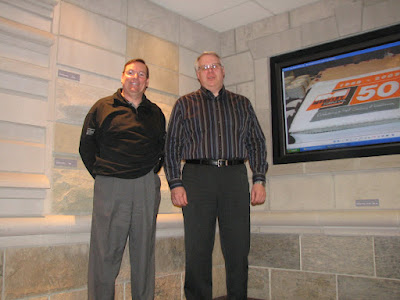
Consider, for example, the story of Merkley Supply in Ottawa, a building materials supplier focusing on masonry and stone products. The company is celebrating its 50th anniversary this year. Its location, in an old industrial area, is hardly fancy or luxurious. Nevertheless, the business has thrived, even in the era of business consolidation and big-box retailers.

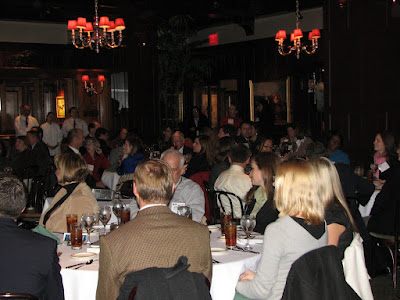
Ken and Robert Merkley know how to leverage marketing and supply chain relationships effectively. Their annual MSL Show has become the main "Construction Show" in Ottawa. Suppliers pay for booths at the event in March, and Merkely in turn turns out the crowd, with free food, refreshments, and incredible networking and lead building opportunities. The company especially focuses on architects and major developers. Merkley's suppliers get the opportunity to talk with people they would otherwise have great difficulty meeting.

But this isn't an elitist event. Merkley's trade contractor clients are also invited. So you have an eclectic and effective mix of blue and white collar visitors -- approximately 1,200 attended the March event.

Robert Merkley said that one of the keys to the show's success is that it is an invitation-only event. You won't be turned away if you come with an invited guest, but he doesn't want it open to the general public (a good idea, because with the free food, drinks and goodies, the place would otherwise be mobbed with unqualified freeloaders!) But Merkley pulls out the stops to bring the people who he wants to be there -- if you qualify to attend and don't respond to the invitation, he and his staff will phone you personally.

This is fine, but can Merkley improve? I reported to them that some clients find the showroom and order desk environment at MSL less than perfect and the experience not quite what they want. Merkley made it clear they are working on improving the service and then he also noted something I didn't know -- special, supplementary invitations and programs for the truly important clients. Aha. If you are among Merkley's best clients, you receive a higher level of individualized and personalized service. Makes sense.

There is another aspect to the story, one which I am growing to appreciate. Merkley connects to the community. At one point in the early 90s recession, he served as the Chair on the boards of both the mixed and residential construction building associations in Ottawa (Ottawa Construction Association and Greater Ottawa Home Builders' Association). He continues this level of involvement, along with charitable and public service contributions. This is helpful both to the community and to his own business relationships (I know of few better networking environments when you are working together with your clients on committees and boards of community service organizations).

Sunday, March 29, 2009

Construction Marketing: Leads and sales

Why bother with learning about how to be an effective and successful construction industry marketer? The answer -- and measure of your marketing success -- is the quality of sales leads you are able to generate.

Quality leads convert to high-value business with little selling or pricing effort. In other words, if your marketing is successful, people will pay your price, without resistance, and will sign on the dotted line exactly when you wish them to make their commitments.

In many respects, lead quality is far more important than quantity. If you want lots of leads, I can give you the phone book, or you can call one of the commercial services who will send you dozens of somewhat qualified leads, of which a few will convert to real business. Maybe you have an efficient and resourceful (and maybe a high pressure) sales force, who can drum up business by cold calling or door-to-door canvassing. These methods work, but they are stressful or most of us, and unpleasant for virtually everyone.

Conversely, word-of-mouth referrals and repeat clients because of their satisfaction with your service are golden. You don't strain or struggle to serve them, you enjoy working with these prime clients, and some of them are incredibly helpful for your business, perhaps referring several other high quality clients.

These numbers are validated by our ongoing poll, where hundreds of people have now voted, and 73 per cent say they find most of their business through repeat and referral business.


With this information in hand, you now have a clue to how you should focus your marketing efforts.
  1. Develop your service so well that clients want to do business with you by treating them right. Remember, two major client complaints are failure to return calls in a timely manner, and failure to clean up your job site. These are easy fixes.
  2. Then, focus on communicating, responding, connecting, and building out relationships with your existing clients to induce and encourage more repeat and referral business.
Your next challenge is to figure out how to leverage beyond these two basic guidelines. Advertising, leads services, and cold calling and canvassing all have their places: They can be expensive, short term, but if you are able to attract the right type of clients who will fit into the referral/repeat matrix you will recoup your investment. But you can do these things intelligently.

I'm a firm believer in effective media publicity (we provide that to our clients in Ontario, North Carolina and the greater Washington DC area), coupled with resourceful association networking, both in the business-t0-business and community environments. Both forms of marketing can be inexpensive or virtually free in cash cost, but require commitments of time, energy and talent.

You don't need to spend a lot of money to be a truly effective construction industry market leader. Simply focus on your core -- your existing and previous clients -- and build out the relationships of trust and integrity to the wider community through their network.

(And what should you do when you are just starting out? I'll discuss your options in my next posting.)


Wednesday, March 25, 2009

How to connect your marketing pieces for success

Robb Graham and Jessica Rowan at the first SMPS Ontario T3 (Third Thursday) networking event in Toronto. How can SMPS chapters attract more participation at events? Tim Klabunde in Washington, DC offers some ideas in his Cofebuz Blog.

Three interesting posts on the blogs I monitor closely demonstrate the challenges and opportunities in construction marketing.

In the first, Tim Klabunde answers a question from a fellow SMPS chapter co-ordinator trying to get more people out to local chapter meetings. He says the most effective approaches are building on word of mouth, and "viral marketing". The latter approach worked for the Design and Construction Network, an initiative founded on online sources such as linkedin.com. "I have not yet been able to make it happen for our SMPS lunch programs," he writes. More effective, in this case, is encouraging and enhancing word-of-mouth promotion.
Instead of just sending out blast e-mails about an event (which you should still do) build a group of people that are responsible to invite people during the course of regular conversations. So, if you send an e-mail to a friend that might benefit from attending ask if they are going to be at the program and let them know that you are going to be there.
Meanwhile, Michael Stone reported that while attendance overall at the Journal of Light Construction conference held up well despite the recession-induced stress in the housing market, he says he was surprised that few younger contractors attended the event.
JLC Shows have an interesting mix of attendees, with younger business owners (20’s and 30’s), as well as those in their 40’s, 50’s, 60’s and even beyond. This show had a serious lack of business owners in their 20’s and 30’s. I have been a speaker at JLC Live shows for many years now, and this was by far the oldest group of attendees that I have seen.

So the question begs to be asked, “Why?” Let me offer my theories, and I’d like to hear yours.

Many older business owners have been through one or more of the housing downturns that we are now experiencing. They even remember the last really tough market, the late 70’s and early 80’s, with mortgage rates in the teens and twenties. They know from experience that we always come out of these downturns and move on to better things, more business, a brighter future. When things are slow, they know that investing in their education will pay off in the long run.

For many young business owners, it is their first business setback or downturn. They have never experienced a lack of phone calls and business, especially when the market was so easy so recently. Many are pushing the panic button and giving their work away, and are working on the jobs themselves. They associate activity with accomplishment. They don’t have time to visit a trade show, they have too much to do.

Stone, of course, says this is unwise. When times get tough, you need to get out and learn how to run your business more effectively. He's right, to a degree. But when the wolf is at your door, and you don't have experience otherwise (and lack capital), you might find it strange to spend time away from clients and spend money on hotels and attendance fees for a conference.

Finally, look at Mel Lester's posting in his E-Quip blog:

As many of you know, I’ve long maintained that superior client service is the best differentiation strategy in our industry. Last week I stumbled across still more evidence to support my claim. The consulting firm Morrissey Goodale recently published the A/E Industry Customer Service Report Card which summarizes their survey of project owners.

Notable in the report is the paucity of high marks for several key service areas. Following are some highlights from the report:

Only 16% of clients gave their A/E service providers an A grade for overall satisfaction. A fourth of respondents gave firms they worked with a C. Sixty percent gave their firms a grade of B.

The lowest scores were largely related to the direct interaction with the client. Only 14% of firms got an A for communications. Project managers received the highest score only 12% of the time. Project management earned the lowest score of all--7%.
When you pull together the threads from these blogs, you can come up with some interesting observations and clues about how to be more successful with your construction industry marketing.
  1. Nothing beats interaction and communication with your clients and prospects. You can do this at conferences and events (Stone, as a consultant, is right to be at the JLC conference, but if you are building business within your markets, I would advocate you attend conferences where your clients are attending, more than your peers.) You can also connect by email, or supplement emails and phone conversations, depending on the nature of your relationship and situation. (Someone who had communicated with us on Internet forums sent an email to me yesterday, I responded with a phone call, and obtained some valuable business from that conversation.)
  2. Your biggest marketing "hits" and "wow" success stories have an aspect of unpredictability about them. Tim Klabunde could not have known ahead of time how the Design and Construction Network would catch on, online. I certainly didn't expect that the postings on "Change order boat" would result in more Google searches to this blog other than the obvious Construction Marketing topic.
  3. However, in assessing the unpredictability of really successful marketing events, you can learn from others' experience and of course ride the wave when it happens. Media publicity, like viral marketing, can achieve dramatic and surprising results, but there are ways to encourage and manage them. While you have to be careful about budgeting for a hit, you certainly can respond effectively and if appropriate stoke the fires.
  4. Finally, you are most likely to be successful if you apply several complementary approaches at the same time. The Design and Construction Network Happy Hour marketing in part achieved viral status because rarely can online interactions lead to face-to-face communication in short order. Likewise, this blog and other online resources allow me to maintain relationships with current, former, and future clients in an unobtrusive environment -- the key is to make closer, more personal and immediate connections when appropriate. (And of course the blog and reference to other bloggers enhances lateral relationships -- the fellow bloggers have their own networks, influence, and connections, so the circle grows wider even as marketing depth and effectiveness increases.)
How can you tie these thought threads together? Most importantly, connect with your clients. Use a variety of complementary resources and marketing methods. You'll achieve success, both slowly and incrementally, and then, suddenly, you may find you have a marketing hit on your hands.

Sunday, March 15, 2009

Same product, different approach

In 2005, we thought of association relationships as "selling opportunities." I discovered the Society for Marketing Professional Services just as we were virtually forced to mothball our U.S. business, and sensed a different approach would work much better, choosing to engage and contribute to the association even though there were no local chapters where we operated and so we could expect absolutely no business in return. Come 2009 and there is a chapter in Ontario and we enjoy good relationships with the chapters in Washington, D.C. and in Raleigh/Durham and Charlotte, North Carolina, where we have active businesses. The above image is from a SMPS D.C. Chapter meeting.

The product/service our business provides in 2009 isn't much different from 2005. Our business is growing (in a serious recession), while in the middle part of the decade, the business was declining, almost to the point of collapse.

What changed?

The answer may provide you with clues about how you can defy the recessionary environment.

We learned how to respect clients and the community-at-large and focus on relationships rather than transactions.

In 2009 we want our sales representatives to be "order-takers". In 2005 we wanted them to be "closers". Order-takers get business because people want to do business with us; closers need to force "sales techniques" on prospective clients.

How can this be? The key to the change is my initially painful discovery that we needed to look far beyond the actual selling process and focus much more on how we relate to our clients both before, during and after the transaction.

We know that we are succeeding when the purchase decision is made effortlessly, without any "sign now" pressure, and when our biggest problem is dealing with competitors who use high pressure or abusive tactics, sometimes souring the market and causing people to say "no" to us because of bad experiences elsewhere.

In many cases, after the potential clients compare us to our competitors, they call back and give us the go-ahead. They've checked with their peers and discovered that we do things differently. (A painful corollary, unfortunately, is that some of our satisfied clients receive calls from our competitors and sign on with them, expecting a similar experience to what they enjoyed with us, only to find not everyone conducts business the same way.)

Now, you might be looking for the magic formula, one-size-fits-all answer here to how this turn-around really works. Here are some points:
  • Since 2005 we've given countless hours in community service and free advertising to associations and causes, never with any expectation of financial return. Of course, the associations and causes represent the interests of our potential clients. So the generosity is well-placed and rational.
  • We've learned to be selective, patient, and rigorous in our hiring policies. Representatives with us need to be able to work within the team, but have the spirit and ability to work independently. Our hiring process is systematized, yet flexible and adaptable.
  • The entire client experience is far more important than the ability to get business short-term. Clients receive thank-you notes, personally. And everyone who does business with us has access to the best marketing advice we can offer -- and that advice is rarely to spend more money with us (this blog is part of that process.)
Can you change your business to achieve success with this business model? Yes, if you understand these basics:
  • You really need to know your product/service and be able to deliver it effectively and at a price where you can earn a fair profit Lowering your prices to win business competitively is rarely the best way to go.
  • You must know the basics of effective business management and operations. You need to know your numbers.
  • Finally, you must appreciate your market and marketing. Read, learn and ask questions. Think for yourself. Remember that your success in marketing depends 80 per cent on the quality of your relationships, both within your business and within your marketplace.

Sunday, March 01, 2009

Construction marketing: How to get rich fast (the slow way)

How tempting it is that you could just phone an 888 number, or send an email with your credit card number, and find the answer to your questions. You need business fast, and there has to be a way to make money quickly.

In fact, I felt some of those urges in the past week, when the financial reports indicated our business has reached a red line. But I know the real answer: Fast, quick money is possible -- I've earned it many times in the past 20 years -- but it only happens when you forget the get-rich-quick mind-set.

Perhaps the best example comes from my life's most fundamental experience. My living standards skyrocketed within two years at the height of the early 90s recession when I learned how to focus on what really matters in personal relationships, and forgot about the money. (We celebrated our 15th anniversary last November.)

Conversely, last week I enjoyed an entertaining get rich quick video on the Internet promoting greedy opportunity-seekers a course explaining how you could play an arbitrage game involving Amazon.com and Google Adwords to make some quick money. Just send the online promoter a few hundred bucks, and you will have your fast answer, the video promised.

Digging just a little further, I learned this arbitrage technique had worked in the past, but after several people got in the game at the same time, the opportunity has narrowed so much that it doesn't work any more -- except to those selling online get-rich-quick schemes. After all, if you have half a brain, you know that if the idea really works as promised in the online postings, you would just continue or expand your existing business rather than selling the secret to thousands of potential competitors.

Nevertheless, you may still wondering if you can get rich quick. You can, but you need to think slowly and selflessly. Here are my three quick money making solutions (and I'm not charging you a cent for the ideas here.)

Focus on what you can give, share, and how you can respect and help others, rather than how much money you can make (but do this in a community and environment of potential clients).

The reciprocity principal is powerful -- you reap what you sow -- but only is effective when you put aside your results expectations. You need to focus on sharing generously within the relevant community. Eventually, you will connect to the mega network and lead providers; and because your selfless reputation is so strong, you'll find you can in an emergency call on favours quickly. Often real money arrives really fast seemingly without effort when people phone or email you with business you didn't expect to receive.

Learn how to advertise systematically and effectively.

You may be successful with a quick advertising hit -- but more likely you will discover your successful advertising strategy through some trial and error. However, you can gain clues about what is likely to work through a combination of resources: Conversations with your current and previous clients (they will tell you what they like, read and watch), really good advertising representatives who will counsel you appropriately, and Internet forums and sites such as this blog can provide some guidance and assistance.

(See the free offer on the sidebar -- and note the previous point which explains why I provide this service. I will share ideas even if you are not anywhere near the market areas served by our publications. You might also wish to consult Michael Stone who has thought the advertising options through carefully.)

Once you have a successful advertising formula, you can moderate the lead-generating tap to provide enough business regardless of the economy. If you need more business, you simply buy more advertising.

Treat your current and former clients with respect and provide incredible, memorable service.

Last night (yes, at 8 pm on Saturday), a recent client emailed a request. I happened to be watching the hockey game on TV with the laptop in hand (alas the Senators lost in overtime), and could fulfill the client's request immediately and exactly as he requested, with a few clicks of the button. He emailed to thank me, noting how self-employed people are often on the job Saturday night -- and said he wishes to place a full page ad in the next issue. So I can now say: "I made money quickly at my computer while watching television." Sounds like one of those Internet get-rich-quick ads, doesn't it.

Remember, your employees represent your business all the time. Encourage them to think the same way about their work and their clients.

No, I don't expect employees to give up their weekends for the business and be on call 24-7. (We have a rule that it is okay to send emails over the weekend, but no one has to reply until Monday a.m.) But I know things are right when they connect, share, communicate and work with their clients in mind, while maintaining life balance. One employee is at a national conference now, for example, with his wife. It is something of a budget breaker expense that could be seen as difficult to justify in the current economy. But he is meeting with movers and shakers among the client base, and has reported between social events, meetings and dinners on the connections and business he has developed there.

So, you can can make money fast, but you will only succeed by taking the slow approach. Respect others, deliver genuine value, and respond quickly (including after hours when it doesn't sacrifice your life quality) and you will succeed.

You can test how I apply these principals by writing a comment or emailing me at buckshon@cnrgp.com.

Monday, February 16, 2009

Paprika Marketing in Los Angeles

Yesterday, in a flash of inspiration after generating three blog entries in 15 minutes, I sent out a special e-card to discuss the idea of The Paprika Effect -- the use of little spices or extras (to the side dishes) that create an enticing client experience.

Despite the fact that most of us are in the middle of a long weekend, so far almost 400 people have opened the email.

Louis Magliano of Bestline Plumbing in Los Angeles suggests that, for his business, the little extras to create a great experience are built through the relationship from beginning to end.

Your question is difficult to answer because we pour paprika over the entire deal before work is commenced.

The first part of your question was what do we do to make the experience enjoyable. When closing the sale, we tell the customer we want them to feel comfortable, sit back, and relax because we will not ask for one penny until the job is 100 per cent completed and not until they are 100 per cent satisfied. We tell the customer they have a lifetime guarantee or a very extended guarantee and it is like we own their plumbing. We promise that we will continue to work on their job until it is finished without going to other jobs. We tell the customer a supervisor will go to the job, check every inch of the job, take pictures and give them pictures of the work. We tell the customer that in my 36 years of doing business we never added extras to a job.

We never told the customer we made a mistake and needed more money and the price quoted is the exact price that the customer will pay, and if we do find something we did not see that is related to the scope of work performed, we will repair, or replace it for free.

The second part of your question asks what we will add to a job. As stated in the first question, during the performance of our work we will throw in many free faucets, a garbage disposer, toilet, and many other small items without even telling the customer we are doing this for them.

The biggest thing we do is something I don't think any contractor does and that is we will actually lower the price of a job after a contract is signed and even after the job is 100 per cent completed, and even when the customer appears to be perfectly satisfied with the price. In the contracting business, there is no set price and there are times we feel we charged the customer more than we should have. I will lower a customer's price, without the customer asking, about three times every year. Also, when sitting with a customer and even after a customer agrees to a price, and even after the contract is signed, I will discount the job a few hundred dollars.

The more obvious way to make a job a good customer experience is cleanliness, mannerisms, and following through with everything spoken and written. We are clean-freaks and our employees must follow many guidelines for protecting the customer's property and accommodating the customer's needs that may include giving the customer the use of a restroom at all times, helping the customer to move their furniture, or making the job peaceful by having our employees keep their voices quiet.

We honor and live by this statement and will not take one penny from a customer:

"A sale is not a sale unless both the buyer and seller are 100 per cent satisfied"

About three times a year a customer will call and tell me he has a job that is completed, he would like to pay, and he has an issue that needs to be corrected. The customer is willing to pay and let us correct the problem later, but I tell the customer not to worry and not to pay until everything is perfect.

I believe all these things help create a good experience for the customer.
I'll share other readers' Paprika ideas in future postings (and tomorrow's Construction Marketing Ideas newsletter). In the meantime, please feel free to share yours with me -- and this blog's readers -- by commenting or emailing buckshon@cnrgp.com.

Saturday, February 07, 2009

The three Es of Construction Marketing: Empathy, Energy and Enjoyment

If you wish to succeed at construction energy marketing remember these basics:

Empathy: Do you care, and respect, your clients, potential clients and strangers receiving your marketing message. Since three quarters of contractors, architects and engineers report that most of their business comes from former and referred clients, empathy is especially important to the people you are working with, and whom you have done business with in the past. Do you clean up your job sites, respond promptly to their calls and enquiries, and deliver a positive and rewarding experience?

And, for those of you who think there is nothing wrong in sending untrained canvassers around neighbourhoods in the evening to blindly knock on strangers' doors, you really need to go to school to learn some empathy to strangers and the community at large.

Energy: Forget the half-baked efforts where you try something once and then give up. Occasionally you will hit the home run, but most marketing success occurs after you make some blunders -- and in any case, even the most effective efforts take time to achieve measurable results. You need to put some energy and effort into your marketing. How? Best solution I know is to relate your marketing to activities and relationships you enjoy and where you have real talent: You'll stick it out even when others give up.

Enjoyment: Will your clients enjoy your marketing experience -- will you enjoy the process as well? Go back to things like telemarketing and canvassing, or calling cold leads, or irritating yourself, your employees and your potential clients with hard-rock selling. Maybe you can find people who enjoy these things (good for you, if your representatives aren't sociopaths).

Here is a simple tip: Find ways to spend more time doing things you enjoy with current and former clients doing things they enjoy -- and watch your referral and repeat business skyrocket.

Tuesday, January 27, 2009

Advertising, branding, and service

Construction industry consultant Michael Stone with Sonny Lykos in a December 2006 photo

The late Sonny Lykos outlines in this June 2004 Journal of Light Construction posting, the basic issues you should consider in advertising and marketing. His points remain valid today.
Nothing - NOTHING we do or say that involves a customer is ever to be thought of as minor, small, unimportant, or insignificant. NEVER!
If your advertising brings your client to the door, the way you treat your client defines your ultimate business success, Lykos advocated. this is a fundamental point which you should regard consistently and vitally.

Sunday, January 25, 2009

The big construction marketing idea picture, simply explained

You try something with construction marketing. It doesn't work. So you think the thing you tried is a waste of time or (worse), you think the whole thing about marketing is a waste, too.

You are right to think your construction marketing efforts will fail, if you think that way.

For example, if you are like most construction businesses which have enjoyed success in relatively good times, you relied on word of mouth and repeat business. Since this seems to be drying up -- people aren't calling you and asking, sometimes pleading with you, to work on their projects, you try advertising. You place your ad and expect the phone to ring. Instead, after spending several hundred dollars, someone calls, only to let you know he is calling five other contractors for the lowest under-the-table price possible (and might do the work himself, anyways.)

You can make three choices in this circumstance. Give up, try something else, or learn what you need to do to get it right.

Giving up isn't such a bad option if you are ready to shrink your business down to the level it needs to do to survive with whatever repeat and referral business you can 'rely' on. (You should always be ready to do the shrinking in the recession, anyways, you really have problems surviving if you put your head in the sand as you deplete all your assets and run up debts.)

The second option, trying something else, may also be right, but if you are just blindly going from one expensive marketing idea to another, you will soon find you are running around in circles, frustrated and failing.

So that takes you to the third option -- learning what you need to do to get it right. You are here, so this is a good sign. You will find other resources, both through your network of friends and colleagues, your industry associations, and often your current clients.

When you read earlier posts here (and the sidebar poll on this blog), you will see that your repeat and referral business is -- and should be -- vitally important to you. Your success in retaining clients and attracting referrals is a sign you have a healthy brand and solid business practices -- real assets. Repeat and referral business, for most of you, should continue to be your primary source of new clients. (The exceptions of course are brand new businesses and very large organizations meeting occasional needs -- you will simply not have enough business in the pipeline, in this case, unless you are aggressive about your outbound new client marketing.)

The difference is my advice about the importance of repeat and referral business is that you not rely on these important assets, but develop them. Your previous clients, after all, can provide you with strong clues about where you should look to advertise and promote your business in the future.

This leads to the best triple play approach you can find to develop and restore your business.

By talking with your former clients, by listening to them, you may find they have immediate needs you can solve (fresh business) or you may uncover new directions to take your business (different direction, same client base), or you may learn which publications they read, which associations they support, and which Internet searches they conduct -- all leading you to media and marketing resources likely to appeal to future clients in the same demographic space.

In other words, to find new business, call, meet, and listen to your current and previous clients.

One approach is to offer them a free check-up or maintenance service; your hour or two with them fixing things they need tended (without billing them) will give you plenty of ideas and insights about where and how to allocate your marketing resources -- and probably bring in some solid paid business, too. In other words, with one step, you'll conduct important market research, build good-will and referrals, and probably sell some of your services to people who really respect and trust you.

Your decision to reconnect with current and previous clients, indeed, is the simple solution to your big construction marketing challenges.

Friday, December 26, 2008

The magic solution (maybe)

Bobby Darnell's recent blog entry, The Calm Before the Storm, is a reminder that you should be wary about anyone who promises quick fix solutions to your marketing challenges.

The bottom line is one does not suddenly become a successful marketer of their company any sooner than one decides to play golf in a manner that will impress a golf playing prospect. They both take time, skill and effort. He writes:

I was going to entitle this entry “Lose Weight! 30 Pounds In A Week, Guaranteed!”

It is pretty close to impossible to buy anything at a major grocery store without reading a similar headline near the check-out counter. Is it possible to lose 30 pounds in a week? Absolutely! I believe if I were to cut off my left leg, I would indeed be at least 30 pounds lighter but the repercussions would not be worth it.

The point is, there are no sure-fire, quick and long term ways to lose weight nor are there any sure-fire, quick and long term ways to build new business. For long term, successful and lasting results, they both take time and a steady effort.

I agree with Bobby, 80 per cent, but allow you the hope for some fast-acting answers if you have an established enthusiastic client base (multiple clients, not one or two dominating customers) and the ability/willingness to get in touch with your current and previous clients. In this case, some immediate communications may result in immediate work if you've done great work for them in the past (and thus, your brand is healthy). But you don't want to handle this stuff carelessly -- take your time to review your options, plan your strategy, and ensure you are on track before blasting away!

Thursday, December 04, 2008

An elegant idea

Jon Goldman speaking at Construct Canada. He has an impressive collection of ideas -- some of which I will share in future blog postings.

Here is a story that will brighten your day -- and perhaps provide the marketing answer you are seeking.

Hopkins and Porter, a Potomac, MD, contractor planned a special celebration for its 25th anniversary. The company sent a letter to its former clients, offering them one free hour of handyman services in exchange for permission to putting a lawn sign at their home.
The campaign cost $2,000 -- and netted $375,000 in sales -- marketing consultant Jon Goldman told a Construct Canada seminar today.

Goldman said 32 per cent of the people who received the letter responded. Many took up the offer of the free handyman service -- but many purchased additional services, and referred their friends.

The thing that I really like about this idea is its impressive simplicity. You don't need to be in business for 25 years to make it work (Hopkins and Porter's website says it celebrated its 30th anniversary in 2007 -- I will check to see if they repeated the story last year.) "Every business has an anniversary; it could be five years, three years, even one years, and this would work," says Goldman.

Goldman says marketing makes the most sense when you pick the "low hanging fruit" and that fruit is, of course, your previous satisfied clients and referral contacts. Give them a reason to connect with you again, and you'll get even more business, and quickly.

Here's the good news. If your business had been doing well in good times, relying on word of mouth and referrals, you can implement this type of strategy quickly, easily, and profitably.
Smart marketing need not be expensive nor difficult to co-ordinate.